 MinuteRead
30 min
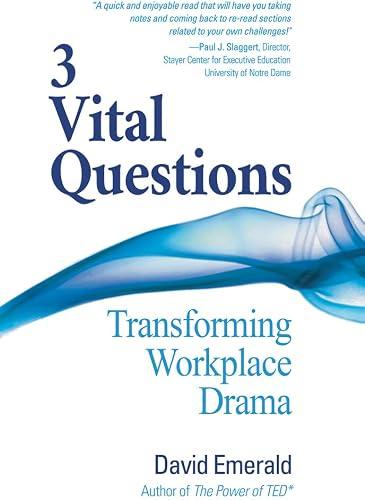
Every workplace has its own version of the same story. A talented team gets bogged down in conflict. A promising project stalls because people are more focused on assigning blame than finding solutions. A manager spends her days putting out fires instead of building something meaningful. An employee feels trapped, complaining about circumstances he believes he cannot change.
By David Emerald
**Estimated Reading Time:** 45 minutes
**What You'll Learn:** How to recognize the hidden dynamics that create workplace drama, shift from reactive problem-solving to creative outcome-building, and transform your relationships at work and home through three deceptively simple questions.
**Who This Book Is For:** Anyone who has ever felt stuck in workplace conflict, drained by office politics, frustrated by recurring problems, or powerless to create meaningful change in their professional or personal life.
Every workplace has its own version of the same story. A talented team gets bogged down in conflict. A promising project stalls because people are more focused on assigning blame than finding solutions. A manager spends her days putting out fires instead of building something meaningful. An employee feels trapped, complaining about circumstances he believes he cannot change. Most of us have lived some version of this story. We know the exhaustion of workplace drama intimately. We feel it in the Sunday evening dread before Monday morning. We hear it in the conversations that circle endlessly around what someone else should have done differently. We see it in the meetings where problems are discussed for hours but nothing actually changes. David Emerald calls this the Dreaded Drama Triangle, and he argues that it is not merely an occasional workplace annoyance. It is the default operating system for how most people approach problems, relationships, and work itself. The drama triangle is so deeply embedded in our thinking that we rarely notice when we are caught in it. We simply feel the anxiety, the frustration, and the sense of powerlessness that accompany it. The cost of this pattern is staggering. Organizations lose countless hours to unproductive conflict. Talented employees burn out and leave. Innovation stalls because people are too busy managing drama to create anything new. Relationships deteriorate. Health suffers. The human toll of chronic workplace drama extends far beyond the office walls. Emerald's insight is that this drama is not caused by difficult people or impossible circumstances. It is caused by a fundamental orientation toward problems rather than outcomes. When we focus on what is wrong, who is to blame, and what we cannot control, we activate a reactive pattern that generates more of the same. The drama triangle is not something that happens to us. It is something we participate in creating. The good news is that this pattern can be transformed. Emerald offers an alternative he calls The Empowerment Dynamic, a framework built around three roles that replace the drama triangle's Victim, Persecutor, and Rescuer with Creator, Challenger, and Coach. The shift is not merely semantic. It represents a fundamentally different way of relating to problems, to other people, and to our own capacity…
Continue reading in the MinuteRead app
Get the complete 30-minute summary of 3 Vital Questions
Get the complete summary in the appThe Problem Orientation focuses on what is wrong and generates anxiety. The Creator Orientation focuses on desired outco
The Dreaded Drama Triangle consists of Victim, Persecutor, and Rescuer roles. These roles form a self-reinforcing cycle
The Empowerment Dynamic offers Creator, Challenger, and Coach as alternatives to the drama roles.
The three vital questions are: Where are you putting your focus? How are you relating? What actions are you taking?
Dynamic tension is the creative energy generated by the gap between desired outcome and current reality.
Baby steps are small, concrete actions that move you toward your desired outcome. They build momentum and confidence.
"3 Vital Questions" is a strong fit if you want practical ideas around business, self help, psychology, especially themes like the problem orientation focuses on what is wrong and generates anxiety. the creator orientation focuses on desired outco; the dreaded drama triangle consists of victim, persecutor, and rescuer roles. these roles form a self-reinforcing cycle. The MinuteRead summary distills these concepts into a focused read, whether you're deciding whether to buy the book or applying its lessons at work.
Motivated to help readers with "There is a focus on problems, David Emerald wrote “3 Vital Questions” to package those ideas for a fast, focused read. In “3 Vital Questions”, David Emerald focuses on "There is a focus on problems. Through “3 Vital Questions”, David Emerald distills the core ideas on business into lessons readers can absorb in a single short sitting. Readers turn to this work when they want David Emerald's perspective on the subject without working through the entire original vol…
View all summaries by David EmeraldContinue Reading
Access the complete 30-minute summary and thousands more nonfiction books in the MinuteRead app.

Continue reading the complete summary in the MinuteRead app.






