 MinuteRead
30 min
Book summary
by Margaret Heffernan
Premium summary · Opens in the app · 30 min read
We have been told a story our entire lives. It is a story about competition. We are told that competition brings out the best in us, that it drives innovation, that it separates the exceptional from the ordinary, and that without it we would stagnate. We have built our schools, our companies, our laboratories, and even our families around this belief. We rank children, grade employees on curves, award bonuses to top performers, and celebrate winners while quietly accepting that someone must lose
**Author:** Margaret Heffernan **Estimated Reading Time:** 45 minutes
**What You'll Learn:**
- Why competition often produces conformity instead of innovation - How collaboration unlocks creativity that rivalry suppresses - What happens when organizations replace ranking systems with trust - Why intrinsic motivation outperforms external rewards - How to build environments where people do their best work
**Who This Book Is For:**
Anyone who has ever felt exhausted by the pressure to win, frustrated by workplaces that pit colleagues against each other, or curious about whether there is a better way to organize human effort. This book is for leaders, educators, parents, and individuals who suspect that the relentless pursuit of victory may be costing us something essential.
We have been told a story our entire lives. It is a story about competition. We are told that competition brings out the best in us, that it drives innovation, that it separates the exceptional from the ordinary, and that without it we would stagnate. We have built our schools, our companies, our laboratories, and even our families around this belief. We rank children, grade employees on curves, award bonuses to top performers, and celebrate winners while quietly accepting that someone must lose. Margaret Heffernan spent years examining this story. What she found was deeply unsettling. The story is wrong. Not just slightly wrong. Not just incomplete. Wrong in ways that have profound consequences for how we work, how we learn, how we create, and how we relate to one another. The evidence she gathered from scientists, educators, business leaders, musicians, and researchers across dozens of fields points to a conclusion that many of us have sensed but few have articulated: competition, as we practice it, is not making us better. It is making us worse. Consider what happened in the pharmaceutical industry. For decades, drug companies poured billions into developing medications that were nearly identical to existing treatments. These "me-too" drugs offered little therapeutic advantage, but they allowed companies to capture a share of a proven market. The result was not medical progress. It was duplication. Resources that could have gone toward genuinely novel treatments were instead spent on copycat products designed to compete rather than to cure. The same pattern appears in music, where the pressure to produce hits led to the widespread use of AutoTune, creating a homogenized sound that stripped away the unique qualities of individual voices. It appears in film, where studios greenlight sequels and reboots rather than original stories. It appears in finance, where banks copied each other's risky strategies until the entire system collapsed in 2008. The problem is not that competition exists. Competition is natural, and in some contexts it can be healthy. The problem…
Continue reading in the MinuteRead app
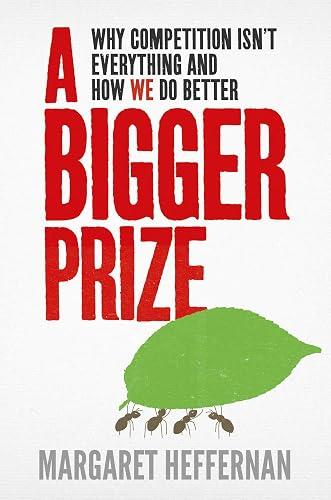
Get the complete 30-minute summary of A Bigger Prize
Get the complete summary in the appCompetition often produces conformity, not innovation. When the stakes are high, people copy proven formulas rather than
External rewards undermine intrinsic motivation. Autonomy, mastery, and purpose are more powerful drivers of performance
Hypercompetitiveness is destructive. It erodes trust, damages relationships, and produces chronic stress.
Collaboration produces better outcomes than competition in complex tasks. Diverse teams outperform homogeneous teams.
Ranking systems create fear and mistrust. They pit colleagues against each other and discourage collaboration.
The Matthew Effect concentrates resources in the hands of those who have already succeeded, producing conservative syste
"A Bigger Prize" is a strong fit if you want practical ideas around business, sociology, psychology, especially themes like competition often produces conformity, not innovation. when the stakes are high, people copy proven formulas rather than; external rewards undermine intrinsic motivation. autonomy, mastery, and purpose are more powerful drivers of performance. The MinuteRead summary distills these concepts into a focused read, whether you're deciding whether to buy the book or applying its lessons at work.
Motivated to help readers with "The problem with competitiveness like this is that, Margaret Heffernan wrote “A Bigger Prize” to package those ideas for a fast, focused read. In “A Bigger Prize”, Margaret Heffernan focuses on "The problem with competitiveness like this is that. Through “A Bigger Prize”, Margaret Heffernan distills the core ideas on business into lessons readers can absorb in a single short sitting. Readers turn to this work when they want Margaret Heffernan's perspective on the …
Continue Reading
Access the complete 30-minute summary and thousands more nonfiction books in the MinuteRead app.

Continue reading the complete summary in the MinuteRead app.






