MinuteRead
30 min
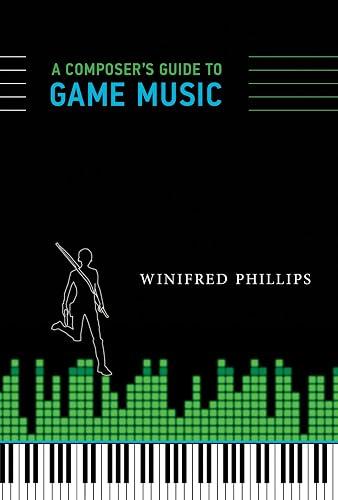
Book summary
by Winifred Phillips
Premium summary · Opens in the app · 30 min read
Most people think of video game music as a simpler cousin of film scoring. The orchestra swells, the hero triumphs, the credits roll. But anyone who has spent serious time with games knows the truth: game music behaves differently. It responds. It waits. It shifts when you turn left instead of right. It knows when you are winning and when you are about to lose everything.
**Author:** Winifred Phillips
**Estimated Reading Time:** 45 minutes
**What You'll Learn:**
- Why game music demands a fundamentally different approach than film or television scoring - How interactive music systems actually work and why they matter - The technical skills every game composer needs to master - How to build themes, loops, and adaptive musical structures - What it takes to build a sustainable career in the game audio industry
**Who This Book Is For:**
Aspiring game composers who want to understand the craft beyond the notes on the page. Experienced musicians transitioning from other media who need to grasp the interactive dimension. Game developers who want to collaborate more effectively with composers. Anyone curious about why video game music has become one of the most dynamic and innovative fields in modern composition.
Most people think of video game music as a simpler cousin of film scoring. The orchestra swells, the hero triumphs, the credits roll. But anyone who has spent serious time with games knows the truth: game music behaves differently. It responds. It waits. It shifts when you turn left instead of right. It knows when you are winning and when you are about to lose everything. Winifred Phillips has spent her career navigating this strange and wonderful territory. She has written music for sprawling action franchises like God of War and Assassin's Creed, for beloved family titles like LittleBigPlanet, and for projects that pushed the boundaries of what interactive audio could do. Along the way, she discovered something that surprised her: the skills required to compose for games are not simply an extension of traditional composition. They are, in many ways, a completely different discipline. The problem is that most composers enter the game industry unprepared for this reality. They arrive with excellent training in harmony, orchestration, and melodic development. They know how to write a beautiful cue. But they do not know how to write music that can loop seamlessly for twenty minutes without driving a player insane. They do not know how to design a musical system that responds to player choices in real time. They do not understand memory budgets, middleware tools, or the psychological effects of repetition. This book exists because that gap between traditional musical training and the actual demands of game development is real, and it is wide. Phillips wrote it to help composers understand what they are actually signing up for when they take on a game project. More importantly, she wrote it to show that these challenges are not obstacles to artistic expression. They are opportunities to create something no other medium allows. The topic matters because games have become one of the most significant cultural forms of our…
Continue reading in the MinuteRead app
Get the complete 30-minute summary of A Composer's Guide to Game Music
Get the complete summary in the appGame music is fundamentally different from film music because it must function in a non-linear, interactive context.
A looping composition must end the same way it began. Master this principle before anything else.
Think in terms of musical states and transitions, not fixed sequences.
Vertical layering and horizontal re-sequencing are the core techniques of interactive music.
Simple, memorable themes are more effective than complex ones.
Repetition builds musical meaning. Embrace it rather than avoiding it.
"A Composer's Guide to Game Music" is a strong fit if you want practical ideas around music, reference, business, especially themes like game music is fundamentally different from film music because it must function in a non-linear, interactive context; a looping composition must end the same way it began. master this principle before anything else. The MinuteRead summary distills these concepts into a focused read, whether you're deciding whether to buy the book or applying its lessons at work.
Motivated to help readers with the creative and technical process of composing music for video games, Winifred Phillips wrote “A Composer's Guide to Game Music” as a practical guide drawn from years of experience and research. In “A Composer's Guide to Game Music”, Winifred Phillips focuses on video game composers are required to master an array of specialized skills that are thoroughly foreign to. Through “A Composer's Guide to Game Music”, Winifred Phillips distills the core ideas on music int…
Continue Reading
Access the complete 30-minute summary and thousands more nonfiction books in the MinuteRead app.

Continue reading the complete summary in the MinuteRead app.