 MinuteRead
30 min
Book summary
Premium summary · Opens in the app · 30 min read
Every workplace is a story. It is a story about what people expect from one another, what they are willing to give, what they hold back, and what happens when those expectations collide with reality. Michael Armstrong's *A Handbook of Human Resource Management Practice* is not a novel, but it reads, in its way, as a comprehensive anatomy of that story. It is a book about the machinery of human cooperation, the delicate architecture of trust, and the systems that either cultivate or corrode the r
**Author:** Michael Armstrong **Estimated Reading Time:** 18 minutes **What This Story Explores:** The architecture of work itself: how organizations shape human effort, how people find meaning and dignity in employment, and how the invisible agreements between employers and employees determine whether institutions thrive or fail. **Who This Book Is For:** Anyone who has ever managed another person, been managed, wondered why some workplaces hum with purpose while others stagnate, or sought to understand the systems beneath the surface of organizational life.
Every workplace is a story. It is a story about what people expect from one another, what they are willing to give, what they hold back, and what happens when those expectations collide with reality. Michael Armstrong's *A Handbook of Human Resource Management Practice* is not a novel, but it reads, in its way, as a comprehensive anatomy of that story. It is a book about the machinery of human cooperation, the delicate architecture of trust, and the systems that either cultivate or corrode the relationship between people and the organizations they serve. The tenth edition of this enduring work arrives at a moment when the nature of work itself has become unsettled. The old certainties of lifetime employment, clear hierarchies, and stable career ladders have given way to something more fluid, more anxious, and more demanding. Armstrong's book is a response to that unsettled condition. It offers not nostalgia for a vanished world of personnel administration, but a forward-looking framework for understanding how organizations can manage their most valuable and most unpredictable resource: human beings. The book's central premise is deceptively simple. Human resource management, Armstrong argues, is not a peripheral administrative function. It is a strategic discipline, one that must be woven into the fabric of organizational decision-making. The people who work in an organization are not merely costs to be controlled or inputs to be optimized. They are the organization's capacity for innovation, its memory, its relationships with customers, and its ability to adapt. To manage them well is to manage the organization's future. Armstrong writes with the clarity of someone who has spent decades in the field, both as a practitioner and as a teacher. His prose is precise, practical, and refreshingly free of jargon. He does not pretend that managing people is easy, nor does he offer simple formulas. Instead, he provides a map of the terrain: the theories that help explain human motivation, the systems that translate strategy into daily practice, and the cultural forces that shape behavior in ways both visible and invisible. The tone of the book is authoritative but not dogmatic. Armstrong presents competing theories with fairness, acknowledging where they conflict and where they complement one another. He is less…
Continue reading in the MinuteRead app
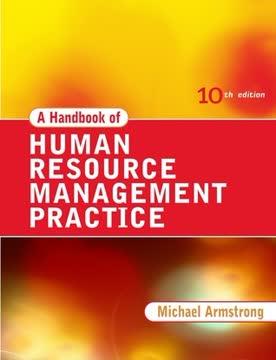
Get the complete 30-minute summary of A Handbook of Human Resource Management Practice 10th Edition
Get the complete summary in the appEvery workplace is a story. It is a story about what people expect from one another, what they are willing to give, what they hold back, and what happens when those expectations collide with reality. Michael Armstrong's *A Handbook of Human
"A Handbook of Human Resource Management Practice 10th Edition" will resonate with readers drawn to business, historical romance, management. Every workplace is a story. It is a story about what people expect from one another, what they are willing to give, what they hold back, and what happens when those expectations co… Our summary captures the core argument so you can learn the essentials before committing to the full book.
Michael Armstrong is a renowned author and expert in the field of human resource management. He has written extensively on HR topics, with his most notable work being "A Handbook of Human Resource Management Practice." Armstrong's writing style is known for its clarity and practicality, making complex HR concepts accessible to both students and professionals. His expertise is widely recognized in the industry, and his books are frequently used as textbooks in academic settings. Armstrong's work …
View all summaries by Michael ArmstrongContinue Reading
Access the complete 30-minute summary and thousands more nonfiction books in the MinuteRead app.

Continue reading the complete summary in the MinuteRead app.






