 MinuteRead
30 min
Book summary
by Mark Schwartz
Premium summary · Opens in the app · 30 min read
Every organization claims to pursue business value. The phrase appears in mission statements, project charters, board presentations, and Agile training manuals. It is the presumed goal of every initiative, the justification for every budget request, the yardstick against which every project is measured. Yet when you ask a simple question, "What exactly do we mean by business value?" the answers become vague, contradictory, or circular.
**Author:** Mark Schwartz
**Estimated Reading Time:** 45 minutes
**What You'll Learn:**
- Why "business value" remains dangerously undefined in most organizations - How traditional financial measures like ROI and NPV fail to guide real decisions - What Agile teams actually need to know about value to do their jobs well - How organizational culture shapes what counts as valuable - Why IT leaders must move beyond "getting a seat at the table" to redefining the conversation entirely
**Who This Book Is For:**
This book is for technology leaders, Agile practitioners, product owners, and executives who sense that something is missing from their conversations about value. If you have ever sat in a planning meeting and wondered who actually decides what "valuable" means, or if you have struggled to connect software delivery to business outcomes, this book will give you a new way of thinking.
Every organization claims to pursue business value. The phrase appears in mission statements, project charters, board presentations, and Agile training manuals. It is the presumed goal of every initiative, the justification for every budget request, the yardstick against which every project is measured. Yet when you ask a simple question, "What exactly do we mean by business value?" the answers become vague, contradictory, or circular. Mark Schwartz noticed this problem from an unusual vantage point. As a Chief Information Officer, he sat at the intersection of technology delivery and business strategy. He watched Agile teams commit themselves to "maximizing business value" while no one could tell them precisely what that meant. He saw product owners prioritize backlogs based on intuition, politics, or habit rather than any coherent theory of value. He observed executives approving projects with elaborate ROI calculations that everyone knew were fictional. The problem, Schwartz realized, was not that people were lazy or incompetent. The problem was that business value is genuinely difficult to define, and most organizations have avoided the hard work of thinking about it clearly. The Agile movement made this problem more urgent. The Agile Manifesto states that the highest priority is "to satisfy the customer through early and continuous delivery of valuable software." Agile frameworks instruct teams to prioritize work by business value. Product owners are told to order backlogs according to value. But the frameworks are silent on how to determine what value means. They assume someone else, somewhere in "the business," knows the answer. Schwartz argues that this assumption is dangerous. When value is undefined, teams cannot make good decisions. When value is undefined, organizations optimize for proxies that may have little to do with what actually matters. When value is undefined, the gap between IT and "the business" grows wider, because each side is operating with different…
Continue reading in the MinuteRead app
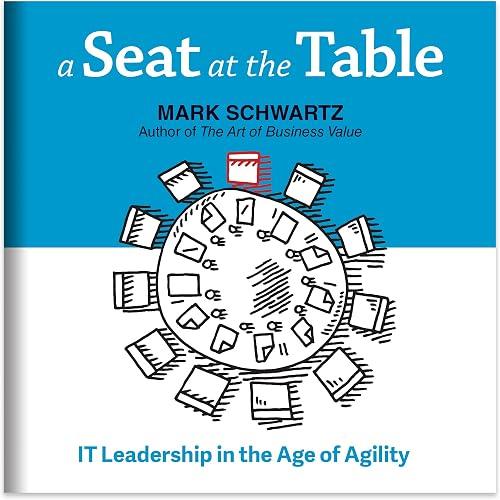
Get the complete 30-minute summary of A Seat at the Table and The Art of Business Value
Get the complete summary in the appBusiness value is a judgment, not a measurement. It is defined by people within a specific organizational context.
ROI and NPV are inadequate measures of value. They ignore risk, timing, options, and non-financial considerations.
Different organizations define value differently. A startup values growth, a nonprofit values mission, a government agen
Culture shapes value more than strategy documents do. What gets funded and praised reveals what an organization actually
Agile teams must participate in defining value, not just receive value definitions from "the business."
Releasing code is not delivering value. Value is realized only when outcomes change.
"A Seat at the Table and The Art of Business Value" is a strong fit if you want practical ideas around business, technology, leadership, especially themes like business value is a judgment, not a measurement. it is defined by people within a specific organizational context; roi and npv are inadequate measures of value. they ignore risk, timing, options, and non-financial considerations. The MinuteRead summary distills these concepts into a focused read, whether you're deciding whether to buy the book or applying its lessons at work.
Motivated to help readers with "Business value, Mark Schwartz wrote “A Seat at the Table and The Art of Business Value” to package those ideas for a fast, focused read. In “A Seat at the Table and The Art of Business Value”, Mark Schwartz focuses on "Business value. Through “A Seat at the Table and The Art of Business Value”, Mark Schwartz distills the core ideas on business into lessons readers can absorb in a single short sitting. Readers turn to this work when they want Mark Schwartz's perspe…
Continue Reading
Access the complete 30-minute summary and thousands more nonfiction books in the MinuteRead app.

Continue reading the complete summary in the MinuteRead app.






