 MinuteRead
30 min
Book summary
Premium summary · Opens in the app · 30 min read
There is a moment in every creative person's life when the obvious answer stops being enough. The familiar solution no longer fits the problem. The well-worn path leads to a dead end. In that moment, most people do what they have always done: they try harder, push further down the same road, and hope for a different result.
**Author:** Roger Von Oech **Estimated Reading Time:** 42 minutes
**What You'll Learn:**
- Why your own mental locks are the biggest barrier to creative thinking - How to break free from assumptions that silently limit your options - Why play and imagination are serious tools for serious problems - How to turn failures and accidents into breakthroughs - Practical techniques for generating more ideas in any situation - How to move from creative insight to real-world implementation
**Who This Book Is For:**
Anyone who has ever felt stuck. Anyone who suspects they are more creative than their current results suggest. Anyone who wants to solve problems with greater originality, whether in business, art, relationships, or daily life.
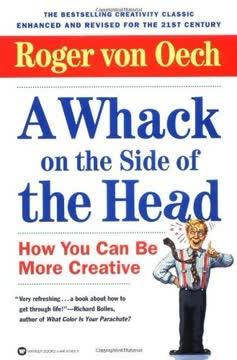
There is a moment in every creative person's life when the obvious answer stops being enough. The familiar solution no longer fits the problem. The well-worn path leads to a dead end. In that moment, most people do what they have always done: they try harder, push further down the same road, and hope for a different result. This book exists because that approach rarely works. Roger Von Oech wrote A Whack on the Side of the Head to address a strange paradox of human thinking. We are all born with enormous creative capacity. Children invent imaginary worlds, ask endless questions, and see connections that adults miss. Yet somewhere between childhood and adulthood, most of us lose access to that natural inventiveness. We do not lose the capacity itself. We bury it under layers of rules, assumptions, habits, and fears. The problem is not that people lack creativity. The problem is that they have learned to think in ways that actively prevent creative ideas from emerging. Von Oech calls these patterns mental locks. They are the invisible constraints that tell us what is possible, what is appropriate, and what is worth trying. They operate so quietly that we rarely notice them. We simply experience their effects: the feeling of being stuck, the sense that there must be a better way but we cannot see it, the frustration of watching others find elegant solutions to problems that baffle us. The title of this book comes from a simple observation. Sometimes you do not need more information, more effort, or more intelligence. Sometimes you need a whack on the side of the head. You need something that jolts you out of your habitual way of seeing things. A good whack disrupts your mental patterns long enough for a new idea to slip through. Von Oech's approach is different from most creativity advice because he does not focus on techniques alone. Techniques matter, but they are useless if your underlying mindset remains locked. Before you can…
Continue reading in the MinuteRead app
Get the complete 30-minute summary of A Whack on the Side of the Head
Get the complete summary in the appMental locks are the main barrier to creativity. Learn to recognize and open them.
The first answer is rarely the best answer. Generate multiple solutions before evaluating.
Logic is one tool among many. Use non-logical thinking during exploration.
Question rules. Distinguish between essential rules and arbitrary conventions.
Play is essential to creativity. Give yourself permission to be playful.
Seek inspiration from other fields. Cross-domain thinking leads to breakthroughs.
"A Whack on the Side of the Head" is a strong fit if you want practical ideas around business, self help, psychology, especially themes like mental locks are the main barrier to creativity. learn to recognize and open them; the first answer is rarely the best answer. generate multiple solutions before evaluating. The MinuteRead summary distills these concepts into a focused read, whether you're deciding whether to buy the book or applying its lessons at work.
Roger von Oech is an American expert in creativity and innovation. He has made significant contributions to the field through his work as a speaker, conference organizer, author, and toy-maker. Von Oech's focus has been on studying and promoting creative thinking techniques. His book "A Whack on the Side of the Head" has become a widely recognized classic in the realm of creativity literature. Through his various endeavors, von Oech has helped individuals and organizations tap into their creativ…
View all summaries by Roger Von OechContinue Reading
Access the complete 30-minute summary and thousands more nonfiction books in the MinuteRead app.

Continue reading the complete summary in the MinuteRead app.






