 MinuteRead
30 min
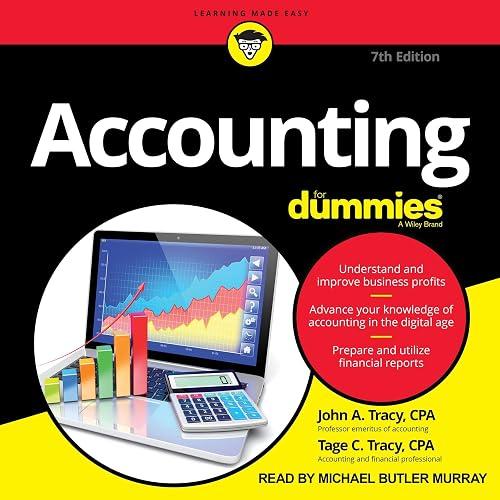
Book summary
by John A. Tracy
Premium summary · Opens in the app · 30 min read
Most people experience accounting the way they experience a foreign language. They recognize the words. They sense that meaning exists somewhere beneath the surface. But when they try to put the pieces together, the picture blurs into confusion.
**Author:** John A. Tracy
**Estimated Reading Time:** 45 minutes
**What You'll Learn:**
- How to read and interpret the three core financial statements - Why the accounting equation governs everything in business finance - How accounting choices affect reported profits - Which financial ratios actually matter and how to use them - What audits can and cannot tell you - How managers use internal accounting beyond external reports - Why ethics sits at the center of credible financial reporting
**Who This Book Is For:**
Anyone who needs to understand business finances without becoming a professional accountant. Managers who want better internal information. Investors who want to read financial reports with confidence. Students who need a clear, practical foundation. Entrepreneurs who must understand the numbers that drive their business. And anyone who has ever felt lost staring at a balance sheet.
Most people experience accounting the way they experience a foreign language. They recognize the words. They sense that meaning exists somewhere beneath the surface. But when they try to put the pieces together, the picture blurs into confusion. This is not a failure of intelligence. It is a failure of translation. Accounting has its own vocabulary, its own logic, and its own way of organizing reality. The rules are not arbitrary, but they are also not intuitive. Debits and credits. Accruals and deferrals. Assets and liabilities. These terms carry precise meanings that differ from everyday usage. Without a guide, most people either give up or develop a shaky understanding that fails them at critical moments. John A. Tracy spent decades teaching accounting at the University of Colorado and working as a certified public accountant. He understood that the problem was never the subject matter. The problem was presentation. Traditional accounting education buries students in mechanics before they ever see the big picture. They learn to record transactions before they learn why transactions matter. They memorize rules before they understand purpose. Tracy took a different approach. He started with the fundamental question: What is accounting actually for? The answer shapes everything that follows. Accounting exists to communicate financial information about a business to people who need that information to make decisions. The financial statements are not an end in themselves. They are a communication tool. Once you understand what the statements are trying to tell you, the mechanics make sense. This book exists because financial literacy is no longer optional. Whether you are a manager, an investor, an entrepreneur, or simply someone who wants to understand how businesses work, you need to read financial statements with confidence. You need to know what the numbers mean, what they hide, and what they reveal. You need to understand the difference between profit and…
Continue reading in the MinuteRead app
Get the complete 30-minute summary of Accounting For Dummies
Get the complete summary in the appThe accounting equation, assets equal liabilities plus owners' equity, is the foundation of all financial accounting.
The three primary financial statements are the balance sheet, income statement, and statement of cash flows.
Profit and cash flow are different concepts, and a company can be profitable while running out of cash.
Accounting involves choices, and those choices affect reported profits.
Ratios provide context for interpretation but are indicators, not final answers.
Audits provide reasonable assurance, not certainty, and do not guarantee fraud detection.
"Accounting For Dummies" is a strong fit if you want practical ideas around business, finance, reference, especially themes like the accounting equation, assets equal liabilities plus owners' equity, is the foundation of all financial accounting; the three primary financial statements are the balance sheet, income statement, and statement of cash flows. The MinuteRead summary distills these concepts into a focused read, whether you're deciding whether to buy the book or applying its lessons at work.
Motivated to help readers with financial statements are the core content of a financial report, John A. Tracy wrote “Accounting For Dummies” to package those ideas for a fast, focused read. In “Accounting For Dummies”, John A. Tracy focuses on financial statements are the core content of a financial report. Through “Accounting For Dummies”, John A. Tracy distills the core ideas on business into lessons readers can absorb in a single short sitting. Readers turn to this work when they want John A.…
Continue Reading
Access the complete 30-minute summary and thousands more nonfiction books in the MinuteRead app.

Continue reading the complete summary in the MinuteRead app.






