 MinuteRead
30 min
Book summary
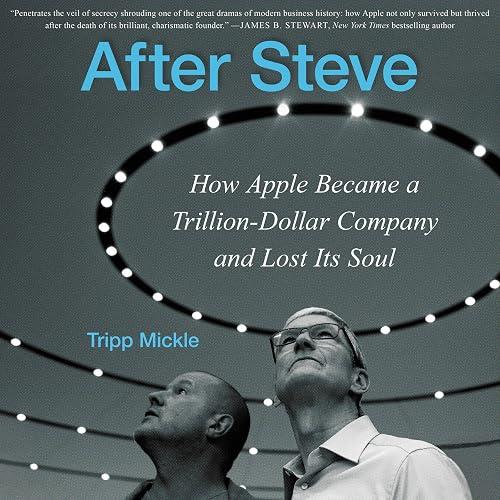
by Tripp Mickle
Premium summary · Opens in the app · 30 min read
Steve Jobs died on October 5, 2011. The news rippled across the world with the force of something inevitable yet still impossible to accept. For years, Apple had been defined by one man's singular vision, his uncompromising taste, his ability to see what others could not. He had rescued the company from near bankruptcy, reinvented entire industries, and created products that changed how billions of people lived, worked, and communicated.
**Author:** Tripp Mickle
**Estimated Reading Time:** 45 minutes
**What You'll Learn:** How Apple navigated the loss of its visionary founder, the internal tensions between design and operations, the strategic shifts that transformed the company's business model, and the human stories behind the products that defined a decade.
**Who This Book Is For:** Anyone who wants to understand what happens when a company built on genius must learn to survive without it, and readers fascinated by the intersection of creativity, leadership, and corporate power.
Steve Jobs died on October 5, 2011. The news rippled across the world with the force of something inevitable yet still impossible to accept. For years, Apple had been defined by one man's singular vision, his uncompromising taste, his ability to see what others could not. He had rescued the company from near bankruptcy, reinvented entire industries, and created products that changed how billions of people lived, worked, and communicated. Then he was gone. The question hanging over Apple in those first days was not whether the company would survive. It was whether Apple could remain Apple without the person who had made it Apple in the first place. Tripp Mickle's account of the years following Jobs's death is not a simple story of decline or triumph. It is something more interesting: a portrait of an institution grappling with the impossible task of replacing irreplaceable genius. The company that emerged under Tim Cook's leadership was financially stronger than ever, becoming the first to reach a trillion-dollar valuation, then two trillion, then three. Yet the nature of its success changed. Apple became less a company that surprised the world and more one that optimized what it already had. This book matters because it addresses a question that extends far beyond Silicon Valley. What happens when a great leader departs? How does an organization preserve its identity while adapting to new realities? Can systems and processes substitute for vision and intuition? The answers are not simple. They involve trade-offs that every institution eventually faces. The tension between creativity and efficiency. The balance between taking risks and protecting what works. The challenge of maintaining standards when the person who set those standards is no longer in the room. Mickle's reporting takes readers inside Apple's design studio, where Jony Ive struggled with burnout and the weight of expectations. It follows Tim Cook as he navigates political pressures in Washington and Beijing. It reveals the internal battles over the Apple Watch, the secretive car project that consumed years and billions of dollars, and the slow transformation of a product company into a services empire. What emerges is not a simple morality tale. Cook was not Jobs, but he was not supposed to…
Continue reading in the MinuteRead app
Get the complete 30-minute summary of After Steve
Get the complete summary in the appApple survived Jobs's death by shifting from vision to execution, from product innovation to operational excellence.
Tim Cook succeeded by being himself, not by trying to be Steve Jobs.
Jony Ive's burnout and departure marked the end of the Jobs-Ive creative partnership that had defined Apple's golden age
The Apple Watch's initial failure as a fashion item and subsequent success as a fitness device revealed the challenges o
China was both Apple's greatest growth opportunity and its greatest strategic vulnerability.
The FBI standoff established privacy as a core part of Apple's brand under Cook.
"After Steve" is a strong fit if you want practical ideas around business, technology, biography, especially themes like apple survived jobs's death by shifting from vision to execution, from product innovation to operational excellence; tim cook succeeded by being himself, not by trying to be steve jobs. The MinuteRead summary distills these concepts into a focused read, whether you're deciding whether to buy the book or applying its lessons at work.
Motivated to help readers with "I immediately fell in love with San Francisco and desperately hope that I can return there sometime in the, Tripp Mickle wrote “After Steve” to package those ideas for a fast, focused read. In “After Steve”, Tripp Mickle focuses on "I immediately fell in love with San Francisco and desperately hope that I can return there sometime in the. Through “After Steve”, Tripp Mickle distills the core ideas on business into lessons readers can absorb in a single short sitti…
Continue Reading
Access the complete 30-minute summary and thousands more nonfiction books in the MinuteRead app.

Continue reading the complete summary in the MinuteRead app.






