MinuteRead
30 min
Book summary
by Project Management Institute
Premium summary · Opens in the app · 30 min read
Most project failures do not happen because people lack technical skills. They happen because people apply the wrong approach to the wrong kind of work. A team building a bridge needs detailed plans, fixed specifications, and sequential execution. A team building a new software product does not. Yet for decades, organizations treated every project as if it were a bridge.
**Author:** Project Management Institute
**Estimated Reading Time:** 45 minutes
**What You'll Learn:** How to understand and apply agile mindsets, values, and principles across different project environments. You will learn how to select the right life cycle approach, build effective teams, measure progress meaningfully, and navigate the organizational changes required for true agility.
**Who This Book Is For:** Project managers, team leads, executives, and practitioners who want to move beyond agile buzzwords and understand how agile thinking actually works in real organizations. Whether you are new to agile or experienced with frameworks like Scrum and Kanban, this guide provides a foundation for making intelligent decisions about when and how to apply agile approaches.
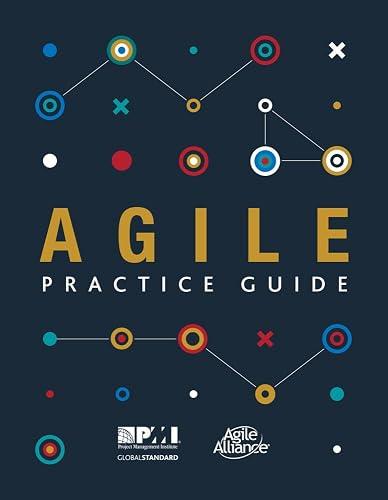
Most project failures do not happen because people lack technical skills. They happen because people apply the wrong approach to the wrong kind of work. A team building a bridge needs detailed plans, fixed specifications, and sequential execution. A team building a new software product does not. Yet for decades, organizations treated every project as if it were a bridge. The Agile Practice Guide exists to address a fundamental mismatch. Traditional project management emerged from industries where requirements could be defined upfront and change was expensive. Construction, manufacturing, aerospace. In those domains, planning ahead makes sense. You cannot pour a foundation and then decide you want a basement instead. But a growing share of modern work operates under very different conditions. The requirements are not fully known. The technology is evolving. The customer's needs shift as they see what is possible. In this environment, detailed upfront planning becomes a liability rather than an asset. Teams spend months writing specifications that become obsolete before the first deliverable ships. This guide from the Project Management Institute represents a significant evolution in how the world's leading project management organization thinks about work. PMI built its reputation on the PMBOK Guide, a comprehensive standard for predictive project management. But the organization recognized that no single approach works for every project. The Agile Practice Guide is PMI's acknowledgment that practitioners need a broader toolkit. The guide does not advocate for agile everywhere. It does not suggest that predictive approaches are obsolete. Instead, it presents a continuum of approaches and helps readers understand where their projects fall on that continuum. Some projects need heavy planning. Some need rapid adaptation. Most need something in between. What makes this guide valuable is its practicality. It does not simply explain agile principles in the abstract. It addresses the real challenges that organizations face when they try to implement agile approaches. How do you choose the right life cycle? What does leadership look like in an agile context? How do you measure progress when the plan itself is…
Continue reading in the MinuteRead app
Get the complete 30-minute summary of Agile Practice Guide
Get the complete summary in the appAgile is a mindset built on values and principles, not a set of practices to be implemented mechanically.
Match your approach to your work. High uncertainty calls for agile. Low uncertainty calls for predictive. Most projects
Lead by serving. Remove obstacles, develop people, and create conditions for team success.
Build small, cross-functional, dedicated teams. This structure eliminates dependencies and speeds delivery.
Deliver value frequently and gather feedback. The cycle of delivery, feedback, and adaptation is the heart of agile.
Hold retrospectives regularly and act on what you learn. Continuous improvement is the most important practice.
"Agile Practice Guide" is a strong fit if you want practical ideas around business, management, reference, especially themes like agile is a mindset built on values and principles, not a set of practices to be implemented mechanically; match your approach to your work. high uncertainty calls for agile. low uncertainty calls for predictive. most projects. The MinuteRead summary distills these concepts into a focused read, whether you're deciding whether to buy the book or applying its lessons at work.
Motivated to help readers with this embodiment of mindset, Project Management Institute wrote “Agile Practice Guide” to package those ideas for a fast, focused read. In “Agile Practice Guide”, Project Management Institute focuses on this embodiment of mindset. Through “Agile Practice Guide”, Project Management Institute distills the core ideas on business into lessons readers can absorb in a single short sitting. Readers turn to this work when they want Project Management Institute's perspective…
Continue Reading
Access the complete 30-minute summary and thousands more nonfiction books in the MinuteRead app.

Continue reading the complete summary in the MinuteRead app.