MinuteRead
30 min
Book summary
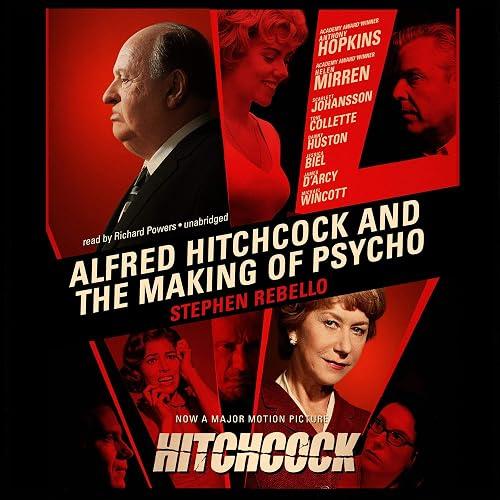
by Stephen Rebello
Premium summary · Opens in the app · 30 min read
In the late autumn of 1957, a deputy sheriff in Plainfield, Wisconsin walked into a farmhouse and stepped into a nightmare that would haunt the American imagination for decades. The home belonged to Ed Gein, a quiet, unassuming bachelor who had lived in the community his entire life. What the deputy found inside defied comprehension: chairs upholstered in human skin, bowls made from human skulls, a belt fashioned from human nipples, and a box of preserved female genitalia. Gein had been robbing
**Author:** Stephen Rebello **Estimated Reading Time:** 2 hours 45 minutes
**What You'll Learn:**
How a real-life horror in rural Wisconsin inspired a novel, how that novel became the obsession of the world's most famous director, and how Alfred Hitchcock risked his fortune and reputation to create a film that changed cinema forever. You will learn about the creative battles, the technical innovations, the psychological insights, and the marketing genius behind one of the most influential movies ever made.
**Who This Book Is For:**
Anyone who has ever watched Psycho and wondered how such a film came to exist. Film lovers who want to understand the craft behind the shock. Creators who want to learn how constraints can fuel innovation. And readers who appreciate the strange alchemy that turns true crime into enduring art.
In the late autumn of 1957, a deputy sheriff in Plainfield, Wisconsin walked into a farmhouse and stepped into a nightmare that would haunt the American imagination for decades. The home belonged to Ed Gein, a quiet, unassuming bachelor who had lived in the community his entire life. What the deputy found inside defied comprehension: chairs upholstered in human skin, bowls made from human skulls, a belt fashioned from human nipples, and a box of preserved female genitalia. Gein had been robbing graves for years, and he had murdered at least two women. The horrors inside that farmhouse were so extreme that newspapers struggled to describe them, often omitting the most disturbing details entirely. The Gein case sent shockwaves through a nation that preferred to believe such monstrosities could only exist in fiction. But for one man living just thirty-nine miles away, the case was more than a headline. Robert Bloch, a writer of horror and suspense stories, found himself deeply unsettled by the proximity of such evil. He wondered how a man could live among neighbors who thought they knew him, only to be revealed as something utterly monstrous. That question would become the seed of a novel called Psycho. Bloch's novel told the story of Norman Bates, a shy motel keeper with a complicated relationship with his mother, and Mary Crane, a woman who steals money and ends up at the wrong place at the wrong time. The book was a departure from the polite mysteries of the era. It dealt with transvestism, necrophilia, matricide, and taxidermy. It killed off its heroine halfway through. It was shocking, disturbing, and deeply psychological. And when it landed on the desk of Alfred Hitchcock, it became something else entirely: an obsession. By 1959, Hitchcock was the most famous director in the world. He had made classics like Rear Window, Vertigo, and North by Northwest. He hosted a popular…
Continue reading in the MinuteRead app
Get the complete 30-minute summary of Alfred Hitchcock and the Making of Psycho
Get the complete summary in the appEvil often hides in plain sight, wearing the face of the familiar.
Creative risk is essential for artistic growth.
Constraints can be the source of innovation.
The power of suggestion is more frightening than explicit depiction.
Breaking narrative conventions creates powerful effects.
Collaboration is essential to great creative work.
"Alfred Hitchcock and the Making of Psycho" is a strong fit if you want practical ideas around film, history, biography, especially themes like evil often hides in plain sight, wearing the face of the familiar; creative risk is essential for artistic growth. The MinuteRead summary distills these concepts into a focused read, whether you're deciding whether to buy the book or applying its lessons at work.
Motivated to help readers with the Gein farmhouse offered testimony not only to man’s fathomless capacity for the barbaric, Stephen Rebello wrote “Alfred Hitchcock and the Making of Psycho” to package those ideas for a fast, focused read. In “Alfred Hitchcock and the Making of Psycho”, Stephen Rebello focuses on the Gein farmhouse offered testimony not only to man’s fathomless capacity for the barbaric. Through “Alfred Hitchcock and the Making of Psycho”, Stephen Rebello distills the core ideas …
Continue Reading
Access the complete 30-minute summary and thousands more nonfiction books in the MinuteRead app.

Continue reading the complete summary in the MinuteRead app.