 MinuteRead
30 min
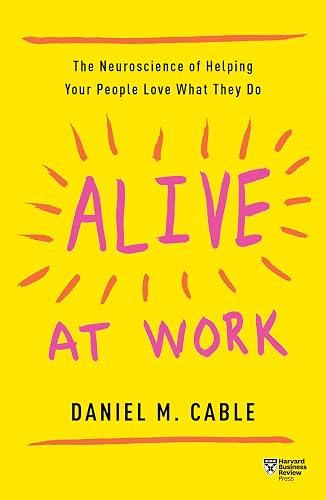
Book summary
by Daniel M. Cable
Premium summary · Opens in the app · 30 min read
Most people do not hate their jobs. That would require energy. What they feel is something quieter and more corrosive: a dull sense of going through the motions, of performing tasks without curiosity, of waiting for the day to end. Gallup has tracked employee engagement for decades, and the numbers remain stubbornly flat. Around two-thirds of workers in developed economies describe themselves as disengaged. They show up. They complete their tasks. They collect their paychecks. But the part of th
**Author:** Daniel M. Cable **Estimated Reading Time:** 45 minutes
Why so many people feel deadened by their jobs despite working in comfortable offices with good pay. How the biology of your brain explains disengagement better than any personality test. What specific practices can wake up the natural curiosity and drive that most organizations accidentally suppress. How leaders can create conditions where people bring their full selves to work without sacrificing accountability or results.
Managers who sense their teams are going through the motions. Employees who remember being excited about work but cannot recall when they last felt that way. Leaders who suspect that control-based management has reached its limits. Anyone curious about why intelligent, capable people so often feel bored, anxious, or checked out at work, and what can be done about it.
Most people do not hate their jobs. That would require energy. What they feel is something quieter and more corrosive: a dull sense of going through the motions, of performing tasks without curiosity, of waiting for the day to end. Gallup has tracked employee engagement for decades, and the numbers remain stubbornly flat. Around two-thirds of workers in developed economies describe themselves as disengaged. They show up. They complete their tasks. They collect their paychecks. But the part of them that wonders, explores, and cares has gone dormant. This is strange when you think about it. Modern workplaces are safer, cleaner, and more comfortable than at any point in history. Pay has risen. Benefits exist. Coffee is often free. And yet the human beings inside these workplaces seem less alive than their counterparts a century ago, who worked longer hours in more dangerous conditions for less money. Daniel Cable, a professor of organizational behavior at London Business School, argues that the problem is not laziness or a generational decline in work ethic. The problem is biological. Human brains contain a system that drives exploration, learning, and meaning-making. Scientists call it the seeking system. When this system is active, people feel curious, motivated, and full of purpose. When it is suppressed, they feel bored, anxious, and empty. The modern workplace, designed during the Industrial Revolution to maximize control and efficiency, accidentally suppresses this system on a massive scale. The Industrial Revolution gave us incredible productivity. It also gave us a model of management built on standardization, specialization, and supervision. Workers were treated as interchangeable parts in a machine. Their job was to follow instructions, not to think. Their curiosity was a liability, not an asset. This model made sense when the goal was producing identical products at scale. It makes far less sense in an economy that demands innovation, adaptability, and continuous learning. Cable's insight is that disengagement…
Continue reading in the MinuteRead app
Get the complete 30-minute summary of Alive at Work
Get the complete summary in the appDisengagement is a biological state, not a personal failing. The seeking system in the brain drives curiosity, learning,
Modern management practices were designed for factories. They prioritize control and efficiency over engagement. These p
Best-self activation helps people connect with their unique strengths. It improves performance and retention by signalin
Self-expression creates psychological safety. When people feel they can be themselves, they take more risks and collabor
Play is a catalyst for learning. It reduces fear and encourages experimentation. Purposeful play can generate real insig
Organizations need both freedom and structure. The goal is freedom within a frame: clear boundaries with room to explore
"Alive at Work" is a strong fit if you want practical ideas around business, psychology, leadership, especially themes like disengagement is a biological state, not a personal failing. the seeking system in the brain drives curiosity, learning,; modern management practices were designed for factories. they prioritize control and efficiency over engagement. these p. The MinuteRead summary distills these concepts into a focused read, whether you're deciding whether to buy the book or applying its lessons at work.
Motivated to help readers with “When the seeking systems are not active, Daniel M. Cable wrote “Alive at Work” to package those ideas for a fast, focused read. In “Alive at Work”, Daniel M. Cable focuses on “When the seeking systems are not active. Through “Alive at Work”, Daniel M. Cable distills the core ideas on business into lessons readers can absorb in a single short sitting. Readers turn to this work when they want Daniel M. Cable's perspective on the subject without working through the e…
Continue Reading
Access the complete 30-minute summary and thousands more nonfiction books in the MinuteRead app.

Continue reading the complete summary in the MinuteRead app.






