MinuteRead
30 min
Book summary
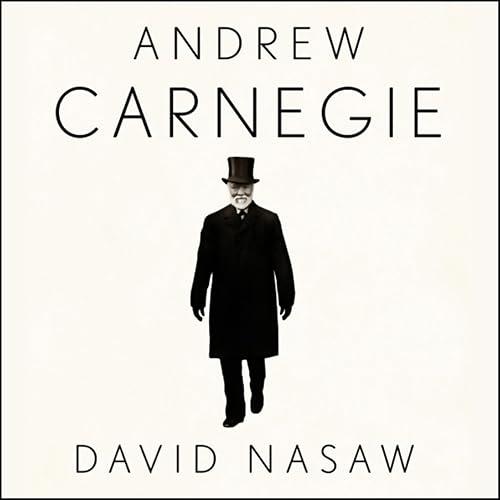
by David Nasaw
Premium summary · Opens in the app · 30 min read
Andrew Carnegie was born in 1835 in a weaver's cottage in Dunfermline, Scotland. His father was a skilled handloom weaver whose craft was being destroyed by the steam-powered factories of the industrial revolution. His mother was the daughter of a shoemaker who had known better days. The family was not starving, but they were sliding. Slowly, inexorably, the bottom was falling out of their world.
**Author:** David Nasaw **Estimated Reading Time:** 42 minutes
The complete story of how a poor Scottish immigrant became the wealthiest man in America, the principles that drove his extraordinary rise, the contradictions that defined his character, and the philosophy of wealth that reshaped philanthropy forever.
This book is for anyone who wants to understand the real Andrew Carnegie beyond the myths. For entrepreneurs studying how great fortunes are built, for readers interested in the industrial revolution that made modern America, and for anyone wrestling with the relationship between wealth, power, and social responsibility.
Andrew Carnegie was born in 1835 in a weaver's cottage in Dunfermline, Scotland. His father was a skilled handloom weaver whose craft was being destroyed by the steam-powered factories of the industrial revolution. His mother was the daughter of a shoemaker who had known better days. The family was not starving, but they were sliding. Slowly, inexorably, the bottom was falling out of their world. When Andrew was twelve years old, the family sold everything they could, borrowed money from relatives, and sailed for America. They settled in Allegheny, Pennsylvania, across the river from Pittsburgh. Young Andrew went to work immediately, first as a bobbin boy in a cotton factory, then as a telegraph messenger, then as a telegraph operator. He was thirteen years old when he started. He would never attend school again. What happened over the next five decades is one of the most remarkable stories in American history. Carnegie rose from that cotton factory to become the richest man in the world. He built the largest steel company on earth. He sold it to J.P. Morgan in 1901 for $480 million, which would be roughly $15 billion today. Then he spent the last two decades of his life giving almost all of it away. But David Nasaw's biography is not a simple rags-to-riches story. It is a deeply researched, unflinching portrait of a complicated man. Carnegie was a ruthless businessman who crushed competitors and drove workers hard, yet he wrote essays about the dignity of labor and the rights of workingmen. He was a champion of democracy who socialized with kings and prime ministers. He was an anti-imperialist who made his fortune selling steel for battleships and cannons. He was a man of peace who built the infrastructure of war. The problem with most accounts of Carnegie is that they flatten him into a caricature. He becomes either the heroic industrialist who embodied the American dream or the hypocritical tycoon who preached philanthropy while exploiting workers. Nasaw refuses both simplifications. He gives us Carnegie in full: ambitious, brilliant, generous, vain, contradictory, and deeply human. This matters because Carnegie's story is not just about one…
Continue reading in the MinuteRead app
Get the complete 30-minute summary of Andrew Carnegie
Get the complete summary in the appAndrew Carnegie rose from poverty to become the richest man in the world through a combination of ambition, self-educati
Carnegie's success depended on opportunity as much as effort. He arrived in America at the right moment, with access to
Self-education was Carnegie's competitive advantage. He read voraciously, memorized poetry, and joined discussion groups
Strategic relationships were central to Carnegie's rise. His connection to Thomas Scott and J. Edgar Thomson at the Penn
Carnegie built his steel empire through vertical integration, cost accounting, and technological innovation. He controll
The Gospel of Wealth argued that the rich should give away their fortunes during their lifetimes. "The man who dies rich
"Andrew Carnegie" is a strong fit if you want practical ideas around biography, history, business, especially themes like andrew carnegie rose from poverty to become the richest man in the world through a combination of ambition, self-educati; carnegie's success depended on opportunity as much as effort. he arrived in america at the right moment, with access to. The MinuteRead summary distills these concepts into a focused read, whether you're deciding whether to buy the book or applying its lessons at work.
Motivated to turn hard-won expertise into something readers can use every day, David Nasaw wrote “Andrew Carnegie” to distill the ideas behind the work into clear, actionable lessons. Through “Andrew Carnegie”, David Nasaw distills the core ideas on biography into lessons readers can absorb in a single short sitting. Readers turn to this work when they want David Nasaw's perspective on the subject without working through the entire original volume. The book is structured so each chapter highligh…
Continue Reading
Access the complete 30-minute summary and thousands more nonfiction books in the MinuteRead app.

Continue reading the complete summary in the MinuteRead app.