 MinuteRead
30 min
Book summary
by Chris Green
Premium summary · Opens in the app · 30 min read
Every day, millions of products are sold at prices that do not reflect their true market value. A toy sits on a clearance shelf at a department store for seven dollars while the same toy sells on Amazon for twenty-three. A kitchen gadget marked down at a regional retailer goes unnoticed by shoppers who would happily pay double online. A book that has been sitting in a thrift store for weeks is worth forty dollars to a collector in another state.
**Author:** Chris Green
**Estimated Reading Time:** 42 minutes
**What You'll Learn:**
- How to identify profitable price differences across retail and online markets - Why Amazon FBA changes the economics of small-scale selling - How to price strategically without racing to the bottom - How to source products from both physical stores and online platforms - How to manage risk and scale your arbitrage business
**Who This Book Is For:**
This book is for anyone who has ever noticed that the same product sells for different prices in different places and wondered whether that gap could become a business. It is for the person scanning clearance aisles with a phone in hand, the side hustler looking for a scalable model, and the entrepreneur who wants to understand how Amazon's fulfillment infrastructure can turn a spare bedroom operation into a serious income stream.
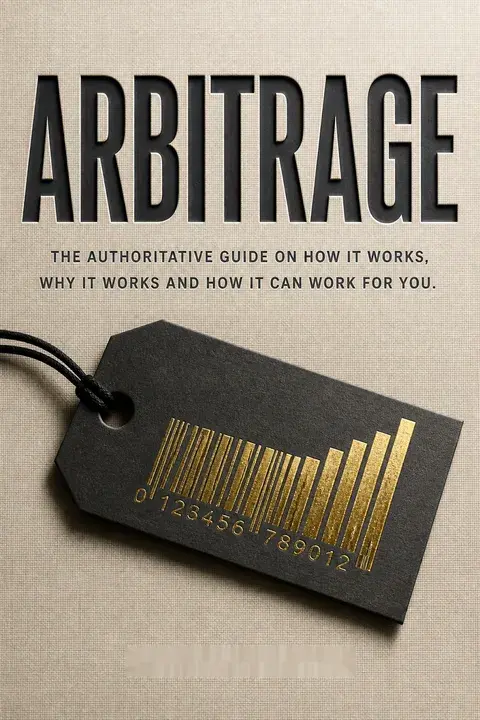
Every day, millions of products are sold at prices that do not reflect their true market value. A toy sits on a clearance shelf at a department store for seven dollars while the same toy sells on Amazon for twenty-three. A kitchen gadget marked down at a regional retailer goes unnoticed by shoppers who would happily pay double online. A book that has been sitting in a thrift store for weeks is worth forty dollars to a collector in another state. These gaps exist because markets are not perfectly efficient. Information travels unevenly. Physical stores need to clear inventory to make room for new stock. Regional preferences create surpluses in one area and shortages in another. Online shoppers value convenience and speed in ways that brick-and-mortar discounters do not fully capture. The practice of exploiting these gaps is called arbitrage. It is one of the oldest money-making strategies in existence, and it is also one of the most accessible. You do not need to invent a product. You do not need to build a brand. You do not need a warehouse, a shipping department, or a customer service team. You need only the ability to see what others overlook and the willingness to act on what you see. Chris Green wrote this book for people who want to understand arbitrage not as an abstract financial concept but as a practical, hands-on business model. His focus is Amazon, and specifically Fulfillment by Amazon, the program that allows independent sellers to store their inventory in Amazon's warehouses and let Amazon handle the picking, packing, shipping, and customer service. The problem most people face when they first encounter the idea of arbitrage is not a lack of opportunity. The opportunities are everywhere. The problem is that they do not know how to evaluate what they find. They see a discounted product…
Continue reading in the MinuteRead app
Get the complete 30-minute summary of Arbitrage
Get the complete summary in the appArbitrage is buying low in one market and selling high in another.
FBA removes the logistical constraints that limit small sellers.
Margin matters more than volume.
Amazon customers value convenience and speed, not just price.
Sales Rank is a snapshot of recent sales, not a predictor.
Hold your price when Amazon competes. Their inventory is not infinite.
"Arbitrage" is a strong fit if you want practical ideas around business, entrepreneurship, amazon, especially themes like arbitrage is buying low in one market and selling high in another; fba removes the logistical constraints that limit small sellers. The MinuteRead summary distills these concepts into a focused read, whether you're deciding whether to buy the book or applying its lessons at work.
Motivated to help readers with the practice of taking advantage of a price difference between two or more markets, Chris Green wrote “Arbitrage” to package those ideas for a fast, focused read. In “Arbitrage”, Chris Green focuses on the practice of taking advantage of a price difference between two or more markets. Through “Arbitrage”, Chris Green distills the core ideas on business into lessons readers can absorb in a single short sitting. Readers turn to this work when they want Chris Green's …
Continue Reading
Access the complete 30-minute summary and thousands more nonfiction books in the MinuteRead app.

Continue reading the complete summary in the MinuteRead app.






