MinuteRead
30 min
Book summary
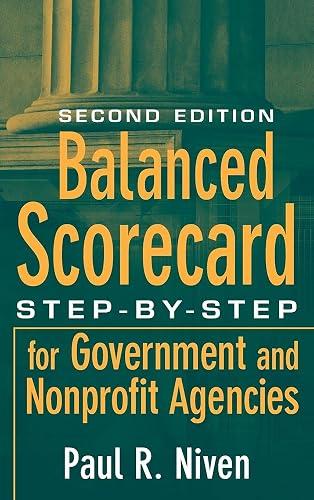
by Paul R. Niven
Premium summary · Opens in the app · 30 min read
Every year, organizations around the world spend billions of dollars developing strategies. They hold offsite retreats, hire consultants, and produce thick binders filled with vision statements, market analyses, and ambitious goals. Then, with great ceremony, the strategy is announced. Employees nod. Executives congratulate one another. And within months, nothing has changed.
### Maximizing Performance and Maintaining Results
**Author:** Paul R. Niven
**Estimated Reading Time:** 45 minutes
**What You'll Learn:**
* Why financial measures alone cannot guide a modern organization * How to build a Balanced Scorecard from vision to implementation * How to use Strategy Maps to visualize cause-and-effect relationships * How to cascade the Scorecard through every level of your organization * How to link strategy to budgets, initiatives, and daily work
**Who This Book Is For:**
Executives, managers, and team leaders who want to move beyond measuring performance and start managing strategy. This book is for anyone who has ever watched a brilliant strategy fail because no one could translate it into action.
Every year, organizations around the world spend billions of dollars developing strategies. They hold offsite retreats, hire consultants, and produce thick binders filled with vision statements, market analyses, and ambitious goals. Then, with great ceremony, the strategy is announced. Employees nod. Executives congratulate one another. And within months, nothing has changed. The strategy sits on a shelf. The daily work of the organization continues exactly as before. The bold vision quietly fades into memory, replaced by the urgent demands of the quarter. This is not a rare failure. It is the norm. Studies consistently show that the majority of strategies are never successfully executed. The gap between strategy formulation and strategy implementation is one of the most persistent and expensive problems in modern management. Paul Niven wrote Balanced Scorecard Step-by-Step to close that gap. The book emerged from a simple observation: organizations do not fail because they lack strategy. They fail because they lack a system for translating strategy into action. They measure the wrong things. They reward the wrong behaviors. They cannot connect the daily work of employees to the long-term goals of the enterprise. The Balanced Scorecard, developed by Robert Kaplan and David Norton in the early 1990s, was designed to solve this problem. But Niven recognized that many organizations adopted the Scorecard as a measurement tool without understanding its deeper potential. They added a few non-financial metrics to their dashboards and declared victory. They missed the point entirely. The real power of the Balanced Scorecard lies in its ability to describe strategy. A well-constructed Scorecard tells the story of how an organization intends to create value. It connects the intangible assets that drive modern business, things like employee skills, customer relationships, and innovation, to the financial outcomes that ultimately determine success. It creates a line of sight from the front line to the bottom line. This condensed edition walks you through the entire process. You will learn why traditional measurement systems fail, how the four perspectives of the Scorecard work together, how to…
Continue reading in the MinuteRead app
Get the complete 30-minute summary of Balanced Scorecard Step-by-Step
Get the complete summary in the appFinancial measures alone cannot guide a modern organization. They describe the past, not the future.
The Balanced Scorecard organizes performance into four perspectives: Financial, Customer, Internal Process, and Learning
The four perspectives are linked in a causal chain. Learning and Growth drives Internal Process, which drives Customer o
A Strategy Map is a one-page visual representation of your strategy. If you cannot draw it, your strategy is not clear.
Cascading the Scorecard creates alignment and line of sight from the executive suite to the front line.
Targets transform measures into management tools. Every measure needs a target.
"Balanced Scorecard Step-by-Step" is a strong fit if you want practical ideas around business, management, leadership, especially themes like financial measures alone cannot guide a modern organization. they describe the past, not the future; the balanced scorecard organizes performance into four perspectives: financial, customer, internal process, and learning. The MinuteRead summary distills these concepts into a focused read, whether you're deciding whether to buy the book or applying its lessons at work.
Motivated to help readers with "The Balanced Scorecard has emerged as a proven and effective tool in our quest to capture, Paul R. Niven wrote “Balanced Scorecard Step-by-Step” to package those ideas for a fast, focused read. In “Balanced Scorecard Step-by-Step”, Paul R. Niven focuses on "The Balanced Scorecard has emerged as a proven and effective tool in our quest to capture. Through “Balanced Scorecard Step-by-Step”, Paul R. Niven distills the core ideas on business into lessons readers can a…
Continue Reading
Access the complete 30-minute summary and thousands more nonfiction books in the MinuteRead app.

Continue reading the complete summary in the MinuteRead app.