 MinuteRead
30 min
Book summary
by Brett King
Premium summary · Opens in the app · 30 min read
In 1994, Bill Gates made a statement that sent ripples through the financial world. "Banking is necessary," he said, "but banks are not."
**Author:** Brett King
**Estimated Reading Time:** 45 minutes
**What You'll Learn:**
- Why the traditional branch-based banking model is collapsing - How customer behavior has fundamentally changed in the digital age - What technologies are reshaping financial services - How to build a bank that survives the next decade - What banking will look like when it becomes invisible
**Who This Book Is For:**
This book is for banking professionals who sense the ground shifting beneath them. It is for executives who know that adding a mobile app to an old business model is not a strategy. It is for entrepreneurs building financial products. It is for anyone who wants to understand why the way we handle money is changing faster than most institutions can keep up.
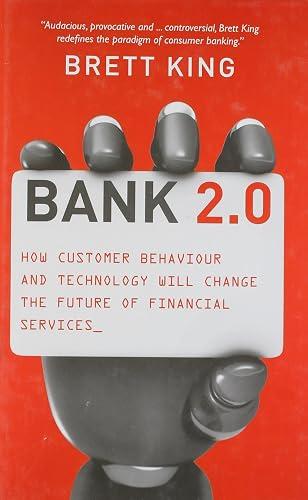
In 1994, Bill Gates made a statement that sent ripples through the financial world. "Banking is necessary," he said, "but banks are not." At the time, most bankers dismissed the comment as the arrogance of a technology billionaire who did not understand their industry. Banking had survived centuries. It had survived wars, depressions, and financial crises. Why would a software company pose a threat? Fast forward to today, and Gates's observation looks less like arrogance and more like prophecy. The fundamental problem is simple. People need banking services. They need somewhere to store money, a way to pay for things, access to credit, and tools to manage their financial lives. What they do not necessarily need is a physical building with tellers, paper forms, and limited hours. They do not need to plan their day around a visit to a branch. They do not need to wait on hold to speak with a customer service representative. The services are essential. The traditional delivery mechanism is not. Brett King wrote Bank 2.0 to capture a moment of profound transition. The book, first published in 2010 and updated in subsequent editions, argues that the banking industry was approaching a tipping point. The old model, built on branches and face-to-face relationships, was becoming unsustainable. The new model, built on digital channels and customer-centric design, was emerging rapidly. The challenge King identified was not primarily technological. The technology existed. Smartphones were spreading. Broadband internet was becoming ubiquitous. The tools to build digital banking experiences were available. The real challenge was organizational and cultural. Banks were structured for a world that no longer existed. Consider the typical bank branch. It is open from nine to five, Monday through Friday, with perhaps a few Saturday hours. It requires customers to travel to a physical location, wait in line, and interact with staff who are often measured on sales targets rather than service quality. The entire experience is designed around…
Continue reading in the MinuteRead app
Get the complete 30-minute summary of Bank 2.0
Get the complete summary in the appBanking is necessary, but banks are not. The services are essential. The traditional delivery mechanism is not.
The customer is in control. They expect the same experience from their bank that they get from Amazon, Google, and Apple
The branch must evolve. It can no longer be the primary channel for transactions. It must become a space for advice and
Mobile is the primary interface. The phone will replace the wallet, the card, and the branch.
Channels must be integrated. Customers do not think in terms of channels. They think in terms of tasks.
Data is the new currency. Banks that master data and analytics will have a significant competitive advantage.
"Bank 2.0" is a strong fit if you want practical ideas around business, finance, technology, especially themes like banking is necessary, but banks are not. the services are essential. the traditional delivery mechanism is not; the customer is in control. they expect the same experience from their bank that they get from amazon, google, and apple. The MinuteRead summary distills these concepts into a focused read, whether you're deciding whether to buy the book or applying its lessons at work.
Motivated to help readers with "Banking is necessary, Brett King wrote “Bank 2.0” to package those ideas for a fast, focused read. In “Bank 2.0”, Brett King focuses on "Banking is necessary. Through “Bank 2.0”, Brett King distills the core ideas on business into lessons readers can absorb in a single short sitting. Readers turn to this work when they want Brett King's perspective on the subject without working through the entire original volume. Brett King (born 24 April 1968 in Melbourne, Austr…
View all summaries by Brett KingContinue Reading
Access the complete 30-minute summary and thousands more nonfiction books in the MinuteRead app.

Continue reading the complete summary in the MinuteRead app.






