 MinuteRead
30 min
Book summary
by Alex J. Gutman
Premium summary · Opens in the app · 30 min read
Every day, decisions worth millions of dollars are made based on data that nobody questioned. A marketing team launches a campaign because a dashboard said sentiment was trending positive. A hospital changes its triage procedures because an algorithm showed a pattern. A hiring manager rejects candidates because a model flagged them as risky. The data said so. The model recommended it. The numbers don't lie.
**Author:** Alex J. Gutman and Jordan Goldmeier
**Estimated Reading Time:** 45 minutes
**What You'll Learn:** How to think critically about data, statistics, and machine learning without writing a single line of code. You'll discover how to ask sharper questions, spot flawed analyses, and communicate more effectively with technical teams.
**Who This Book Is For:** Business professionals, managers, executives, and curious minds who work with data or data people but feel unprepared to challenge results, evaluate claims, or separate signal from noise.
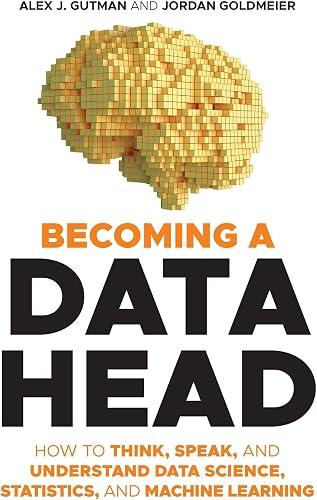
Every day, decisions worth millions of dollars are made based on data that nobody questioned. A marketing team launches a campaign because a dashboard said sentiment was trending positive. A hospital changes its triage procedures because an algorithm showed a pattern. A hiring manager rejects candidates because a model flagged them as risky. The data said so. The model recommended it. The numbers don't lie. Except they do. Not because data is inherently deceptive, but because the people interpreting it often lack the skills to interrogate what they're seeing. They accept results at face value. They confuse correlation with causation. They treat statistically significant findings as practically meaningful. They assume that because a computer produced the answer, the answer must be right. This is the quiet crisis running through modern organizations. A 2019 survey by Splunk found that 98% of executives agreed that data skills matter for their workforce. Yet 67% of those same executives admitted they felt uncomfortable using data themselves. More than half believed they were too old to learn. The people making the biggest decisions feel the least equipped to understand the evidence behind those decisions. The authors call this data defeatism. It's the belief that data literacy requires a technical background, that statistics is for statisticians, that machine learning is too complex for ordinary mortals to grasp. This belief is wrong, and it's expensive. Alex Gutman and Jordan Goldmeier wrote this book to occupy a middle ground that barely existed before. On one side sit the hype-peddling business books that promise data will transform everything if you just believe hard enough. On the other side sit the intimidating technical tomes, five hundred pages of equations and code that assume you already have a statistics degree. Neither serves the professional who needs to understand enough to ask good questions, challenge bad assumptions, and make better decisions. The term Data Head describes this person. A Data Head is anyone who can think critically about data, speak intelligently about statistics and machine learning, and ask sharp questions without building the models themselves. A Data Head doesn't need to code. A Data Head doesn't need a PhD. A Data Head needs curiosity, humility, and a framework for thinking clearly…
Continue reading in the MinuteRead app
Get the complete 30-minute summary of Becoming a Data Head
Get the complete summary in the app**Ask about the problem before the data.** Why is this important? Who will act differently based on the results?
**Everything varies.** Most fluctuations are noise. Don't react to random variation.
**Demand the data's origin story.** Who collected it? How? What's missing?
**Always ask about the base rate.** A 99% accurate test can be a coin flip if the condition is rare.
**Statistical significance is not practical importance.** Ask about effect size, not just p-values.
**Accuracy is misleading when classes are imbalanced.** Compare to the majority-class baseline.
"Becoming a Data Head" is a strong fit if you want practical ideas around business, technology, science, especially themes like **ask about the problem before the data.** why is this important? who will act differently based on the results?; **everything varies.** most fluctuations are noise. don't react to random variation. The MinuteRead summary distills these concepts into a focused read, whether you're deciding whether to buy the book or applying its lessons at work.
Motivated to help readers with the book's thesis is that data literacy is a thinking skill, Alex J. Gutman wrote “Becoming a Data Head” to package those ideas for a fast, focused read. In “Becoming a Data Head”, Alex J. Gutman focuses on the book's thesis is that data literacy is a thinking skill. Through “Becoming a Data Head”, Alex J. Gutman distills the core ideas on business into lessons readers can absorb in a single short sitting. Readers turn to this work when they want Alex J. Gutman's p…
Continue Reading
Access the complete 30-minute summary and thousands more nonfiction books in the MinuteRead app.

Continue reading the complete summary in the MinuteRead app.






