MinuteRead
30 min
Book summary
Premium summary · Opens in the app · 30 min read
Most people know two versions of Steve Jobs. The first is the young genius in the garage, the visionary who gave us the Macintosh and then got pushed out of his own company. The second is the older, turtlenecked sage who returned to Apple and delivered the iMac, the iPod, the iPhone, and the iPad before his tragic death. The popular narrative treats these two Steves as essentially the same person, separated only by time and circumstance.
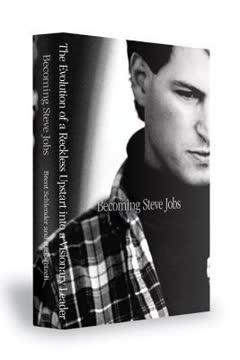
**Author:** Brent Schlender with Rick Tetzeli
**Estimated Reading Time:** 45 minutes
**What You'll Learn:** The real story behind Steve Jobs' transformation from a brash, impulsive young founder into the visionary leader who reshaped multiple industries. You will discover how failure, exile, and personal growth forged the maturity that made Apple's greatest achievements possible. This is not a story of innate genius, but of a human being who learned, slowly and painfully, how to become the leader the world now remembers.
**Who This Book Is For:** Anyone who believes that great leadership is born, not made. Anyone who has ever failed and wondered if redemption is possible. Anyone who wants to understand the actual Steve Jobs, not the caricature of saint or monster, but the complex, evolving person who changed how we live and work.
Most people know two versions of Steve Jobs. The first is the young genius in the garage, the visionary who gave us the Macintosh and then got pushed out of his own company. The second is the older, turtlenecked sage who returned to Apple and delivered the iMac, the iPod, the iPhone, and the iPad before his tragic death. The popular narrative treats these two Steves as essentially the same person, separated only by time and circumstance. This book argues that they were not the same person at all. The Steve Jobs who returned to Apple in 1997 was fundamentally different from the one who had been forced out twelve years earlier. He had not simply aged. He had been reshaped by failure, by the humbling experience of irrelevance, by the slow work of building two other companies, and by the ordinary human experiences of marriage and fatherhood. The problem with the standard story is that it flattens a human being into a myth. It suggests that Jobs arrived fully formed, that his success was inevitable, that his brilliance was a fixed trait rather than something he cultivated over decades. This version of events is not only inaccurate. It is also useless. If Jobs was simply born a genius, then there is nothing to learn from his life. If his story is one of innate talent meeting destiny, then the rest of us can only watch in admiration. But the real story is far more interesting and far more valuable. Jobs was not born a great leader. He became one. And he became one through a process that was messy, nonlinear, and deeply human. He made catastrophic mistakes. He hurt people unnecessarily. He was exiled from the company he founded. He spent years in the wilderness, trying to prove himself again. And somewhere in that wilderness, he began to change. Brent Schlender covered Jobs for nearly…
Continue reading in the MinuteRead app
Get the complete 30-minute summary of Becoming Steve Jobs
Get the complete summary in the appSteve Jobs became great. He was not born that way. His most important qualities were developed over decades of trial, er
The exile from Apple was the best thing that ever happened to him. It forced him to learn the skills he had lacked durin
Pixar taught Jobs how to nurture creative talent. He learned that his role was not to be the visionary, but to protect a
Design is a moral commitment to the user. Simplicity is not about removing visual elements. It is about removing anythin
The reality distortion field is a double-edged sword. It can inspire extraordinary achievement or enable dangerous denia
Great products require both creative freedom and operational discipline. The leader's job is to hold these two forces in
"Becoming Steve Jobs" is a strong fit if you want practical ideas around biography, business, technology, especially themes like steve jobs became great. he was not born that way. his most important qualities were developed over decades of trial, er; the exile from apple was the best thing that ever happened to him. it forced him to learn the skills he had lacked durin. The MinuteRead summary distills these concepts into a focused read, whether you're deciding whether to buy the book or applying its lessons at work.
Brent Schlender is a veteran tech journalist known for his in-depth profiles of Silicon Valley leaders. He wrote for The Wall Street Journal and FORTUNE magazine, covering prominent figures like Steve Jobs, Bill Gates, and Andy Grove. Schlender's work is characterized by intimate access to subjects and extensive background knowledge. He co-authored "Becoming Steve Jobs" with Rick Tetzeli, drawing on his long-standing relationship with Jobs. Schlender has received recognition for his journalism, …
View all summaries by Brent SchlenderContinue Reading
Access the complete 30-minute summary and thousands more nonfiction books in the MinuteRead app.

Continue reading the complete summary in the MinuteRead app.