 MinuteRead
30 min
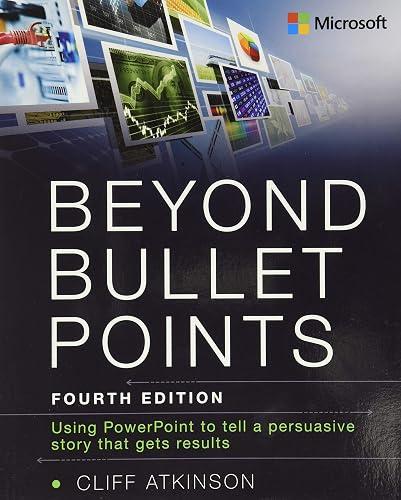
Book summary
by Cliff Atkinson
Premium summary · Opens in the app · 30 min read
The modern presentation is broken. Millions of people open PowerPoint every day, type bullet points onto slides, and then stand in front of audiences who struggle to stay awake. The tool that was supposed to make communication easier has somehow made it harder. We have all been on both sides of this problem. We have created presentations that felt flat and uninspired. We have sat through presentations that left us confused, bored, or overwhelmed. Something is fundamentally wrong with the way we
**Author:** Cliff Atkinson
**Estimated Reading Time:** 45 minutes
**What You'll Learn:**
- Why most presentations fail before you even open PowerPoint - How working memory shapes what your audience can actually absorb - A proven three-act structure that turns any presentation into a compelling story - How to design slides that support your message instead of competing with it - Practical techniques for delivering presentations with confidence in any setting
**Who This Book Is For:**
Anyone who has ever sat through a soul-crushing presentation and wondered if there was a better way. Whether you are a business professional pitching a proposal, a teacher explaining complex material, a lawyer arguing a case, or a salesperson trying to win a client, this book offers a fundamentally different approach. If you suspect that your slides are not working as hard as you are, this book will show you why and what to do about it.
The modern presentation is broken. Millions of people open PowerPoint every day, type bullet points onto slides, and then stand in front of audiences who struggle to stay awake. The tool that was supposed to make communication easier has somehow made it harder. We have all been on both sides of this problem. We have created presentations that felt flat and uninspired. We have sat through presentations that left us confused, bored, or overwhelmed. Something is fundamentally wrong with the way we think about presentations. The root of the problem is not laziness or lack of skill. It is a misunderstanding of how the human mind processes information. Most presenters assume that if they put enough information on their slides, the audience will absorb it. They treat slides like documents, cramming them with text, data, and bullet points. Then they read those slides aloud, creating a redundant and exhausting experience. The audience is forced to choose between reading the slide and listening to the speaker. In most cases, they do neither well. Cliff Atkinson, a former journalist and communications consultant, recognized this problem and set out to find a better way. His investigation led him to cognitive science, where he discovered research that explains why traditional presentations fail. The human brain has severe limitations on how much new information it can process at any given moment. Working memory, the mental workspace where we hold and manipulate new information, can only handle a few items at a time. When presenters overload that workspace, the audience simply stops processing. They check their phones. They daydream. They wait for it to end. Atkinson's insight was to apply these cognitive principles to presentation design. He developed a method he calls Beyond Bullet Points, or BBP, which treats presentations not as documents to…
Continue reading in the MinuteRead app
Get the complete 30-minute summary of Beyond Bullet Points
Get the complete summary in the appWorking memory can hold only three to four chunks of new information at a time. Respect this limit in every presentation
Structure your presentation as a three-act story: setup, development, and resolution.
Act I must establish the setting, the audience's role, the challenge, the desired outcome, and the call to action.
The gap between Point A (the problem) and Point B (the goal) creates the tension that drives engagement.
Limit Act II to three or four key points. Each point should be a complete sentence stating a compelling reason.
Each slide should contain one idea expressed in a headline, paired with a relevant visual.
"Beyond Bullet Points" is a strong fit if you want practical ideas around business, reference, design, especially themes like working memory can hold only three to four chunks of new information at a time. respect this limit in every presentation; structure your presentation as a three-act story: setup, development, and resolution. The MinuteRead summary distills these concepts into a focused read, whether you're deciding whether to buy the book or applying its lessons at work.
Motivated to help readers with working memory is severely limited in its capacity to process new information, Cliff Atkinson wrote “Beyond Bullet Points” to package those ideas for a fast, focused read. In “Beyond Bullet Points”, Cliff Atkinson focuses on working memory is severely limited in its capacity to process new information. Through “Beyond Bullet Points”, Cliff Atkinson distills the core ideas on business into lessons readers can absorb in a single short sitting. Readers turn to this wo…
Continue Reading
Access the complete 30-minute summary and thousands more nonfiction books in the MinuteRead app.

Continue reading the complete summary in the MinuteRead app.






