 MinuteRead
30 min
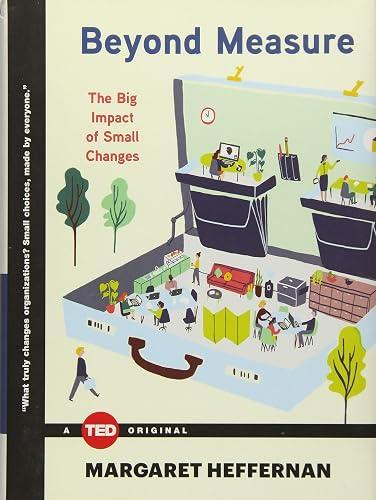
Book summary
by Margaret Heffernan
Premium summary · Opens in the app · 30 min read
Every organization says it wants innovation. Every leader claims to value creativity. Every company declares that its people are its greatest asset. Yet most workplaces are designed to suppress the very qualities they claim to prize.
**Author:** Margaret Heffernan
**Estimated Reading Time:** 45 minutes
**What You'll Learn:**
- Why the smartest teams are not the ones with the highest IQs - How conflict, properly harnessed, becomes an organization's greatest asset - Why social capital matters more than intellectual capital - What really drives innovation and resilience in companies - How to build a culture where people think for themselves
**Who This Book Is For:**
This book is for leaders who sense that something is broken in how we work. It is for managers tired of chasing productivity hacks that do not work. It is for anyone who has ever sat in a meeting where everyone nodded but nobody agreed. And it is for those who suspect that the best ideas in their organization are being silenced by politeness, hierarchy, or fear.
Every organization says it wants innovation. Every leader claims to value creativity. Every company declares that its people are its greatest asset. Yet most workplaces are designed to suppress the very qualities they claim to prize. Think about how most organizations actually operate. Meetings are structured to avoid disagreement. Employees are rewarded for compliance rather than challenge. Hierarchies ensure that ideas flow upward only when they confirm what leaders already believe. Dissent is treated as disloyalty. Questions are seen as signs of weakness. The result is a strange paradox: companies filled with smart, capable people who collectively produce mediocre results. Margaret Heffernan spent years investigating why some organizations thrive while others stagnate. What she discovered was not what she expected. The difference was not talent, strategy, or technology. The difference was culture. Specifically, it was the presence of what she calls "just cultures": environments where people feel safe to speak up, challenge assumptions, and think for themselves. The problem is that most leaders misunderstand what makes a great team. They assume that hiring the smartest individuals will produce the smartest organization. They believe that harmony is a sign of health. They think that efficiency means eliminating friction. All of these assumptions are wrong. The research tells a different story. Teams with the highest IQs do not outperform teams with average IQs. In fact, they often do worse. What distinguishes high-performing teams is not raw intelligence but social sensitivity, equal participation, and psychological safety. In other words, the best teams are not the ones with the smartest people. They are the ones where people can think together. Heffernan's investigation took her into hospitals, tech companies, manufacturing plants, and research institutions. She studied organizations that had transformed themselves from toxic environments into thriving communities. She examined the hidden costs of overwork, the surprising power of conflict, and the critical importance of what she calls "social capital": the…
Continue reading in the MinuteRead app
Get the complete 30-minute summary of Beyond Measure
Get the complete summary in the appOrganizations are communities, not machines. The quality of relationships determines the quality of results.
Creative conflict is essential. Disagreement about ideas, conducted in an environment of trust, produces better thinking
Social capital matters more than intellectual capital. Trust enables the free flow of information that collective intell
Thinking is physical. Overwork, multitasking, and constant activity degrade the quality of thought.
Leadership is a behavior, not a position. Anyone can lead when they think for themselves and act on their convictions.
Expectations drive outcomes. Expect great things, provide support, and people will rise to meet them.
"Beyond Measure" is a strong fit if you want practical ideas around business, psychology, leadership, especially themes like organizations are communities, not machines. the quality of relationships determines the quality of results; creative conflict is essential. disagreement about ideas, conducted in an environment of trust, produces better thinking. The MinuteRead summary distills these concepts into a focused read, whether you're deciding whether to buy the book or applying its lessons at work.
Motivated to help readers with truly creative conflict requires a complex array of personalities, Margaret Heffernan wrote “Beyond Measure” to package those ideas for a fast, focused read. In “Beyond Measure”, Margaret Heffernan focuses on truly creative conflict requires a complex array of personalities. Through “Beyond Measure”, Margaret Heffernan distills the core ideas on business into lessons readers can absorb in a single short sitting. Readers turn to this work when they want Margaret Hef…
Continue Reading
Access the complete 30-minute summary and thousands more nonfiction books in the MinuteRead app.

Continue reading the complete summary in the MinuteRead app.






