MinuteRead
30 min
Book summary
Premium summary · Opens in the app · 30 min read
Most stories about billionaires follow a familiar arc. A person accumulates extraordinary wealth, builds a legacy, and then, perhaps near the end of life, writes a check or establishes a foundation with their name on the building. The wealth remains a family asset. The name endures. The giving, however generous, is a footnote to the fortune.
**Author:** Conor O'Clery **Estimated Reading Time:** 42 minutes
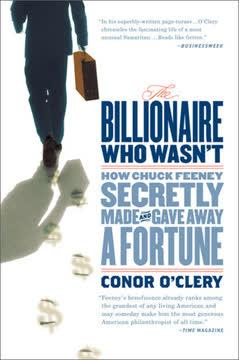
The remarkable story of Chuck Feeney, a man who built a multibillion-dollar retail empire and then secretly gave it all away. This book reveals how a frugal Irish-American from New Jersey became one of history's most consequential philanthropists while living like a retiree on a modest pension. You will learn about his philosophy of giving while living, his strategic approach to transforming education and healthcare systems, and the extraordinary lengths he went to in order to remain anonymous.
This book is for anyone interested in entrepreneurship, philanthropy, or the question of what wealth is actually for. It is for people who suspect that the most meaningful lives are often lived quietly. It is for readers who want to understand how one person's decision to give away billions changed universities, peace processes, and healthcare systems across three continents. And it is for anyone who has ever wondered whether money can buy meaning.
Most stories about billionaires follow a familiar arc. A person accumulates extraordinary wealth, builds a legacy, and then, perhaps near the end of life, writes a check or establishes a foundation with their name on the building. The wealth remains a family asset. The name endures. The giving, however generous, is a footnote to the fortune. Chuck Feeney inverted this story completely. In 1984, at the age of fifty-three, Feeney quietly transferred his entire 38.75 percent stake in Duty Free Shoppers, the company he had co-founded and built into the largest liquor retailer in the world, to a foundation he had established in Bermuda. The transfer was not announced. No press release was issued. No building was named. The beneficiaries of his giving were required to sign confidentiality agreements. Many of them did not know where the money was coming from. For the next thirteen years, Feeney continued to appear on Forbes magazine's list of the wealthiest Americans. The magazine estimated his net worth in the billions. In reality, his personal wealth had dropped below two million dollars. He owned no houses, no cars, and no stock in the company he had spent his life building. He wore a fifteen-dollar watch. He flew economy class. He carried his reading materials in a plastic bag. When the truth finally emerged in 1997, it made headlines around the world. Here was a billionaire who had given away not a percentage of his wealth, not even half of it, but essentially all of it. And he had done so while still alive, while still actively engaged in the work of giving, and without seeking any recognition for himself. The scale of Feeney's giving is difficult to comprehend. Between 1982 and 1997 alone, his foundations…
Continue reading in the MinuteRead app
Get the complete 30-minute summary of The Billionaire Who Wasn't
Get the complete summary in the app**Give while living.** Problems do not wait. If you have resources that could help, use them now.
**Give anonymously.** The reward for giving should be the giving itself, not the recognition that follows.
**Live simply.** Frugality is not deprivation. It is freedom from attachment to wealth.
**Look for leverage.** A well-placed grant can catalyze change that far exceeds the value of the grant itself.
**Prioritize local ownership.** The best solutions are developed by the people who will live with them.
**Work harder than anyone else.** Luck plays a role in success, but hard work allows you to capitalize on luck.
"The Billionaire Who Wasn't" is a strong fit if you want practical ideas around biography, business, finance, especially themes like **give while living.** problems do not wait. if you have resources that could help, use them now; **give anonymously.** the reward for giving should be the giving itself, not the recognition that follows. The MinuteRead summary distills these concepts into a focused read, whether you're deciding whether to buy the book or applying its lessons at work.
Conor O'Clery is an Irish journalist and author known for his work as a foreign correspondent. He has written several books on international affairs and notable figures. O'Clery's writing style is described as detailed and thorough, often providing extensive background information on his subjects. His approach to biography involves extensive research and interviews, as evidenced in "The Billionaire Who Wasn't." While some readers find his style engaging and informative, others consider it overly…
View all summaries by Conor O'CleryContinue Reading
Access the complete 30-minute summary and thousands more nonfiction books in the MinuteRead app.

Continue reading the complete summary in the MinuteRead app.