 MinuteRead
30 min
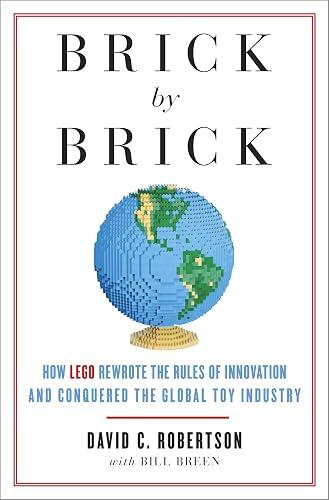
Book summary
by David C. Robertson
Premium summary · Opens in the app · 30 min read
In 2003, the LEGO Group was dying. The Danish family-owned company that had delighted children for generations was losing nearly a million dollars every single day. Its core product, the plastic brick, seemed hopelessly outdated in an era of video games, internet connectivity, and digital entertainment. The company had spent years frantically innovating its way out of irrelevance, launching theme parks, video games, clothing lines, jewelry, and electronic toys. Each new venture was supposed to s
**Author:** David C. Robertson **Estimated Reading Time:** 45 minutes
**What You'll Learn:**
- How a beloved family company nearly destroyed itself by innovating too much - Why LEGO's core values became both its greatest strength and its biggest obstacle - The specific strategies LEGO used to stage one of the most remarkable turnarounds in business history - How to balance disciplined focus with creative freedom - What happens when a company listens to its customers too much, and too little
**Who This Book Is For:**
This book is for anyone who has ever held a LEGO brick and wondered how such a simple toy could build a global empire. It is for business leaders wrestling with innovation, for managers trying to balance tradition with change, and for entrepreneurs who want to understand why some beloved brands survive while others disappear. Most of all, it is for readers who appreciate a true story about near-failure and redemption, told through the lens of one of the world's most iconic companies.
In 2003, the LEGO Group was dying. The Danish family-owned company that had delighted children for generations was losing nearly a million dollars every single day. Its core product, the plastic brick, seemed hopelessly outdated in an era of video games, internet connectivity, and digital entertainment. The company had spent years frantically innovating its way out of irrelevance, launching theme parks, video games, clothing lines, jewelry, and electronic toys. Each new venture was supposed to save the company. Each one made things worse. The story of LEGO's near-collapse and subsequent revival is not just a business case study. It is a story about identity, about what happens when an organization forgets what made it special, and about the painful process of rediscovering that identity before it is too late. The LEGO Group began in 1932 in the workshop of a Danish carpenter named Ole Kirk Christiansen. He started by making wooden toys, and he built his company on a simple principle: "Only the best is good enough." That phrase, carved into a wooden sign in his workshop, became the company's guiding philosophy. Quality mattered. Craftsmanship mattered. Children deserved products that respected their intelligence and nurtured their imagination. When the company began producing plastic bricks in 1949, and when it refined the interlocking stud-and-tube design in 1958, it created something unprecedented: a system of play. Every brick ever made would connect with every other brick ever made. A child who received a LEGO set in 1960 could combine it with a set purchased in 1990. This backward compatibility created endless creative possibilities and built a loyalty that few products have ever achieved. For decades, this system drove remarkable success. The company grew steadily,…
Continue reading in the MinuteRead app
Get the complete 30-minute summary of Brick by Brick
Get the complete summary in the appInnovation is not inherently good. It must create value and align with core strengths.
LEGO nearly went bankrupt by innovating too much, too broadly, and too far from what made it special.
The turnaround began with survival: cutting costs, selling assets, and stopping the bleeding.
Refocusing on the core business, the brick and the System of Play, was the foundation of recovery.
Listening to customers, especially through observation, reveals truths that assumptions cannot.
Passionate fans can be valuable partners in innovation if you treat them as partners rather than threats.
"Brick by Brick" is a strong fit if you want practical ideas around business, history, management, especially themes like innovation is not inherently good. it must create value and align with core strengths; lego nearly went bankrupt by innovating too much, too broadly, and too far from what made it special. The MinuteRead summary distills these concepts into a focused read, whether you're deciding whether to buy the book or applying its lessons at work.
Motivated to help readers with 1) LEGO's core values and founding principles drove its success 2) Innovation led to near-bankruptcy in the, David C. Robertson wrote “Brick by Brick” to package those ideas for a fast, focused read. In “Brick by Brick”, David C. Robertson focuses on 1) LEGO's core values and founding principles drove its success 2) Innovation led to near-bankruptcy in the. Through “Brick by Brick”, David C. Robertson distills the core ideas on business into lessons readers can abs…
Continue Reading
Access the complete 30-minute summary and thousands more nonfiction books in the MinuteRead app.

Continue reading the complete summary in the MinuteRead app.






