MinuteRead
30 min
Book summary
Premium summary · Opens in the app · 30 min read
Most people read the Bible wrong. Not out of malice or laziness, but because nobody taught them how to read it correctly. They approach the text with modern assumptions, expecting it to behave like a contemporary history book, a scientific manual, or a collection of timeless aphorisms. When it fails to meet those expectations, they grow frustrated. They blame themselves for not being spiritual enough. Or they blame the Bible for being outdated and incoherent.
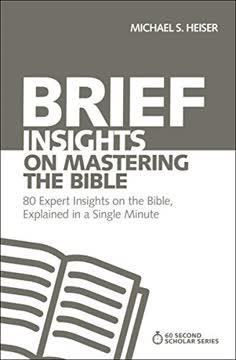
**Author:** Michael S. Heiser **Estimated Reading Time:** 45 minutes
### What You'll Learn How to read the Bible on its own terms by understanding the ancient context, literary techniques, and theological goals of the biblical writers. You will discover why letting the Bible be what it is transforms confusion into clarity and unlocks the richness of Scripture.
### Who This Book Is For Anyone who has ever felt frustrated, confused, or disconnected when reading the Bible. Whether you are a lifelong reader or someone who has never made it past Genesis, this book provides the interpretive keys that make the ancient text accessible, coherent, and deeply meaningful.
Most people read the Bible wrong. Not out of malice or laziness, but because nobody taught them how to read it correctly. They approach the text with modern assumptions, expecting it to behave like a contemporary history book, a scientific manual, or a collection of timeless aphorisms. When it fails to meet those expectations, they grow frustrated. They blame themselves for not being spiritual enough. Or they blame the Bible for being outdated and incoherent. The problem is not the Bible. The problem is the lens. Michael S. Heiser spent his career helping ordinary readers remove the foggy lenses of modern expectation and see the biblical text with ancient eyes. His core insight is disarmingly simple: the Bible is an ancient book written by ancient people with an ancient worldview. When you let it be what it actually is, the confusion lifts. The strange passages make sense. The beauty of the literary design emerges. The theological power hits with full force. This book is not about telling you what to believe. It is about giving you the tools to read the Bible intelligently, honestly, and with genuine understanding. Heiser does not ask you to check your brain at the door. He asks you to engage your brain more fully than ever before, to become a careful reader who respects the text enough to read it in context. The Bible is both divine and human. That dual nature is not a problem to solve but a reality to embrace. God did not override the personalities, cultures, or limitations of the human authors. He worked through them. They wrote as people of their time, using the literary conventions, cosmological assumptions, and cultural frameworks available to them. Recognizing this does not diminish Scripture. It honors how God actually chose to communicate. When you learn to read the Bible this way, something shifts. Passages that once seemed bizarre become fascinating windows into ancient thought. Laws that appeared arbitrary reveal deep theological logic. Prophetic books transform from cryptic fortune-telling into powerful calls for justice and faithfulness. The Gospels…
Continue reading in the MinuteRead app
Get the complete 30-minute summary of Brief Insights on Mastering the Bible
Get the complete summary in the appLet the Bible be what it is: an ancient book from another time and place.
Inspiration was a process involving genuine human participation.
Biblical writers used literary techniques that must be recognized for proper interpretation.
Creation accounts are polemics against ancient Near Eastern myths, not scientific explanations.
Old Testament laws taught theological truths through symbolic action within a covenant framework.
Prophets were preachers calling for covenant faithfulness, not primarily fortune-tellers.
"Brief Insights on Mastering the Bible" is a strong fit if you want practical ideas around christian, christianity, faith, especially themes like let the bible be what it is: an ancient book from another time and place; inspiration was a process involving genuine human participation. The MinuteRead summary distills these concepts into a focused read, whether you're deciding whether to buy the book or applying its lessons at work.
Michael S. Heiser is a scholar specializing in biblical studies and the ancient Near East. He holds a Ph.D. in Hebrew Bible and Semitic Languages from the University of Wisconsin-Madison and an M.A. in Ancient History from the University of Pennsylvania. As the Academic Editor of Logos Bible Software, Heiser focuses on Israelite religion, biblical theology, and ancient Near Eastern studies. He maintains several blogs on biblical topics and fringe beliefs about the ancient world. Heiser also offe…
View all summaries by Michael S. HeiserContinue Reading
Access the complete 30-minute summary and thousands more nonfiction books in the MinuteRead app.

Continue reading the complete summary in the MinuteRead app.