 MinuteRead
30 min
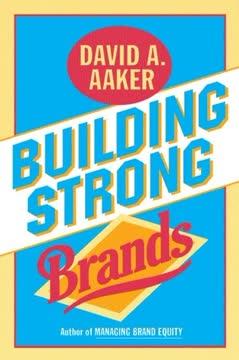
Book summary
Premium summary · Opens in the app · 30 min read
Every business leader knows that brands matter. Walk through any supermarket and you will see the evidence: people reach for familiar names, pay more for trusted labels, and ignore perfectly good alternatives sitting inches away. Yet when asked to explain exactly what a brand is worth, or how to build one deliberately, most executives struggle to give a clear answer.
**Author:** David A. Aaker
**Estimated Reading Time:** 45 minutes
**What You'll Learn:**
* Why brand equity is the most valuable asset a company owns * How to build a brand identity that withstands competition and time * The four dimensions of brand equity and how to strengthen each * How organizational associations create advantages competitors cannot copy * How to measure brand performance across products and markets * How to leverage brands for growth without destroying them
**Who This Book Is For:**
This book is for anyone responsible for building, managing, or growing a brand. Marketing executives, brand managers, entrepreneurs, product leaders, and business students will all find practical frameworks they can apply immediately. If you have ever wondered why some brands command premium prices while others compete on discounts, or why certain companies survive crises while others collapse, this book provides the answers.
Every business leader knows that brands matter. Walk through any supermarket and you will see the evidence: people reach for familiar names, pay more for trusted labels, and ignore perfectly good alternatives sitting inches away. Yet when asked to explain exactly what a brand is worth, or how to build one deliberately, most executives struggle to give a clear answer. This is not surprising. For decades, brands were treated as marketing artifacts: logos, slogans, and advertising campaigns. Companies spent millions on creative work without understanding what they were actually building. They measured awareness and recall, but not the deeper assets that drive customer behavior. They launched extensions without knowing whether they were strengthening or weakening the brand. They changed positioning whenever a new executive arrived, never realizing they were discarding years of accumulated value. David Aaker changed how the business world thinks about brands. His central insight is both simple and profound: a brand is not a logo or a tagline. A brand is a set of assets, held in the minds of customers, that creates value for both the customer and the firm. These assets include awareness, perceived quality, loyalty, and associations. Together, they form brand equity, and brand equity is often the most valuable asset a company owns. The problem Aaker addresses is that most companies do not manage these assets deliberately. They manage products, distribution channels, pricing, and promotions. They treat the brand as a byproduct of these activities rather than as a strategic asset requiring its own management discipline. The result is predictable: brands drift, lose relevance, and become commodities. Companies then respond by cutting prices, which further erodes the brand, creating a downward spiral that is difficult to escape. Why does this matter now more than ever? Because the competitive environment has become brutal. Products are copied within months. Features are…
Continue reading in the MinuteRead app
Get the complete 30-minute summary of Building Strong Brands
Get the complete summary in the appBrand equity is a set of assets linked to a brand's name that adds value to the product or service.
The four primary brand assets are awareness, perceived quality, loyalty, and associations.
Brand identity is aspirational, not descriptive. It defines what the brand wants to become.
Organizational associations provide differentiation that competitors cannot easily copy.
Brand personality creates emotional connections that drive loyalty and advocacy.
Consistency is essential for owning a position in the customer's mind.
"Building Strong Brands" is a strong fit if you want practical ideas around business, design, buisness, especially themes like brand equity is a set of assets linked to a brand's name that adds value to the product or service; the four primary brand assets are awareness, perceived quality, loyalty, and associations. The MinuteRead summary distills these concepts into a focused read, whether you're deciding whether to buy the book or applying its lessons at work.
David A. Aaker is a renowned expert in brand management and marketing. He serves as a professor of Marketing at the University of California, Berkeley. Aaker is widely recognized for his contributions to the field of branding and has authored numerous books on the subject. His work focuses on developing strategies for building and managing strong brands, and he is known for creating frameworks and models that help businesses understand and improve their brand positioning. Aaker's expertise exten…
View all summaries by David A. AakerContinue Reading
Access the complete 30-minute summary and thousands more nonfiction books in the MinuteRead app.

Continue reading the complete summary in the MinuteRead app.






