MinuteRead
30 min
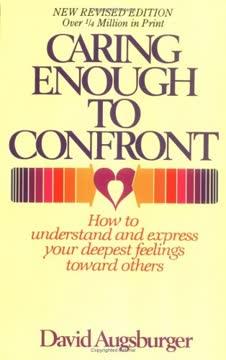
Book summary
Premium summary · Opens in the app · 30 min read
Most people believe they have two options when conflict arises. They can fight or they can flee. They can attack or they can avoid. They can be honest and damage the relationship, or they can preserve the relationship and swallow their truth.
**Author:** David Augsburger **Estimated Reading Time:** 45 minutes
**What You'll Learn** How to transform conflict from something you dread into something you can handle with honesty and love. You will learn to speak truth without destroying relationships, own your anger without letting it own you, build trust through vulnerability, and become the kind of person who can confront with care.
**Who This Book Is For** Anyone who has ever avoided a difficult conversation. Anyone who has ever exploded in frustration and damaged a relationship. Anyone who wants to be both truthful and loving, both honest and kind, both strong and gentle. This book is for leaders, partners, parents, friends, and anyone who believes relationships matter enough to fight for them well.
Most people believe they have two options when conflict arises. They can fight or they can flee. They can attack or they can avoid. They can be honest and damage the relationship, or they can preserve the relationship and swallow their truth. This is a false choice. It is a trap that keeps people stuck in patterns of resentment, silence, explosive arguments, and shallow peace. The belief that truth and love cannot coexist in moments of tension is one of the most destructive myths in human relationships. David Augsburger wrote this book to dismantle that myth. He recognized that the real problem is not conflict itself. Conflict is natural, neutral, and potentially creative. The real problem is that most people never learned how to care and confront at the same time. They were taught that caring means being nice, and confronting means being harsh. They never saw a model of someone who could do both. The cost of this failure is enormous. Marriages crumble under the weight of unspoken resentments. Workplaces become toxic with passive-aggressive behavior. Friendships fade because honest conversations never happen. Communities fracture because people would rather gossip than speak directly. The inability to confront with care is not a small communication problem. It is a relational catastrophe that repeats itself daily in every corner of human life. Augsburger offers a different path. He calls it care-fronting. It is not a compromise between caring and confronting. It is not a middle ground where you water down both. It is a way of being that unites them completely. When you care-front, you offer genuine caring that lifts, supports, and encourages the other person while simultaneously telling the truth with clarity and courage. You do not choose between the relationship and the issue. You hold both. This book is deeply practical. It teaches specific skills: how to speak truth without manipulation, how to own your anger instead of blaming others, how to invite change without demanding it, how to…
Continue reading in the MinuteRead app
Get the complete 30-minute summary of Caring Enough to Confront
Get the complete summary in the appConflict is natural and can be creative. Your response determines the outcome.
Care-fronting unites caring and confronting. Do not choose between truth and love. Do both.
Truthing means speaking clearly, honestly, and with personal responsibility. Use "I" statements that own your experience
Your anger comes from your demands, not from other people's actions. Own it.
Confrontation should invite change, not demand it. Respect the other person's freedom.
Trust builds through vulnerability. Someone has to go first. Let it be you.
"Caring Enough to Confront" is a strong fit if you want practical ideas around christian, self help, psychology, especially themes like conflict is natural and can be creative. your response determines the outcome; care-fronting unites caring and confronting. do not choose between truth and love. do both. The MinuteRead summary distills these concepts into a focused read, whether you're deciding whether to buy the book or applying its lessons at work.
David W. Augsburger is a renowned author, counselor, and professor emeritus of pastoral care at Fuller Theological Seminary. He has written extensively on topics related to conflict resolution, relationships, and Christian counseling. Augsburger is known for his innovative approach to communication, coining terms like "care-fronting" to describe compassionate confrontation. His work combines psychological insights with Christian principles, making complex ideas accessible to a broad audience. Au…
View all summaries by David AugsburgerContinue Reading
Access the complete 30-minute summary and thousands more nonfiction books in the MinuteRead app.

Continue reading the complete summary in the MinuteRead app.