MinuteRead
30 min
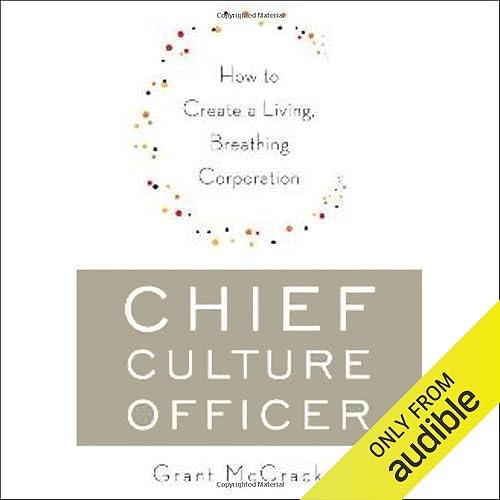
Book summary
by Grant McCracken
Premium summary · Opens in the app · 30 min read
The modern corporation is a marvel of organized intelligence. Over the past century, businesses have mastered the mysteries of operations management, logistics, finance, human resources, and organizational behavior. They have built sophisticated systems for tracking inventory, optimizing supply chains, measuring employee performance, and forecasting quarterly earnings. They can tell you, with remarkable precision, how many units of a product will sell in a given region during a given week.
**Author:** Grant McCracken
**Estimated Reading Time:** 45 minutes
**What You'll Learn:**
- Why culture is the single most underutilized asset in modern business - How cultural blind spots have cost companies billions of dollars - What a Chief Culture Officer actually does and why every serious company needs one - How to read fast culture and slow culture without getting whiplash - Why consumers are no longer passive recipients but active co-creators - How to build a cultural intelligence system that gives you a lasting competitive edge
**Who This Book Is For:**
Business leaders who sense that traditional market research misses something essential. Marketers tired of being blindsided by cultural shifts. Entrepreneurs who want to spot opportunities before competitors do. Anyone who has ever wondered why smart companies make spectacularly dumb cultural mistakes. If you have ever felt that your organization is fluent in finance and operations but illiterate in culture, this book is for you.
The modern corporation is a marvel of organized intelligence. Over the past century, businesses have mastered the mysteries of operations management, logistics, finance, human resources, and organizational behavior. They have built sophisticated systems for tracking inventory, optimizing supply chains, measuring employee performance, and forecasting quarterly earnings. They can tell you, with remarkable precision, how many units of a product will sell in a given region during a given week. And yet, these same corporations are routinely blindsided by something far more fundamental: what people actually care about. Consider the strange case of Levi Strauss. For decades, Levi's was the undisputed king of denim. The company had deep pockets, global distribution, iconic branding, and a century of accumulated expertise. Then hip-hop culture emerged in the late 1980s and early 1990s, and with it came a new aesthetic: baggy jeans, oversized silhouettes, urban streetwear. Levi's executives watched this cultural shift unfold from their San Francisco headquarters and decided it was a passing fad. They kept producing the same slim, straight-leg jeans they had always produced. The result was catastrophic. By the time Levi's finally acknowledged the trend, competitors like FUBU, Phat Farm, and even mainstream brands that had adapted faster had captured an enormous share of the market. Analysts estimated that Levi's missed out on roughly one billion dollars in potential revenue. A billion dollars lost not because of poor manufacturing, not because of supply chain failures, not because of bad accounting, but because the company lacked the cultural intelligence to recognize a shift that was happening in plain sight. Then there is the Quaker Oats disaster. In 1994, Quaker acquired Snapple for $1.7 billion, convinced that the quirky beverage brand would fit seamlessly into its portfolio. Quaker's executives ran the numbers, analyzed distribution channels, and…
Continue reading in the MinuteRead app
Get the complete 30-minute summary of Chief Culture Officer
Get the complete summary in the appCulture is a fundamental driver of business success, not a peripheral concern.
Most companies have a structural blind spot when it comes to culture.
Fast culture moves rapidly through networks. Slow culture moves gradually through institutions.
Status is about hierarchy. Cool is about authenticity. The balance between them has shifted.
Consumers are no longer passive recipients. They are active co-creators.
Ethnography and empathy are essential tools for understanding culture.
"Chief Culture Officer" is a strong fit if you want practical ideas around business, anthropology, sociology, especially themes like culture is a fundamental driver of business success, not a peripheral concern; most companies have a structural blind spot when it comes to culture. The MinuteRead summary distills these concepts into a focused read, whether you're deciding whether to buy the book or applying its lessons at work.
Motivated to help readers with culture matters for reasons good and bad, Grant McCracken wrote “Chief Culture Officer” to package those ideas for a fast, focused read. Through “Chief Culture Officer”, Grant McCracken distills the core ideas on business into lessons readers can absorb in a single short sitting. Readers turn to this work when they want Grant McCracken's perspective on the subject without working through the entire original volume. The book is structured so each chapter highlights …
Continue Reading
Access the complete 30-minute summary and thousands more nonfiction books in the MinuteRead app.

Continue reading the complete summary in the MinuteRead app.