MinuteRead
30 min
Book summary
by outlining how to analyse stocks
Premium summary · Opens in the app · 5 min read
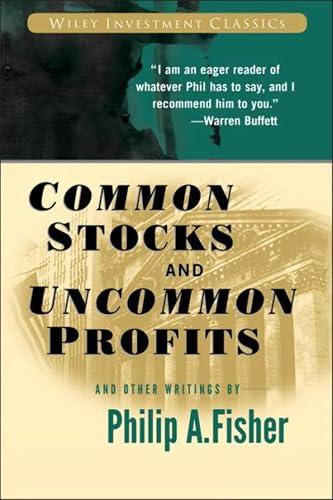
Common Stocks and Uncommon Profits paves the way to success for all investors by outlining how to analyse stocks, understand the market, make smart investments and wise money decisions, and profit from them by being patient with the stock market and keeping your money in for the long-term.
Common Stocks and Uncommon Profits paves the way to success for all investors by outlining how to analyse stocks, understand the market, make smart investments and wise money decisions, and profit from them by being patient with the stock market and keeping your money in for the long-term.
Naturally, you can’t just place your money in a company without conducting comprehensive research on it beforehand. So where do you start? First, make a list of the companies you wish to research. You could also look up potential names from the industries that you understand best.
Then you will have to narrow it down by conducting extensive analysis. Research their activity profile and industry analysis, their competitors, their main clients, and how they manage their money. These are all challenging to research, that is why the scuttlebutt method can prove to be highly efficient.
It implies contacting their stakeholders directly and learning information firsthand. This way, you get to form your own idea about the company in the most accurate way. However, it can be quite time-consuming to do such thorough research. So make sure you pick the right stocks to work with.
Make sure to take into account their management effectiveness and if they’re investing in research and development. This denotes if they’re oriented towards the future when it comes to their product line and services. Moreover, check their reputation when it comes to employee and customer satisfaction to know if they have a strong or weak organization.
Essentially, investing comes down to buying and selling, right? Of course, the best way to increase your wealth is to buy a stock when the price is low, and then sell it later on when you see an increase. Although this sounds obvious, you’d be surprised to see how your mentality changes when it comes to practice. When money’s in the game, people often get scared when their stocks fall, and therefore panic sell to avoid further losses. More often than not, the stock will recover and the price will increase significantly. Thus, the average investor will want to hop on this train and catch the upward trend due to the fear of missing out. This process repeats itself again and again. This often creates overvalued or undervalued stocks in the market. As a long-term investor, you must always look for the future. Learn that the market is irrational and is always acting on short-term events. For example, a well-established company may drive down its profits due to an expense in the R&D department. Although this will benefit the company later, investors don’t see it that way. If you time your entry properly, you can increase your wealth significantly. Then, keep your…
Continue reading in the MinuteRead app
Get the complete 5-minute summary of Common Stocks and Uncommon Profits
Get the complete summary in the appYou must perform a comprehensive analysis on your stock before you invest in it.
Always buy low and then sell your stock for a higher price.
Look for mature companies and seek stable, long-term profits.
"Common Stocks and Uncommon Profits" is a strong fit if you want practical ideas around business, investing, management, especially themes like you must perform a comprehensive analysis on your stock before you invest in it; always buy low and then sell your stock for a higher price. The MinuteRead summary distills these concepts into a focused read, whether you're deciding whether to buy the book or applying its lessons at work.
Motivated to help readers with common Stocks and Uncommon Profits paves the way to success for all investors by outlining how to analyse, outlining how to analyse stocks wrote “Common Stocks and Uncommon Profits” to package those ideas for a fast, focused read. In “Common Stocks and Uncommon Profits”, outlining how to analyse stocks focuses on common Stocks and Uncommon Profits paves the way to success for all investors by outlining how to analyse. Through “Common Stocks and Uncommon Profits”, o…
View all summaries by outlining how to analyse stocksContinue Reading
Access the complete 5-minute summary and thousands more nonfiction books in the MinuteRead app.

Continue reading the complete summary in the MinuteRead app.