MinuteRead
30 min
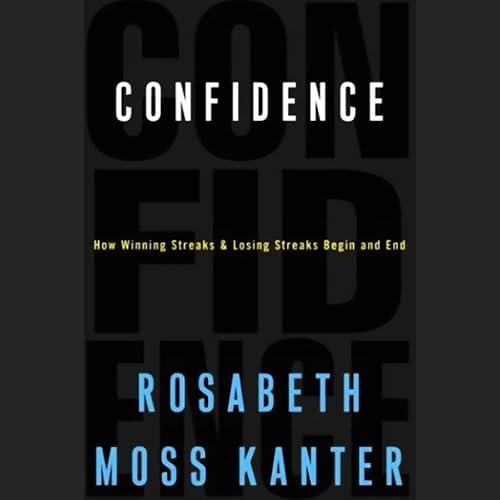
Book summary
by Rosabeth Moss Kanter
Premium summary · Opens in the app · 30 min read
Every organization rises and falls on an invisible force that rarely appears on balance sheets or organizational charts. That force is confidence. It determines whether people take bold action or hesitate. It shapes whether teams collaborate or retreat into silos. It decides whether investors double down or withdraw support. And it explains why some companies, sports teams, and even nations experience remarkable winning streaks while others spiral into seemingly irreversible decline.
**Author:** Rosabeth Moss Kanter
**Estimated Reading Time:** 42 minutes
**What You'll Learn:**
- Why confidence is the hidden force behind every winning streak and every losing streak - How confidence operates at four distinct levels: self, others, system, and external stakeholders - The three cornerstones of confidence: accountability, collaboration, and initiative - How leaders build or destroy confidence through their words, actions, and systems - Practical strategies for reversing decline and restoring momentum in any organization
**Who This Book Is For:**
This book is for leaders who sense something is missing in their organization despite having good people and adequate resources. It is for managers facing a turnaround challenge, entrepreneurs trying to build momentum, and individuals who want to understand why some teams consistently outperform others. It is for anyone who has ever wondered why confidence matters more than talent, strategy, or luck.
Every organization rises and falls on an invisible force that rarely appears on balance sheets or organizational charts. That force is confidence. It determines whether people take bold action or hesitate. It shapes whether teams collaborate or retreat into silos. It decides whether investors double down or withdraw support. And it explains why some companies, sports teams, and even nations experience remarkable winning streaks while others spiral into seemingly irreversible decline. Rosabeth Moss Kanter spent years studying this phenomenon across industries, geographies, and contexts. She examined companies like Gillette, Continental Airlines, and the BBC during their darkest hours and their greatest triumphs. She studied sports teams riding winning streaks and losing streaks. She analyzed communities, schools, and even entire nations attempting to reverse decline. What she found was remarkably consistent: confidence, or the lack of it, was the single most powerful predictor of outcomes. The problem is that most people misunderstand confidence. They think of it as a personality trait, something you either have or you don't. They assume confident people are simply born that way, or that confidence is a byproduct of success rather than a cause of it. This misunderstanding leads to a dangerous passivity. Leaders wait for results to improve before they address morale. They assume that winning will restore confidence, when in fact it is confidence that enables winning in the first place. Kanter's research reveals something far more actionable. Confidence is not a fixed trait. It is a dynamic state that can be built, eroded, and rebuilt. It operates at multiple levels simultaneously: confidence in yourself, confidence in your teammates, confidence in the systems and structures around you, and confidence from external stakeholders. When all four levels align, organizations enter winning streaks that feel almost magical. When they misalign, losing streaks take hold and become self-reinforcing. The stakes could not be higher.…
Continue reading in the MinuteRead app
Get the complete 30-minute summary of Confidence
Get the complete summary in the appConfidence consists of positive expectations for favorable outcomes.
Confidence operates at four levels: self, others, system, and external stakeholders.
Winning streaks and losing streaks are self-reinforcing cycles.
Accountability, collaboration, and initiative are the three cornerstones of confidence.
A promise made is a promise kept.
Leadership is about building the confidence of everyone else.
"Confidence" is a strong fit if you want practical ideas around business, leadership, psychology, especially themes like confidence consists of positive expectations for favorable outcomes; confidence operates at four levels: self, others, system, and external stakeholders. The MinuteRead summary distills these concepts into a focused read, whether you're deciding whether to buy the book or applying its lessons at work.
Motivated to help readers with confidence consists of positive expectations for favorable outcomes, Rosabeth Moss Kanter wrote “Confidence” to package those ideas for a fast, focused read. In “Confidence”, Rosabeth Moss Kanter focuses on confidence consists of positive expectations for favorable outcomes. Through “Confidence”, Rosabeth Moss Kanter distills the core ideas on business into lessons readers can absorb in a single short sitting. Readers turn to this work when they want Rosabeth Moss …
Continue Reading
Access the complete 30-minute summary and thousands more nonfiction books in the MinuteRead app.

Continue reading the complete summary in the MinuteRead app.