MinuteRead
30 min
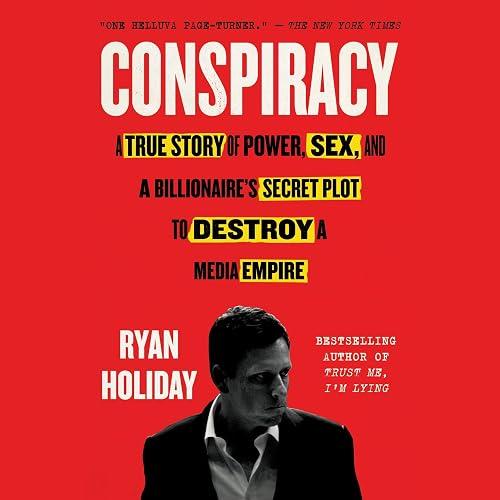
Book summary
by Ryan Holiday
Premium summary · Opens in the app · 30 min read
In 2007, a gossip website published an article outing a prominent technology investor as gay. The investor was not a public figure in the traditional sense. He had not sought fame. He had built companies, funded startups, and accumulated wealth quietly. The website, Gawker, operated under a simple philosophy: everything is fair game, everyone is a story, and no one deserves privacy.
**Author:** Ryan Holiday **Estimated Reading Time:** 42 minutes
**What You'll Learn:**
- How a single determined individual can challenge and defeat powerful institutions - The mechanics of strategic patience and long-term planning - Why secrecy remains one of the most underrated tools for achieving difficult goals - The ethical complexities that arise when private action reshapes public institutions - What the Gawker takedown reveals about money, power, and the future of journalism
**Who This Book Is For:**
This book is for anyone who has ever felt powerless against a large institution. It is for entrepreneurs who want to understand how asymmetric strategies work. It is for journalists who need to understand the forces reshaping their industry. It is for students of strategy who want to see how ancient principles apply to modern conflicts. And it is for anyone curious about one of the most consequential media stories of the digital age.
In 2007, a gossip website published an article outing a prominent technology investor as gay. The investor was not a public figure in the traditional sense. He had not sought fame. He had built companies, funded startups, and accumulated wealth quietly. The website, Gawker, operated under a simple philosophy: everything is fair game, everyone is a story, and no one deserves privacy. The investor was Peter Thiel. He would spend the next decade orchestrating one of the most remarkable acts of private retribution in modern history. He would fund lawsuits, recruit lawyers, identify sympathetic plaintiffs, and wait patiently for the perfect moment to strike. When he was finished, Gawker Media would be bankrupt, its flagship site shut down, and its founder personally liable for millions of dollars in damages. This is not a story about whether Thiel was right or wrong. It is a story about how power actually works. Ryan Holiday wrote Conspiracy because he recognized something important about the Thiel-Gawker saga. Most people saw a billionaire exacting revenge on a media company. Holiday saw something more interesting: a masterclass in strategic thinking, patience, and the mechanics of asymmetric warfare. He saw a conspiracy, and he wanted to understand how it worked. The word conspiracy carries heavy baggage. It conjures images of shadowy cabals, paranoid delusions, and nefarious plots. But Holiday argues that we have misunderstood the concept. A conspiracy, at its core, is simply a coordinated effort by a small group of people to achieve a goal through secret means. It is a tool. Like any tool, it can be used for good or ill. The Thiel-Gawker story matters because it reveals uncomfortable truths about how the world operates. It shows that institutions are more vulnerable than they appear. It demonstrates that patience and resources can overcome…
Continue reading in the MinuteRead app
Get the complete 30-minute summary of Conspiracy
Get the complete summary in the appConspiracies are a form of power. Understanding them is essential for understanding how the world works.
Patience is a strategic weapon. The long game is often the winning game.
Secrecy provides a decisive advantage. Protect your plans.
Small, committed teams can accomplish what large organizations cannot.
Every institution has vulnerabilities. Find them and exploit them.
Arrogance is a strategic liability. Never assume you are invincible.
"Conspiracy" is a strong fit if you want practical ideas around business, politics, law, especially themes like conspiracies are a form of power. understanding them is essential for understanding how the world works; patience is a strategic weapon. the long game is often the winning game. The MinuteRead summary distills these concepts into a focused read, whether you're deciding whether to buy the book or applying its lessons at work.
Motivated to help readers with "Perhaps we have too few conspiracies, Ryan Holiday wrote “Conspiracy” to package those ideas for a fast, focused read. In “Conspiracy”, Ryan Holiday focuses on "Perhaps we have too few conspiracies. Through “Conspiracy”, Ryan Holiday distills the core ideas on business into lessons readers can absorb in a single short sitting. Readers turn to this work when they want Ryan Holiday's perspective on the subject without working through the entire original volume. Ryan…
View all summaries by Ryan HolidayContinue Reading
Access the complete 30-minute summary and thousands more nonfiction books in the MinuteRead app.

Continue reading the complete summary in the MinuteRead app.