 MinuteRead
30 min
Book summary
by Philip Graves
Premium summary · Opens in the app · 30 min read
Every year, businesses spend billions of dollars trying to understand what their customers want. They conduct surveys, convene focus groups, run interviews, and analyze questionnaires. They ask people what they like, what they would buy, what they think about a new product concept, and why they made a particular purchase. The result is a mountain of data, a collection of confident predictions, and a set of carefully documented consumer insights.
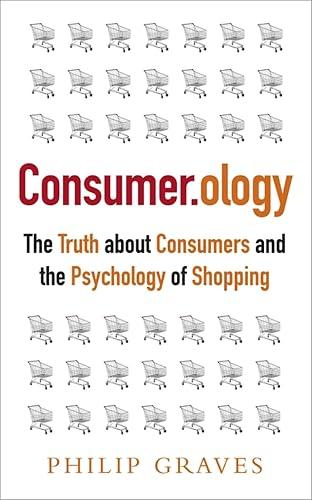
**The Truth About Consumers and the Psychology of Shopping**
By Philip Graves
**Estimated Reading Time:** 45 minutes
**What You'll Learn:**
Why much of what businesses believe about their customers is wrong, how the unconscious mind truly drives purchasing decisions, why traditional market research consistently misleads, and what actually works when you want to understand consumer behavior.
**Who This Book Is For:**
Business leaders, marketers, product developers, researchers, and anyone who has ever suspected that asking people what they think is not the same as discovering what they will actually do.
Every year, businesses spend billions of dollars trying to understand what their customers want. They conduct surveys, convene focus groups, run interviews, and analyze questionnaires. They ask people what they like, what they would buy, what they think about a new product concept, and why they made a particular purchase. The result is a mountain of data, a collection of confident predictions, and a set of carefully documented consumer insights. Then they launch the product, and it fails. This happens with remarkable frequency. Estimates suggest that the majority of new products fail within their first year. Marketing campaigns built on extensive research underperform. Brands make expensive decisions based on information that seemed solid, reliable, and scientific, only to discover that the real world did not cooperate with their carefully constructed models. Why does this happen? Philip Graves offers a provocative answer: because we do not think in the way we think we do. The fundamental premise of Consumerology is simple but profound. Human beings are not the rational, self-aware decision-makers we imagine ourselves to be. We believe we know why we make choices. We believe we can accurately predict what we will want in the future. We believe that asking people questions yields truthful, useful answers. But the evidence from psychology, neuroscience, and behavioral economics tells a very different story. Most of what drives consumer behavior happens below the level of conscious awareness. The unconscious mind processes vast amounts of information, makes rapid judgments, and guides our actions in ways we cannot access or explain. When we are asked why we bought something, we do not report the actual causes of our behavior. We invent plausible-sounding explanations after the fact. We rationalize. We confabulate. We tell stories that make sense to us and to the person asking, but those stories may have very little to do with what actually drove our decision. This creates a serious problem for traditional market research. If people cannot accurately explain their own behavior, then asking them to do so produces misleading information. If people cannot predict their own future preferences, then asking them what they would buy in the future is an exercise in…
Continue reading in the MinuteRead app
Get the complete 30-minute summary of Consumerology
Get the complete summary in the appThe unconscious mind drives consumer behavior. Most decisions are made automatically, below the level of conscious aware
Consumers cannot accurately explain their own choices. When asked why they bought something, they generate rationalizati
The environment shapes decisions. Lighting, music, scent, and layout influence behavior without conscious awareness.
Observation beats interrogation. Watching what people do provides more reliable insights than asking what they think.
Asking questions changes thinking. The research process itself contaminates results.
Focus groups distort insights. Group dynamics produce artificial responses.
"Consumerology" is a strong fit if you want practical ideas around business, psychology, marketing, especially themes like the unconscious mind drives consumer behavior. most decisions are made automatically, below the level of conscious aware; consumers cannot accurately explain their own choices. when asked why they bought something, they generate rationalizati. The MinuteRead summary distills these concepts into a focused read, whether you're deciding whether to buy the book or applying its lessons at work.
Motivated to help readers with we don't think in the way we think we do, Philip Graves wrote “Consumerology” to package those ideas for a fast, focused read. Through “Consumerology”, Philip Graves distills the core ideas on business into lessons readers can absorb in a single short sitting. Readers turn to this work when they want Philip Graves's perspective on the subject without working through the entire original volume. The book is structured so each chapter highlights a practical lesson fro…
Continue Reading
Access the complete 30-minute summary and thousands more nonfiction books in the MinuteRead app.

Continue reading the complete summary in the MinuteRead app.






