MinuteRead
30 min
Book summary
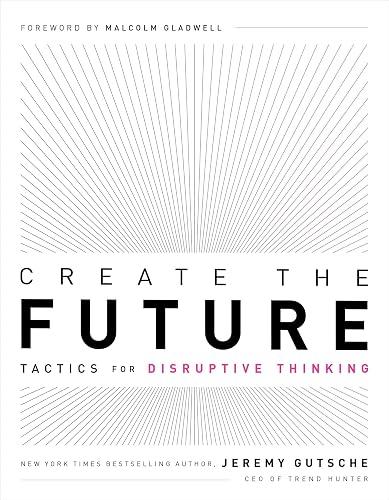
by Jeremy Gutsche
Premium summary · Opens in the app · 30 min read
Something strange happens when you become successful. The very qualities that got you there, the discipline, the focus, the refined processes, the hard-won expertise, begin working against you. You stop seeing what's new because you're so good at seeing what's familiar.
**Author:** Jeremy Gutsche **Estimated Reading Time:** 45 minutes
Why smart people and successful companies repeatedly miss world-changing opportunities that are right in front of them. You'll discover the seven specific traps that keep you stuck in familiar patterns, learn how to break free from path dependency, and gain practical tools for spotting and seizing the opportunities that others dismiss.
This book is for leaders who sense that their organization is moving too slowly, entrepreneurs who want to spot opportunities before competitors do, and anyone who feels stuck in routines that no longer serve them. If you've ever wondered why brilliant companies like Kodak or Nokia failed despite having every advantage, this book explains exactly what went wrong and how to avoid the same fate.
Something strange happens when you become successful. The very qualities that got you there, the discipline, the focus, the refined processes, the hard-won expertise, begin working against you. You stop seeing what's new because you're so good at seeing what's familiar. Jeremy Gutsche has spent his career studying this paradox. As the CEO of Trend Hunter, he has analyzed over 10,000 innovation projects and worked with organizations ranging from Disney to NASA to Starbucks. What he discovered is both unsettling and liberating. The biggest barrier to innovation isn't a lack of creativity or resources. It's the invisible grooves we fall into, grooves that determine our decisions long before we consciously make them. Consider a strange historical fact. The standard railroad gauge in the United States is four feet, eight and a half inches. Why such an oddly specific measurement? Because that was the width of Roman chariot wheels. English roads were built to accommodate Roman chariots, and when railroads came along, they used the same roads and the same measurements. The space shuttle's rocket boosters, built in Utah and transported by rail to Florida, had to fit through tunnels that were sized for those same tracks. So a design decision made by Roman engineers two thousand years ago determined the width of a spacecraft booster. This is path dependency. It's the tendency for past decisions to constrain future possibilities, often without anyone noticing. And it doesn't just affect railroad gauges. It affects how you think, how your company operates, and whether you'll recognize the next big opportunity when it appears. The next decade will bring more change than any previous period in human history. Mind-reading interfaces, augmented reality, advanced artificial intelligence, and technologies we can't yet imagine will reshape every industry. The opportunity is unprecedented. But so is the risk of being left behind. Most people will miss this opportunity. Not because they're not smart enough or don't work hard enough. They'll miss it because they're…
Continue reading in the MinuteRead app
Get the complete 30-minute summary of Create the Future + The Innovation Handbook
Get the complete summary in the appYour brain is wired to repeat what worked before, and this wiring is your biggest obstacle to innovation.
Revolutionary ideas look awkward and unpolished at first. Don't dismiss them because they don't fit your expectations.
Expertise creates blind spots. Seek out diverse perspectives that challenge your assumptions.
Inaction is the default state. Create urgency to overcome the ease of staying the same.
Success breeds complacency. Don't let past wins prevent you from pursuing future opportunities.
Change is exponential, not linear. The future will arrive faster than you expect.
"Create the Future + The Innovation Handbook" is a strong fit if you want practical ideas around business, entrepreneurship, leadership, especially themes like your brain is wired to repeat what worked before, and this wiring is your biggest obstacle to innovation; revolutionary ideas look awkward and unpolished at first. don't dismiss them because they don't fit your expectations. The MinuteRead summary distills these concepts into a focused read, whether you're deciding whether to buy the book or applying its lessons at work.
Motivated to help readers with you are about to experience history’s highest rate of change, Jeremy Gutsche wrote “Create the Future + The Innovation Handbook” to package those ideas for a fast, focused read. In “Create the Future + The Innovation Handbook”, Jeremy Gutsche focuses on you are about to experience history’s highest rate of change. Through “Create the Future + The Innovation Handbook”, Jeremy Gutsche distills the core ideas on business into lessons readers can absorb in a single sho…
Continue Reading
Access the complete 30-minute summary and thousands more nonfiction books in the MinuteRead app.

Continue reading the complete summary in the MinuteRead app.