MinuteRead
30 min
Book summary
by Harvard Business Publishing
Premium summary · Opens in the app · 30 min read
Every year, thousands of people convince themselves they have a business idea worth pursuing. Some of those ideas are genuinely brilliant. Most are not. But the difference between success and failure rarely comes down to the quality of the idea alone. It comes down to whether the founder can think clearly about how that idea becomes a functioning business.
**Author:** Harvard Business Publishing
**Estimated Reading Time:** 45 minutes
**What You'll Learn:**
- Why a business plan is more than a formality and how it shapes your venture's future - How to craft each section of a plan that investors actually want to read - The common mistakes that sink otherwise promising business plans - How to use your plan as a living management tool long after launch
**Who This Book Is For:**
Entrepreneurs preparing to launch a venture, managers seeking internal funding for new initiatives, founders who need to communicate their vision to investors, and anyone who wants to think rigorously about whether a business idea can survive contact with reality.
Every year, thousands of people convince themselves they have a business idea worth pursuing. Some of those ideas are genuinely brilliant. Most are not. But the difference between success and failure rarely comes down to the quality of the idea alone. It comes down to whether the founder can think clearly about how that idea becomes a functioning business. This is where the business plan enters the picture. For many entrepreneurs, writing a business plan feels like a chore. It is something they do because an investor asked for it, or because a bank requires it before approving a loan, or because an incubator program demands it as part of the application. They treat it as a document to be produced and filed away, a box to be checked before the real work begins. That mindset is a mistake. A well-constructed business plan is not a formality. It is a thinking tool. It forces you to answer questions you might otherwise avoid. Who exactly is your customer? Why would they choose you over existing alternatives? How much money do you actually need, and what will you spend it on? What could go wrong, and what will you do when it does? The process of writing the plan is often more valuable than the plan itself. It exposes flawed assumptions before they become expensive mistakes. It reveals gaps in your knowledge that need to be filled. It forces you to confront uncomfortable truths about your market, your competition, and your own capabilities. Consider what happens when you skip this process. You launch a business based on enthusiasm and intuition. You believe customers will love your product because you love it. You assume the market is large enough because you know a few people who expressed interest. You estimate costs optimistically and revenues generously. Then reality arrives. Customers are harder to acquire than expected. Competitors respond aggressively. Cash runs out faster than projected. The business fails, and you are left wondering what went wrong. A thoughtful business plan would not…
Continue reading in the MinuteRead app
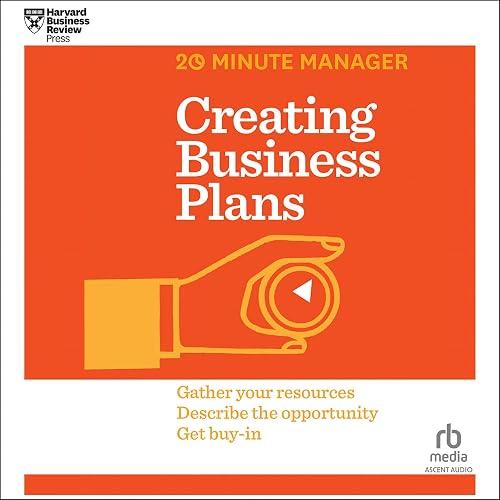
Get the complete 30-minute summary of Creating Business Plans
Get the complete summary in the appA business plan serves three purposes: evaluation, persuasion, and management. Use all three.
Write the executive summary last, and make it compelling. It is the only section many readers will see.
Demonstrate that your market is large, growing, and accessible. Define your addressable market specifically.
Showcase your team's relevant experience and complementary strengths. Acknowledge weaknesses and explain how you will ad
Center your marketing strategy on the customer problem you solve. Address product, price, place, and promotion.
Calculate your breakeven point and understand your cost structure. Know how many customers you need to survive.
"Creating Business Plans" is a strong fit if you want practical ideas around business, entrepreneurship, management, especially themes like a business plan serves three purposes: evaluation, persuasion, and management. use all three; write the executive summary last, and make it compelling. it is the only section many readers will see. The MinuteRead summary distills these concepts into a focused read, whether you're deciding whether to buy the book or applying its lessons at work.
Motivated to help readers with writing a business plan is an important first step in starting any new venture, Harvard Business Publishing wrote “Creating Business Plans” to package those ideas for a fast, focused read. In “Creating Business Plans”, Harvard Business Publishing focuses on writing a business plan is an important first step in starting any new venture. Through “Creating Business Plans”, Harvard Business Publishing distills the core ideas on business into lessons readers can absorb …
View all summaries by Harvard Business PublishingContinue Reading
Access the complete 30-minute summary and thousands more nonfiction books in the MinuteRead app.

Continue reading the complete summary in the MinuteRead app.