MinuteRead
5 min
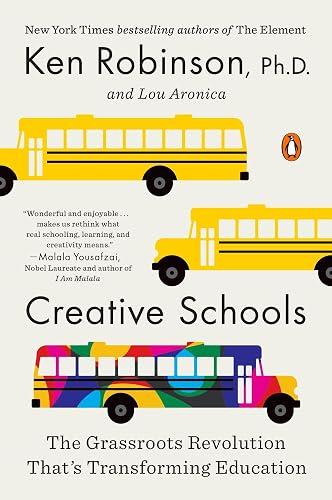
Creative Schools reveals how fundamentally broken our formal education system really is and how we can change our perspective to teach children the competencies and things they actually need to navigate the modern world.
Creative Schools reveals how fundamentally broken our formal education system really is and how we can change our perspective to teach children the competencies and things they actually need to navigate the modern world.
Have you ever thought about why schools are the way they are? What they were created for?
When you dig deep into the books of the history of education, what you find isn’t all too pretty. Before our Western, formal school system was introduced, only few people were schooled. Usually the sons and daughters of rich people would have private teachers to teach them in a variety of subjects like history, art, math, language, biology and music.
Why the sudden change? Why have everyone learn these things? Because after the industrial revolution, people would need them to do their work.
It’s simple. To do highly standardized factory work, people would need highly standardized factory knowledge. So at the turn of the 19th to the 20th century Western governments introduced mass education built around conformity and obedience, using the same linear processes that made factories so efficient.
100 years later our kids still run through the same standardized, test-infested machine, to become cogs in the system when those cogs have long stopped being valuable.
There’s a reason Western schools do poorly in PISA studies (not least because PISA is standardized itself) and Finnish schools with only 2 hours worth of lessons a day are at the top of the scoreboard.
Schools are not designed to make you smarter. Right now, they’re designed to make you a productive employee, who doesn’t ask too many questions.
Can you remember a time when everything was interesting? When you wanted to touch, feel, look at and explore the whole world? You might not remember it, but there was such a time. It was when you were four years old. And then you started going to school. All of a sudden, you had to do stuff. Not because it was fun. But because it was required. And you started disliking books, disliking the subjects, and you stopped exploring. If you didn’t and you liked school, there was only one person responsible for this: your teacher. Great teachers nurture the creativity and curiosity of kids. They expand it, instead of nipping it in the bud by making their lessons boring. We all teach at times, whether to our friends, family, kids, or actual classrooms. When we do, Ken Robinson suggests we think of ourselves as gardeners: we can’t force our “plants” to grow, but we can feed their natural desire to do so. He says a good teacher will do four things: Engage with children on their level to spark their curiosity –…
Continue reading in the MinuteRead app
Get the complete 5-minute summary of Creative Schools
Get the complete summary in the appSchools aren’t meant to make you better, they’re designed to make you an obedient, productive employee.
Try to think of yourself as a gardener when you want to teach someone something.
What our kids really need to develop are curiosity, creativity and criticism.
"Creative Schools" is a strong fit if you want practical ideas around creativity, culture, education, especially themes like schools aren’t meant to make you better, they’re designed to make you an obedient, productive employee; try to think of yourself as a gardener when you want to teach someone something. The MinuteRead summary distills these concepts into a focused read, whether you're deciding whether to buy the book or applying its lessons at work.
Sir Ken Robinson, PhD is an internationally recognized leader in the development of creativity, innovation and human resources in education and in business. He is also one of the world’s leading speakers on these topics, with a profound impact on audiences everywhere. With over 37 million views, his 2006 TED Talk is the most viewed in the history of TED. In 2011 he was listed as “one of the world's elite thinkers on creativity and innovation” by Fast Company magazine, and was ranked among the Th…
View all summaries by Sir Ken Robinson PhDContinue Reading
Access the complete 5-minute summary and thousands more nonfiction books in the MinuteRead app.

Continue reading the complete summary in the MinuteRead app.