 MinuteRead
30 min
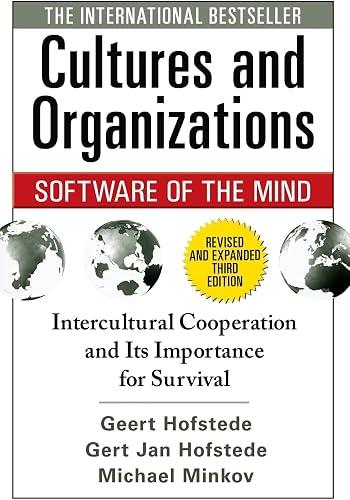
Book summary
by Geert Hofstede
Premium summary · Opens in the app · 30 min read
Every day, people from different countries misunderstand each other. A German manager gives direct feedback to a Japanese employee and watches the relationship collapse. An American negotiator pushes for a quick decision and offends his Chinese counterparts. A Swedish team leader encourages open debate and confuses her Mexican colleagues, who expected clear direction from above.
**Author:** Geert Hofstede
**Estimated Reading Time:** 90 minutes
**What You'll Learn:**
- Why people from different countries think, feel, and act differently - The six dimensions that explain most cultural differences worldwide - How culture shapes families, schools, workplaces, and governments - Why management techniques that work in one country often fail in another - How to navigate cultural differences with intelligence and respect
**Who This Book Is For:**
Anyone who works across borders, manages diverse teams, negotiates internationally, teaches students from different backgrounds, or simply wants to understand why the world feels so divided and how to bridge those divides.
Every day, people from different countries misunderstand each other. A German manager gives direct feedback to a Japanese employee and watches the relationship collapse. An American negotiator pushes for a quick decision and offends his Chinese counterparts. A Swedish team leader encourages open debate and confuses her Mexican colleagues, who expected clear direction from above. These failures rarely happen because anyone is incompetent or malicious. They happen because people assume that everyone thinks the way they do. They assume that what works in their culture will work everywhere. They assume that their values are universal. Geert Hofstede spent decades proving that these assumptions are wrong. In the late 1960s and early 1970s, Hofstede had an extraordinary opportunity. He worked for IBM, which had employees in more than seventy countries. The company conducted extensive surveys of employee values and attitudes. When Hofstede analyzed the data, he discovered something remarkable. Employees from the same country gave similar answers, even when they worked in different offices. Employees from different countries gave different answers, even when they worked for the same company with the same policies. The differences were not random. They formed patterns. And those patterns revealed something profound about how culture shapes the human mind. Hofstede came to describe culture as "the software of the mind." Just as a computer needs software to function, humans need mental programs to interpret the world, decide what matters, and guide their behavior. We acquire this mental software in childhood, from our families, schools, and communities. By the time we are adults, it operates so automatically that we rarely notice it. This is why cultural differences are so difficult to navigate. We do not experience our own culture as a choice. We experience it as reality. The way we greet people, express disagreement, show respect, or define fairness feels natural and obvious. When someone from another culture behaves differently, we do not think "they have different mental software." We think "they are rude" or "they are strange" or "they are wrong." Hofstede's work provides an alternative. Instead of judging, we can understand. Instead of assuming,…
Continue reading in the MinuteRead app
Get the complete 30-minute summary of Cultures and Organizations
Get the complete summary in the appCulture is learned mental programming shared by members of a society. It shapes how people think, feel, and act.
Power distance measures acceptance of inequality. High power distance cultures value hierarchy; low power distance cultu
Individualist cultures prioritize personal freedom; collectivist cultures prioritize group loyalty.
Masculine cultures value achievement and competition; feminine cultures value cooperation and quality of life.
Uncertainty avoidance measures tolerance for ambiguity. High uncertainty avoidance cultures value rules; low uncertainty
Long-term oriented cultures prioritize future rewards; short-term oriented cultures prioritize tradition and present obl
"Cultures and Organizations" is a strong fit if you want practical ideas around business, psychology, culture, especially themes like culture is learned mental programming shared by members of a society. it shapes how people think, feel, and act; power distance measures acceptance of inequality. high power distance cultures value hierarchy; low power distance cultu. The MinuteRead summary distills these concepts into a focused read, whether you're deciding whether to buy the book or applying its lessons at work.
Motivated to help readers with culture is always a collective phenomenon, Geert Hofstede wrote “Cultures and Organizations” to package those ideas for a fast, focused read. In “Cultures and Organizations”, Geert Hofstede focuses on culture is always a collective phenomenon. Through “Cultures and Organizations”, Geert Hofstede distills the core ideas on business into lessons readers can absorb in a single short sitting. Readers turn to this work when they want Geert Hofstede's perspective on the …
Continue Reading
Access the complete 30-minute summary and thousands more nonfiction books in the MinuteRead app.

Continue reading the complete summary in the MinuteRead app.






