MinuteRead
30 min
Book summary
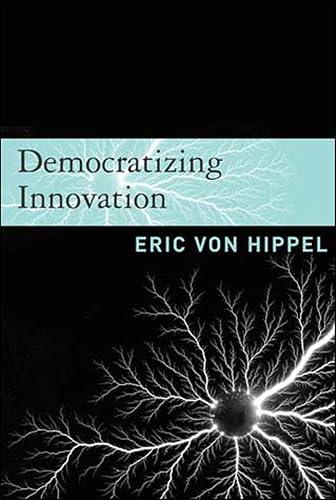
by Eric von Hippel
Premium summary · Opens in the app · 30 min read
For most of the twentieth century, the story of innovation followed a familiar script. Manufacturers identified needs in the marketplace. They invested in research and development. They designed products. They brought those products to market. Consumers simply chose among whatever options manufacturers offered.
**Author:** Eric von Hippel **Estimated Reading Time:** 45 minutes
**What You'll Learn:**
- Why users, not manufacturers, develop many of the world's most important innovations - How lead users anticipate market needs years before they become mainstream - Why freely sharing innovations often beats protecting them with patents - How toolkits enable users to design exactly what they need - What manufacturers must do to profit from user innovation - How policy and intellectual property laws must evolve
**Who This Book Is For:**
This book is for product developers, entrepreneurs, innovation managers, policymakers, and anyone curious about where breakthrough ideas actually come from. If you have ever modified a product to better suit your needs, you are already part of the story this book tells.
For most of the twentieth century, the story of innovation followed a familiar script. Manufacturers identified needs in the marketplace. They invested in research and development. They designed products. They brought those products to market. Consumers simply chose among whatever options manufacturers offered. This story is comforting. It places innovation in the hands of experts, inside well-funded laboratories, guided by professional managers. It suggests that progress flows from producer to consumer in a tidy, predictable stream. But this story is incomplete. In fact, it misses one of the most important sources of innovation in the modern economy: the users themselves. Consider the mountain bike. It was not developed by a bicycle manufacturer. It was created by young riders in Northern California who wanted bikes that could handle rough downhill terrain. They took old cruiser bicycles, added stronger brakes, modified the frames, and created something entirely new. Only later, after the sport had grown and the designs had proven themselves, did manufacturers begin producing mountain bikes commercially. Consider the scientific instruments that enabled major discoveries in chemistry and physics. Study after study has shown that the most important innovations in these instruments came not from instrument manufacturers, but from the scientists who used them. These scientists had a problem to solve, a measurement to make, a phenomenon to understand. When existing instruments failed them, they built better ones. Consider open-source software. Linux, Apache, Python, and countless other programs were not created by software companies seeking profit. They were created by programmers who needed tools that did not yet exist. They built those tools for themselves, shared them freely, and transformed the software industry in the process. These examples are not anomalies. They represent a pattern that repeats across industries and around the world. Users innovate. They always have. And now, thanks to advances in technology, they are innovating more effectively than ever before. Eric von Hippel, a professor at the MIT Sloan School of Management, has…
Continue reading in the MinuteRead app
Get the complete 30-minute summary of Democratizing Innovation
Get the complete summary in the appUsers, not just manufacturers, develop many of the most important innovations in a wide range of industries.
Lead users experience needs before the broader market, making their innovations valuable predictors of future demand.
Innovation tools are becoming democratized, expanding the pool of potential innovators to millions of ordinary users.
Free revealing of innovations often benefits the innovator more than protecting them with intellectual property.
Toolkits enable manufacturers to tap into user creativity while maintaining control over production.
Innovation communities amplify the power of individual innovators through collaboration and feedback.
"Democratizing Innovation" is a strong fit if you want practical ideas around business, technology, economics, especially themes like users, not just manufacturers, develop many of the most important innovations in a wide range of industries; lead users experience needs before the broader market, making their innovations valuable predictors of future demand. The MinuteRead summary distills these concepts into a focused read, whether you're deciding whether to buy the book or applying its lessons at work.
Motivated to help readers with many of the most important and novel products and processes in a range of fields have been developed by user, Eric von Hippel wrote “Democratizing Innovation” to package those ideas for a fast, focused read. In “Democratizing Innovation”, Eric von Hippel focuses on many of the most important and novel products and processes in a range of fields have been developed by user. Through “Democratizing Innovation”, Eric von Hippel distills the core ideas on business into …
Continue Reading
Access the complete 30-minute summary and thousands more nonfiction books in the MinuteRead app.

Continue reading the complete summary in the MinuteRead app.