 MinuteRead
30 min
Book summary
by Bill Burnett
Premium summary · Opens in the app · 30 min read
Most people spend more time planning a two-week vacation than designing their careers. That observation, uncomfortable as it may be, explains why so many talented people feel trapped in jobs that drain them. They drift into roles, accept whatever comes next, and then wonder how they ended up somewhere they never intended to be.
**Author:** Bill Burnett **Estimated Reading Time:** 45 minutes
How to apply design thinking principles to transform your relationship with work. You will discover practical tools for navigating workplace challenges, redesigning your current role, building influence, thriving in hybrid environments, and making career decisions without waiting for perfect clarity.
Anyone who has ever felt stuck at work. Anyone who has wondered whether to quit or stay. Anyone navigating office politics, considering freelance work, adapting to remote teams, or simply wanting more meaning from the hours they spend earning a living. If you have a job, want a job, or are thinking about leaving a job, this book was written for you.
Most people spend more time planning a two-week vacation than designing their careers. That observation, uncomfortable as it may be, explains why so many talented people feel trapped in jobs that drain them. They drift into roles, accept whatever comes next, and then wonder how they ended up somewhere they never intended to be. The problem is not a lack of ambition. Most people genuinely want meaningful work. The problem is that nobody taught them how to design a career. We learn math, history, and literature in school, but nobody teaches us how to figure out what we want to do with our lives. We are expected to know, somehow, through intuition or luck. Bill Burnett spent decades as a product designer in Silicon Valley before becoming the Executive Director of the Design Program at Stanford University. He worked on Apple PowerBooks, helped create the first slate computer, and designed toys for Hasbro. His career has been built on solving messy problems through design thinking. When he began teaching design at Stanford, he noticed something striking. The same methods that helped him create better products could help people create better careers. Design thinking starts with a simple premise. You do not need to know the answer before you begin. You start where you are, build prototypes, test ideas, and learn from what happens. This approach works for products, and it works for careers. The traditional approach to career planning assumes you can figure everything out in advance. You pick a path, make a plan, and execute. But life rarely cooperates with such linear thinking. Industries change. Interests evolve. Opportunities appear that you never anticipated. The result is frustration when reality fails to match the plan. Burnett offers a different approach. Instead of trying to predict the future, you design your way forward. You treat your career as a series of experiments. You make small changes, observe the results, and adjust. You embrace what he calls "good enough for now" rather than waiting for perfect clarity. This matters because the world…
Continue reading in the MinuteRead app
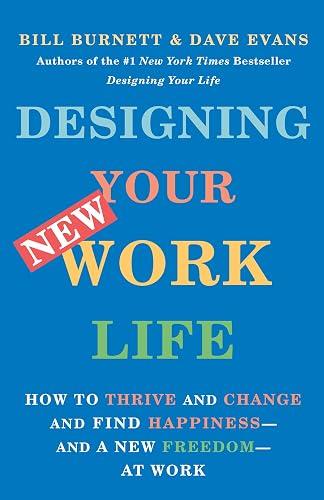
Get the complete 30-minute summary of Designing Your New Work Life
Get the complete summary in the appYou can design your work life the same way designers create products. Start where you are, build prototypes, test ideas,
If it is not actionable, it is not a problem. Reframe vague complaints into Minimum Actionable Problems.
Track what you learned, what you initiated, and who you helped each day. Patterns will reveal what actually energizes yo
Influence equals Value plus Recognition. Create value and make sure it is seen.
Before quitting, explore four redesign strategies: reframe, remodel, relocate, reinvent.
View gig work as prototyping for money. Write a simple business plan and differentiate your offering.
"Designing Your New Work Life" is a strong fit if you want practical ideas around business, self help, design, especially themes like you can design your work life the same way designers create products. start where you are, build prototypes, test ideas,; if it is not actionable, it is not a problem. reframe vague complaints into minimum actionable problems. The MinuteRead summary distills these concepts into a focused read, whether you're deciding whether to buy the book or applying its lessons at work.
Motivated to help readers with good enough for now leaves open the possibility of growth and change but doesn't make changing for change's, Bill Burnett wrote “Designing Your New Work Life” to package those ideas for a fast, focused read. In “Designing Your New Work Life”, Bill Burnett focuses on good enough for now leaves open the possibility of growth and change but doesn't make changing for change's. Through “Designing Your New Work Life”, Bill Burnett distills the core ideas on business into…
View all summaries by Bill BurnettContinue Reading
Access the complete 30-minute summary and thousands more nonfiction books in the MinuteRead app.

Continue reading the complete summary in the MinuteRead app.






