 MinuteRead
30 min
Book summary
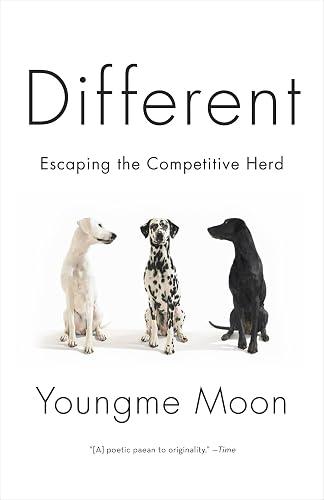
by Youngme Moon
Premium summary · Opens in the app · 30 min read
There is a strange paradox at the heart of modern business. Companies spend billions of dollars every year trying to differentiate themselves from their competitors. They hire the best agencies, conduct exhaustive market research, and launch sophisticated branding campaigns. They obsess over customer feedback and pour resources into product development. And yet, in category after category, the result is the same: a marketplace filled with products that are nearly indistinguishable from one anoth
**Author:** Youngme Moon **Estimated Reading Time:** 45 minutes
**What You'll Learn:**
- Why most companies end up looking exactly like their competitors despite their best efforts to differentiate - How progress paradoxically leads to sameness - The five consumer coping mechanisms in hyper-mature markets - Three proven strategies for breaking away from the herd - Why the most successful brands often reject conventional marketing wisdom
**Who This Book Is For:**
This book is for anyone who has ever wondered why so many products in the same category feel interchangeable. It is for marketers tired of chasing competitors feature for feature. It is for entrepreneurs who suspect that the path to differentiation requires something more than incremental improvement. And it is for anyone who has stood in a supermarket aisle, stared at thirty varieties of toothpaste, and felt the strange exhaustion of too many meaningless choices.
There is a strange paradox at the heart of modern business. Companies spend billions of dollars every year trying to differentiate themselves from their competitors. They hire the best agencies, conduct exhaustive market research, and launch sophisticated branding campaigns. They obsess over customer feedback and pour resources into product development. And yet, in category after category, the result is the same: a marketplace filled with products that are nearly indistinguishable from one another. Walk down the cereal aisle of any American supermarket and you will find hundreds of options. But how many of them are truly different from the others? How many offer something that no other cereal offers? The same question applies to airlines, hotels, banks, car manufacturers, smartphone makers, and fast-food chains. In each of these categories, the players have spent decades trying to outdo one another. And in each of these categories, the players have ended up looking more alike than ever. This is not a failure of effort. It is a failure of logic. Youngme Moon, a professor at Harvard Business School, has spent her career studying this phenomenon. Her conclusion is both simple and unsettling: the very strategies that companies use to differentiate themselves are the strategies that drive them toward sameness. The harder they compete, the more they converge. The more they improve, the more they blur together. The problem begins with measurement. In any mature industry, a set of standard metrics emerges to define what "good" looks like. Airlines measure on-time performance, seat pitch, and route coverage. Hotels measure star ratings, amenities, and loyalty program benefits. Universities measure acceptance rates, faculty publications, and endowment size. These metrics are useful for tracking performance, but they also create a subtle trap. Once an industry agrees on what to measure, every player in that industry starts optimizing for the same numbers.…
Continue reading in the MinuteRead app
Get the complete 30-minute summary of Different
Get the complete summary in the appCompetitive herding drives companies toward sameness, not differentiation.
The augmentation trap leads to products that are overstuffed with features that no one asked for.
In hyper-mature categories, consumers stop caring about brands and develop coping mechanisms instead.
Reverse positioning means deliberately offering less while adding unexpected extravagance.
Breakaway positioning means challenging the category itself, not just the brand's position within it.
Hostile positioning means rejecting customer-centric marketing and embracing polarization.
"Different" is a strong fit if you want practical ideas around business, entrepreneurship, management, especially themes like competitive herding drives companies toward sameness, not differentiation; the augmentation trap leads to products that are overstuffed with features that no one asked for. The MinuteRead summary distills these concepts into a focused read, whether you're deciding whether to buy the book or applying its lessons at work.
Motivated to help readers with the more entrenched a system of measurement, Youngme Moon wrote “Different” to package those ideas for a fast, focused read. In “Different”, Youngme Moon focuses on the more entrenched a system of measurement. Through “Different”, Youngme Moon distills the core ideas on business into lessons readers can absorb in a single short sitting. Readers turn to this work when they want Youngme Moon's perspective on the subject without working through the entire original vol…
Continue Reading
Access the complete 30-minute summary and thousands more nonfiction books in the MinuteRead app.

Continue reading the complete summary in the MinuteRead app.






