 MinuteRead
30 min
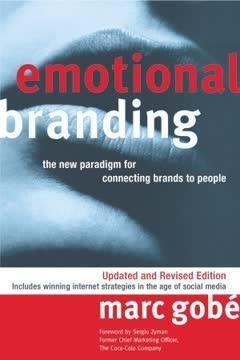
For most of the twentieth century, marketing operated on a simple premise. Build a good product. Explain its features. Price it competitatively. Distribute it widely. Advertise its benefits. Consumers, the theory went, would make rational decisions based on information.
**Author:** Marc Gobé **Estimated Reading Time:** 45 minutes
**What You'll Learn**
How the most successful brands in the world stopped selling products and started creating emotional connections. You will learn why consumers choose brands that understand them, how sensory experiences shape loyalty, why authenticity matters more than advertising, and how to build a brand that people genuinely care about.
**Who This Book Is For**
This book is for marketers, brand managers, entrepreneurs, designers, and anyone who wants to understand why some brands inspire devotion while others struggle for attention. If you have ever wondered why people camp outside stores for a new phone or pay premium prices for coffee they could make at home, this book will explain the emotional mechanics behind those decisions.
For most of the twentieth century, marketing operated on a simple premise. Build a good product. Explain its features. Price it competitatively. Distribute it widely. Advertise its benefits. Consumers, the theory went, would make rational decisions based on information. This approach worked well enough when products were scarce and choices were limited. But something fundamental changed in the final decades of the century. Products became abundant. Quality became table stakes. Differentiation based on features became nearly impossible. A car was a car. A computer was a computer. A cup of coffee was a cup of coffee. And yet, some brands thrived while others faded. Some products commanded premium prices while functionally identical competitors struggled. Some companies inspired fierce loyalty while others fought constant price wars. The difference, Marc Gobé argues, was not in the products themselves. The difference was in how these brands made people feel. Emotional Branding is Gobé's attempt to explain this shift and provide a framework for navigating it. The book emerged from his work at Desgrippes Gobé, one of the world's leading brand design firms, where he helped create brand identities for companies like Coca-Cola, Victoria's Secret, and Godiva. Through decades of practical experience, Gobé observed a pattern: the brands that succeeded were not necessarily the ones with the best products or the biggest advertising budgets. They were the ones that understood human emotion. The problem, as Gobé saw it, was that most companies were still operating with an outdated mental model. They thought of customers as rational actors making calculated decisions. They focused on features, benefits, and price points. They treated branding as a cosmetic exercise, something applied after the real work of product development was done. This approach, Gobé argues, is fundamentally backwards. People do not buy products. They buy feelings. They buy identities. They buy belonging. They buy the promise of becoming someone slightly better, slightly happier, slightly more complete. The product is merely the vehicle for this emotional…
Continue reading in the MinuteRead app
Get the complete 30-minute summary of Emotional Branding, Revised Edition
Get the complete summary in the app**People buy feelings, not products.** The emotional experience is the real product.
**Treat customers as people, not consumers.** Build relationships, not transactions.
**Engage all five senses.** Sensory experiences create stronger memories and deeper connections.
**Be authentic.** People can detect insincerity. Fake authenticity is worse than no authenticity.
**Time is the new luxury.** Help people save time and enhance the quality of their time.
**Social media is a conversation.** Listen, respond, and create content worth sharing.
"Emotional Branding, Revised Edition" is a strong fit if you want practical ideas around business, design, psychology, especially themes like **people buy feelings, not products.** the emotional experience is the real product; **treat customers as people, not consumers.** build relationships, not transactions. The MinuteRead summary distills these concepts into a focused read, whether you're deciding whether to buy the book or applying its lessons at work.
Marc Gobe is a renowned expert in the field of branding and marketing. His work focuses on emotional branding strategies and their impact on consumer behavior. Gobe emphasizes the importance of creating emotional connections between brands and customers through various sensory elements and experiences. His approach considers demographic shifts, cultural trends, and technological advancements in shaping brand strategies. Gobe's insights have influenced numerous companies in developing stronger br…
View all summaries by Marc GobéContinue Reading
Access the complete 30-minute summary and thousands more nonfiction books in the MinuteRead app.

Continue reading the complete summary in the MinuteRead app.






