 MinuteRead
30 min
Book summary
Premium summary · Opens in the app · 30 min read
A quiet revolution is reshaping the business world, and most companies have not yet noticed. The old rules of marketing, the ones taught in business schools for decades, are losing their grip on reality. Customers are no longer the rational, calculating decision-makers that traditional marketing theory assumed them to be. They are not carefully weighing features and benefits before making logical choices. Something far more interesting is happening.
**Author:** Bernd H. Schmitt
**Estimated Reading Time:** 45 minutes
**What You'll Learn:**
- Why traditional feature-and-benefit marketing no longer captures customer loyalty - The five strategic experience modules that form the foundation of experiential marketing - How to design sensory, emotional, intellectual, behavioral, and social brand experiences - Practical tools for building holistic experiences that create lasting customer connections - How to transform your organization into an experience-driven enterprise
**Who This Book Is For:**
This book is for marketing professionals, brand managers, entrepreneurs, and business leaders who recognize that customers have changed and that old marketing formulas are losing their power. It is for anyone who wants to move beyond selling products and start creating meaningful experiences that customers remember, share, and return to.
A quiet revolution is reshaping the business world, and most companies have not yet noticed. The old rules of marketing, the ones taught in business schools for decades, are losing their grip on reality. Customers are no longer the rational, calculating decision-makers that traditional marketing theory assumed them to be. They are not carefully weighing features and benefits before making logical choices. Something far more interesting is happening. People are choosing products, services, and brands based on how those things make them feel. They are drawn to experiences that stimulate their senses, touch their emotions, engage their minds, and connect them to something larger than themselves. The customer who once compared specifications now walks into a store because of its atmosphere, buys a phone because of how it feels in the hand, and remains loyal to a brand because of what that brand says about who they are. This shift did not happen overnight. It emerged from three powerful forces that have transformed the commercial landscape. The first is the omnipresence of information technology. The internet, mobile devices, and social media have given customers unprecedented access to information and unprecedented power to share their opinions. A single tweet about a bad experience can reach millions of people within hours. A viral video can make or break a product launch. In this environment, functional superiority is no longer enough. Customers expect products to work well, but they choose products that make them feel something. The second force is the supremacy of brands. In a world of endless choices, brands have become shortcuts for meaning. They are symbols that customers use to express their identities, signal their values, and connect with like-minded people. A brand is no longer just a name on a package. It is a promise of an experience, a badge of belonging, a story that customers tell about themselves. Companies that understand this have built empires not on product features but on the emotional and…
Continue reading in the MinuteRead app
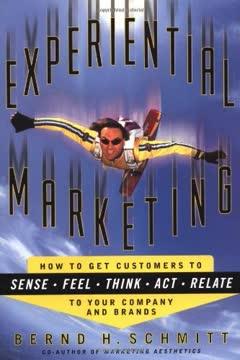
Get the complete 30-minute summary of Experiential Marketing
Get the complete summary in the appCustomers are driven by emotions, sensations, and social connections, not just logic and utility.
The five strategic experiential modules are SENSE, FEEL, THINK, ACT, and RELATE.
Experience providers are the tactical tools that bring experiences to life.
Sensory experiences create immediate engagement and powerful memories.
Most affect occurs during consumption, so design the consumption experience to generate positive feelings.
Intellectual engagement creates deeper, more lasting connections than passive consumption.
"Experiential Marketing" is a strong fit if you want practical ideas around business, management, especially themes like customers are driven by emotions, sensations, and social connections, not just logic and utility; the five strategic experiential modules are sense, feel, think, act, and relate. The MinuteRead summary distills these concepts into a focused read, whether you're deciding whether to buy the book or applying its lessons at work.
Bernd H. Schmitt is a renowned marketing expert and author specializing in customer experience and brand management. He is a professor of international business at Columbia Business School and has written several influential books on marketing and branding. Bernd H. Schmitt is known for pioneering the concept of experiential marketing, which focuses on creating memorable and emotionally engaging experiences for customers. His work has significantly influenced modern marketing strategies, emphasi…
View all summaries by Bernd H. SchmittContinue Reading
Access the complete 30-minute summary and thousands more nonfiction books in the MinuteRead app.

Continue reading the complete summary in the MinuteRead app.






