MinuteRead
30 min
Book summary
Premium summary · Opens in the app · 30 min read
Most people believe that powerful speaking and writing come from having something powerful to say. This is only half true. The other half lies in knowing how to say it. A mediocre idea expressed with rhetorical skill will often persuade more effectively than a brilliant idea expressed poorly. This is an uncomfortable truth, but the classical rhetoricians understood it, and so did every great English writer and speaker who came after them.
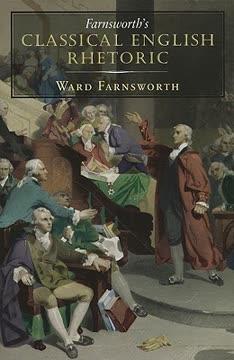
**Author:** Ward Farnsworth **Estimated Reading Time:** 45 minutes
### What You'll Learn
The English language contains a hidden arsenal of persuasive techniques that master speakers and writers have used for centuries. This book reveals those techniques, drawing from the rhetorical tradition that stretches from ancient Greece to the speeches of Churchill, Lincoln, and Burke. You will learn how repetition builds emotional power, how sentence structure creates rhythm and memorability, how strategic omission engages the listener's mind, and how questions can become weapons of argument. You will discover that great rhetoric is not a matter of talent or inspiration but of specific, learnable devices that anyone can study and apply.
### Who This Book Is For
This book is for anyone who wants their words to carry more weight. Whether you write speeches, argue cases, teach students, lead teams, or simply want to express yourself with greater clarity and force, the classical devices of rhetoric will serve you. No prior knowledge of rhetoric is required. Farnsworth teaches each device through examples drawn from the finest English prose and oratory, showing exactly how the masters achieved their effects.
Most people believe that powerful speaking and writing come from having something powerful to say. This is only half true. The other half lies in knowing how to say it. A mediocre idea expressed with rhetorical skill will often persuade more effectively than a brilliant idea expressed poorly. This is an uncomfortable truth, but the classical rhetoricians understood it, and so did every great English writer and speaker who came after them. The problem is that rhetoric has largely disappeared from modern education. Students may encounter terms like metaphor or alliteration, but the deeper structural devices that give prose its persuasive force remain unknown to most educated people. This is a strange loss. For centuries, rhetoric formed the core of Western education. Shakespeare studied it. Lincoln studied it. Churchill studied it. They did not invent their techniques from scratch. They inherited a system. Ward Farnsworth wrote this book to restore that system to modern readers. He does not offer vague advice about speaking with confidence or finding your authentic voice. He offers something far more practical: a catalog of specific verbal moves, each with a name, a definition, and a collection of examples showing how the masters used it. The book is not a theoretical treatise. It is a toolbox. What makes Farnsworth's approach different is his method of teaching through examples. Rather than defining a device and moving on, he shows the device at work in sentences by Burke, Dickens, Churchill, Lincoln, and many others. He explains what the device accomplishes in each case and why it works. By the end of the…
Continue reading in the MinuteRead app
Get the complete 30-minute summary of Farnsworth's Classical English Rhetoric
Get the complete summary in the appAnaphora repeats words at the beginning of successive clauses to build momentum.
Epistrophe repeats words at the end of successive clauses to drive a point home.
Isocolon uses parallel structure to create balance and aid comprehension.
Antithesis juxtaposes contrasting ideas in parallel form for clarity and force.
Anastrophe inverts normal word order to create emphasis and suspense.
Ellipsis omits implied words to create brevity and engage the listener.
"Farnsworth's Classical English Rhetoric" is a strong fit if you want practical ideas around writing, language, education, especially themes like anaphora repeats words at the beginning of successive clauses to build momentum; epistrophe repeats words at the end of successive clauses to drive a point home. The MinuteRead summary distills these concepts into a focused read, whether you're deciding whether to buy the book or applying its lessons at work.
Ward Farnsworth is the Dean and John Jeffers Research Chair at the University of Texas School of Law. He previously served as Associate Dean for Academic Affairs and Professor of Law at Boston University Law School. Farnsworth's distinguished career includes clerking for Supreme Court Justice Anthony M. Kennedy and working as a Legal Adviser to the Iran-United States Claims Tribunal. He holds a J.D. from the University of Chicago Law School and a B.A. from Wesleyan University. Farnsworth has aut…
View all summaries by Ward FarnsworthContinue Reading
Access the complete 30-minute summary and thousands more nonfiction books in the MinuteRead app.

Continue reading the complete summary in the MinuteRead app.