 MinuteRead
30 min
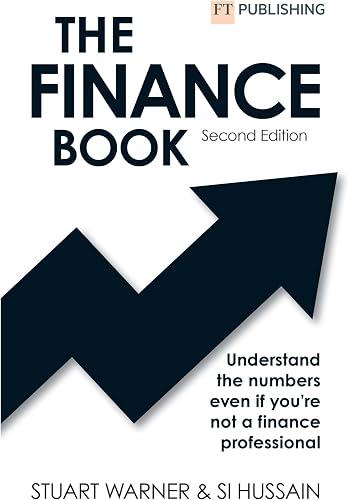
Book summary
by Stuart Warner
Premium summary · Opens in the app · 30 min read
Every day, businesses make decisions that involve money. They hire people, buy equipment, set prices, negotiate with suppliers, borrow from banks, and invest in new opportunities. Behind each of these decisions lies a financial reality that determines whether the business thrives, survives, or fails.
**Author:** Stuart Warner **Estimated Reading Time:** 45 minutes
**What You'll Learn:**
- How to read and interpret the three essential financial statements - Why profit and cash are not the same thing - How to assess a company's true profitability beyond the bottom line - How to manage working capital effectively - How to make smarter investment decisions - How to understand pricing, budgeting, and corporate governance
**Who This Book Is For:**
This book is for anyone who wants to understand business finance without getting lost in jargon. Whether you are a manager who needs to engage with financial information, an entrepreneur building a business, a student preparing for a career in commerce, or simply someone who wants to make better financial decisions, this book will give you the confidence to read, interpret, and use financial information effectively.
Every day, businesses make decisions that involve money. They hire people, buy equipment, set prices, negotiate with suppliers, borrow from banks, and invest in new opportunities. Behind each of these decisions lies a financial reality that determines whether the business thrives, survives, or fails. Yet for many people, the language of finance remains frustratingly opaque. Terms like accruals, gearing, working capital, and net present value sound like a foreign language. Financial statements appear to be dense tables of numbers designed to confuse rather than clarify. The result is that capable, intelligent people often feel excluded from conversations that fundamentally affect their work and their future. This book exists to change that. Stuart Warner wrote The Finance Book with a simple conviction: financial literacy is not a specialist skill reserved for accountants and CFOs. It is a fundamental capability that every professional should possess. The principles of finance are not inherently difficult. They are logical, structured, and accessible once the jargon is stripped away and the underlying concepts are explained clearly. The problem this book addresses is significant. In organizations of every size, people make decisions every day that have financial consequences. A marketing manager chooses between advertising channels. An operations manager decides whether to hold more inventory. A sales director negotiates payment terms with a major customer. A project leader evaluates whether a proposed initiative is worth pursuing. Without financial literacy, these decisions are made on intuition, habit, or incomplete information. The consequences of financial illiteracy are real. Businesses run out of cash despite being profitable on paper. Managers pursue projects that destroy value because they do not understand the time value of money. Companies take on dangerous levels of debt because the true cost of leverage is not understood. Opportunities are missed because people cannot see the financial implications of their choices. Warner's approach is different from traditional finance education. He…
Continue reading in the MinuteRead app
Get the complete 30-minute summary of The Finance Book
Get the complete summary in the appThe three financial statements are the P&L, the balance sheet, and the cash flow statement. They answer different questi
Profit is not the same as cash. Accrual accounting recognizes revenue and expenses when earned or incurred, not when cas
Profitability is about more than absolute profit. Margins measure profit relative to revenue, and returns measure profit
Working capital is the difference between current assets and current liabilities. Managing it effectively frees up cash
Debt is cheaper than equity due to tax deductibility and lower risk for lenders, but it increases financial risk.
The time value of money means that a pound today is worth more than a pound tomorrow. Always discount future cash flows
"The Finance Book" is a strong fit if you want practical ideas around business, finance, reference, especially themes like the three financial statements are the p&l, the balance sheet, and the cash flow statement. they answer different questi; profit is not the same as cash. accrual accounting recognizes revenue and expenses when earned or incurred, not when cas. The MinuteRead summary distills these concepts into a focused read, whether you're deciding whether to buy the book or applying its lessons at work.
Motivated to help readers with the P&L or 'profit and loss account' or 'statement of profit or loss' or 'income statement' is one of the key, Stuart Warner wrote “The Finance Book” to package those ideas for a fast, focused read. In “The Finance Book”, Stuart Warner focuses on the P&L or 'profit and loss account' or 'statement of profit or loss' or 'income statement' is one of the key. Through “The Finance Book”, Stuart Warner distills the core ideas on business into lessons readers can absorb i…
Continue Reading
Access the complete 30-minute summary and thousands more nonfiction books in the MinuteRead app.

Continue reading the complete summary in the MinuteRead app.






