 MinuteRead
30 min
Book summary
by Gene Siciliano
Premium summary · Opens in the app · 30 min read
In the early 2000s, a series of corporate scandals shook the business world to its core. Companies that had seemed invincible collapsed almost overnight. Thousands of employees lost their jobs, their retirement savings, and their faith in the system. The common thread running through these disasters was not a lack of intelligence or ambition. It was financial ignorance, carelessness, and in some cases, outright dishonesty.
**Author:** Gene Siciliano
**Estimated Reading Time:** 45 minutes
**What You'll Learn:** - How to read and interpret the three essential financial statements - The critical difference between profit and cash flow - How to use financial ratios to uncover hidden business insights - The fundamentals of cost accounting and budgeting - How businesses are financed through debt and equity - Practical frameworks for making better financial decisions
**Who This Book Is For:** Managers, supervisors, entrepreneurs, and professionals who need to understand financial concepts but lack formal training in accounting or finance. If you have ever felt lost in a budget meeting, confused by a financial report, or uncertain about how your decisions affect the company's bottom line, this book was written for you.
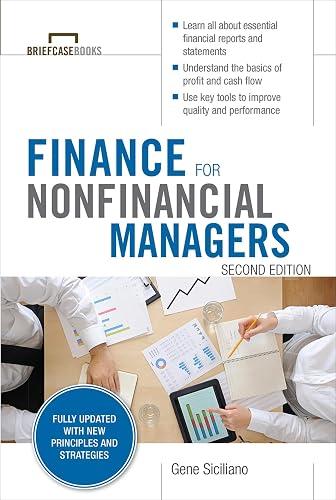
In the early 2000s, a series of corporate scandals shook the business world to its core. Companies that had seemed invincible collapsed almost overnight. Thousands of employees lost their jobs, their retirement savings, and their faith in the system. The common thread running through these disasters was not a lack of intelligence or ambition. It was financial ignorance, carelessness, and in some cases, outright dishonesty. These events revealed an uncomfortable truth: many managers, even at the highest levels, did not truly understand the financial machinery of their own organizations. They could talk about strategy and vision, but they could not read a balance sheet. They could inspire teams, but they could not spot the warning signs of impending financial trouble. They were flying blind, and when the storms came, they had no instruments to guide them. Gene Siciliano wrote Finance for Non-Financial Managers to address this gap. His central argument is simple but profound: financial literacy is not optional for modern managers. It is a survival skill. Whether you work in marketing, operations, human resources, or sales, your decisions have financial consequences. Understanding those consequences is not just about protecting your career. It is about protecting your organization, your colleagues, and the value that everyone works so hard to create. The problem is that finance has a reputation for being intimidating. The terminology sounds like a foreign language. The statements look like walls of numbers. The concepts seem abstract and disconnected from daily work. Many managers respond by avoiding the subject entirely, delegating financial matters to the accounting department and hoping for the best. Siciliano's approach is different. He treats financial literacy as something that can be learned by anyone willing to invest the time. He explains concepts in plain language, connects them to real business situations, and shows how financial information can be used to make better decisions. He does not assume prior knowledge, but he also does not talk down to his readers. The goal…
Continue reading in the MinuteRead app
Get the complete 30-minute summary of Finance for Non-Financial Managers
Get the complete summary in the appThe balance sheet shows what a company owns, owes, and what remains for owners at a specific moment.
The income statement shows whether a company made money over a period of time.
The cash flow statement shows where cash came from and where it went.
Profit and cash flow are different. Both matter.
Critical Performance Factors reveal the underlying dynamics of a business.
Cost accounting reveals the true profitability of products and services.
"Finance for Non-Financial Managers" is a strong fit if you want practical ideas around business, finance, management, especially themes like the balance sheet shows what a company owns, owes, and what remains for owners at a specific moment; the income statement shows whether a company made money over a period of time. The MinuteRead summary distills these concepts into a focused read, whether you're deciding whether to buy the book or applying its lessons at work.
Motivated to help readers with the accounting scandals of 2002 showed that financial incompetence, Gene Siciliano wrote “Finance for Non-Financial Managers” to package those ideas for a fast, focused read. In “Finance for Non-Financial Managers”, Gene Siciliano focuses on the accounting scandals of 2002 showed that financial incompetence. Through “Finance for Non-Financial Managers”, Gene Siciliano distills the core ideas on business into lessons readers can absorb in a single short sitting. Rea…
Continue Reading
Access the complete 30-minute summary and thousands more nonfiction books in the MinuteRead app.

Continue reading the complete summary in the MinuteRead app.






