 MinuteRead
30 min
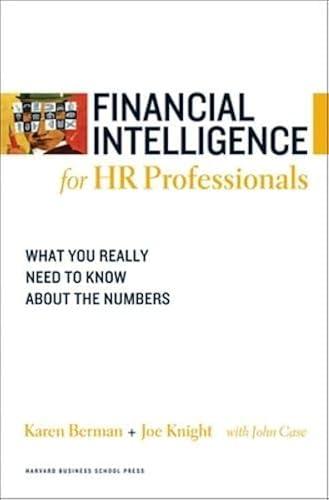
Book summary
by Karen Berman
Premium summary · Opens in the app · 30 min read
There is a moment in every HR professional's career when the conversation shifts. You are sitting in a meeting with senior leaders, discussing whether to expand a team, launch a new training program, or restructure a department. The discussion turns to numbers. Someone mentions operating margin. Another person references the balance sheet. The CFO asks a question about cash flow implications. And suddenly, you feel yourself fading into the background, unsure how to contribute, uncertain what the
**Author:** Karen Berman
**Estimated Reading Time:** 45 minutes
**What You'll Learn:** - Why financial intelligence is the single most important skill for HR professionals who want a seat at the strategic table - How to read and interpret income statements, balance sheets, and cash flow statements with confidence - The hidden assumptions and estimates behind every financial number - How to use financial ratios to make smarter workforce decisions - How to calculate ROI for HR initiatives and justify investments in human capital - How working capital management connects to your daily HR decisions - How to build a financially literate organization that performs better
**Who This Book Is For:** HR professionals who are tired of being excluded from strategic conversations. HR leaders who want to move beyond administrative support and become true business partners. Anyone in human resources who has ever felt lost when finance colleagues start talking about margins, cash flow, or return on assets. If you have ever wanted to understand what the numbers really mean and how to use them to drive better decisions, this book is for you.
There is a moment in every HR professional's career when the conversation shifts. You are sitting in a meeting with senior leaders, discussing whether to expand a team, launch a new training program, or restructure a department. The discussion turns to numbers. Someone mentions operating margin. Another person references the balance sheet. The CFO asks a question about cash flow implications. And suddenly, you feel yourself fading into the background, unsure how to contribute, uncertain what the numbers actually mean. This moment is not a failure. It is an opportunity. But only if you are prepared. For decades, human resources has been treated as a support function. HR professionals managed payroll, handled compliance, processed benefits, and dealt with employee relations. These responsibilities mattered, but they rarely required deep financial understanding. The result was predictable. HR leaders were often excluded from strategic planning. They were brought in after decisions were made, asked to implement changes rather than shape them. They were seen as cost centers rather than value creators. That world is disappearing. The most successful organizations now recognize that people are their most important asset and their largest expense. Workforce decisions drive financial outcomes. Hiring, training, compensation, retention, and organizational design all have direct impacts on profitability, cash flow, and long-term value creation. When HR professionals understand finance, they can connect their work to these outcomes. They can speak the language of business. They can earn a seat at the table. This book exists to help you earn that seat. The challenge is that most HR professionals have never been trained in finance. They may have taken…
Continue reading in the MinuteRead app
Get the complete 30-minute summary of Financial Intelligence for HR Professionals
Get the complete summary in the appFinancial intelligence is the key to HR's strategic potential. Without it, HR remains on the periphery. With it, HR beco
Financial statements are not reality. They are a reflection of reality, built on estimates and assumptions. Ask question
Profit is not cash. A company can be profitable while running out of cash. Always examine cash flow.
The income statement shows profitability. The balance sheet shows financial position. The cash flow statement shows cash
Ratios reveal more than raw numbers. Compare ratios over time and against benchmarks to identify trends and opportunitie
Every HR initiative should be evaluated using ROI. Calculate the payback period, net present value, or internal rate of
"Financial Intelligence for HR Professionals" is a strong fit if you want practical ideas around business, finance, management, especially themes like financial intelligence is the key to hr's strategic potential. without it, hr remains on the periphery. with it, hr beco; financial statements are not reality. they are a reflection of reality, built on estimates and assumptions. ask question. The MinuteRead summary distills these concepts into a focused read, whether you're deciding whether to buy the book or applying its lessons at work.
Motivated to help readers with "If you want to be seen as an integral part of the success of your company, Karen Berman wrote “Financial Intelligence for HR Professionals” to package those ideas for a fast, focused read. In “Financial Intelligence for HR Professionals”, Karen Berman focuses on "If you want to be seen as an integral part of the success of your company. Through “Financial Intelligence for HR Professionals”, Karen Berman distills the core ideas on business into lessons readers can …
View all summaries by Karen BermanContinue Reading
Access the complete 30-minute summary and thousands more nonfiction books in the MinuteRead app.

Continue reading the complete summary in the MinuteRead app.






