MinuteRead
30 min
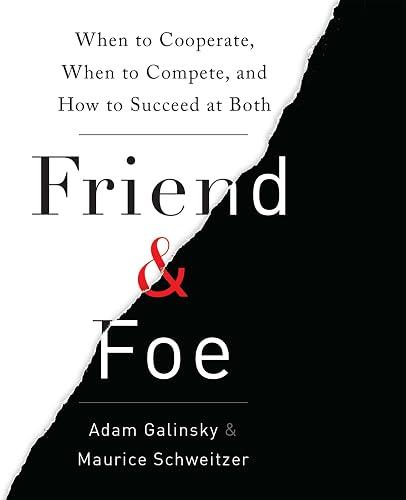
Book summary
by Adam Galinsky
Premium summary · Opens in the app · 30 min read
Every relationship you have contains a fundamental tension. The colleague who supports your project today might compete with you for a promotion tomorrow. The sibling who cheered for you at graduation might resent your success. The business partner who shares your vision might also want the larger share of the profits. We are constantly navigating between two opposing forces: the desire to cooperate and the impulse to compete.
**Author:** Adam Galinsky with Maurice Schweitzer
**Estimated Reading Time:** 45 minutes
**What You'll Learn:**
- Why every relationship contains both cooperation and competition - How social comparisons shape your motivation and self-worth - When hierarchy helps and when it hurts - How to build trust quickly and repair it when broken - Why perspective-taking is your most powerful social tool - How to negotiate strategically and leave lasting positive impressions
**Who This Book Is For:**
Anyone who works with other people. That includes managers navigating office politics, entrepreneurs building partnerships, parents raising competitive siblings, negotiators seeking better deals, and anyone who has ever wondered whether to trust a colleague or push back against a rival. If you interact with humans, this book will change how you understand those interactions.
Every relationship you have contains a fundamental tension. The colleague who supports your project today might compete with you for a promotion tomorrow. The sibling who cheered for you at graduation might resent your success. The business partner who shares your vision might also want the larger share of the profits. We are constantly navigating between two opposing forces: the desire to cooperate and the impulse to compete. Most books about social dynamics take sides. Some tell you to be ruthless, to treat every interaction as a battle to be won. Others tell you to be generous, to build trust and collaboration above all else. Both approaches miss something essential. Human relationships are never purely competitive or purely cooperative. They are always both, often at the same time. Adam Galinsky and Maurice Schweitzer spent decades researching this tension. Their work spans social psychology, behavioral economics, and organizational behavior. What they discovered is that the most successful people are not those who always cooperate or always compete. They are those who understand when each approach serves them best and can shift fluidly between them. Consider a simple example. Two colleagues are assigned to work on a project together. They need to cooperate to produce excellent work. But they are also competing for a single promotion slot. If they cooperate fully, they might produce great results but one will still lose the promotion. If they compete too aggressively, the project suffers and both look bad. The person who navigates this well understands that both dynamics are operating simultaneously. This book exists because most people get this balance wrong. Some people default to competition, seeing threats everywhere and alienating potential allies. Others default to cooperation, getting taken advantage of and missing opportunities to advance their interests. The goal is not to pick a side. The goal is to develop the flexibility to move between cooperation and competition as the situation demands. The stakes are…
Continue reading in the MinuteRead app
Get the complete 30-minute summary of Friend & Foe
Get the complete summary in the appEvery relationship contains both cooperation and competition. The skill is knowing which to emphasize and when.
Social comparison is automatic, but you can choose your reference points. Choose comparisons that motivate rather than d
Power boosts confidence but reduces empathy. Practice perspective-taking to counteract its corrupting effects.
Hierarchy helps with routine tasks but hurts with creative tasks. Match the structure to the task.
Trust requires both warmth and competence. Lead with warmth, then demonstrate competence.
Effective apologies require speed, candor, vulnerability, focus on the victim, and a promise to change.
"Friend & Foe" is a strong fit if you want practical ideas around business, psychology, self help, especially themes like every relationship contains both cooperation and competition. the skill is knowing which to emphasize and when; social comparison is automatic, but you can choose your reference points. choose comparisons that motivate rather than d. The MinuteRead summary distills these concepts into a focused read, whether you're deciding whether to buy the book or applying its lessons at work.
Motivated to help readers with the way we come to understand how well we are doing is by looking at others, Adam Galinsky wrote “Friend & Foe” to package those ideas for a fast, focused read. In “Friend & Foe”, Adam Galinsky focuses on the way we come to understand how well we are doing is by looking at others. Through “Friend & Foe”, Adam Galinsky distills the core ideas on business into lessons readers can absorb in a single short sitting. Readers turn to this work when they want Adam Galinsky…
Continue Reading
Access the complete 30-minute summary and thousands more nonfiction books in the MinuteRead app.

Continue reading the complete summary in the MinuteRead app.