MinuteRead
30 min
Book summary
by James Gleick
Premium summary · Opens in the app · 5 min read
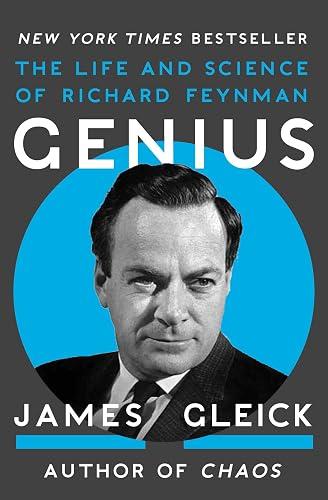
Genius: The Life And Science Of Richard Feynman tells the story of one the greatest minds in the history of science, all the way from his humble beginnings to changing physics as we know it and receiving the Nobel prize.
Genius: The Life And Science Of Richard Feynman tells the story of one the greatest minds in the history of science, all the way from his humble beginnings to changing physics as we know it and receiving the Nobel prize.
The greatest minds are often bred by the greatest parents, which is definitely true for Richard Feynman. His father predicted that if he were to have a son, he would become a great scientist. But Melville Feynman didn’t stop at visualizing, he made sure his son would be equipped with all the mental tools he needed to make this dream come true.
He taught Richard to visualize concepts by showing him tiles with geometric patterns before he could even read. Indeed, visualization would become a key tool for Feynman. For example, when he learned about the Tyrannosaurus Rex, his father told him it’d be tall enough to reach his bedroom window, but his head would be too wide to fit through, making numbers graspable.
Their focus always lay on observing and understanding, so Richard could build his own examples. So when they observed birds, Melville would tell Richard species names in Chinese, Portuguese and Italian, to emphasize that the real knowledge lay in seeing the world as it is and understanding what really happens. No matter what call a bird, it’s what it does that matters and separates it from other birds.
In school, it quickly became clear that Richard was better in math than anyone else. He breezed through his exams and won competitions with ease, mostly thanks to his visualization abilities and empathy. In a competition, your path to the solution doesn’t matter, and so Richard often got a jump on everyone else.
For example, in a problem where a hat falls off a boat into the river, drifts away unnoticed for 45 minutes and the velocity of the water and boat were given, Feynman didn’t need to scribble down formulas to find the answer. He simply visualized himself as the hat and instantly realized: you don’t need the numbers. It’ll take 45 minutes to retrieve the hat.
This highlights another highly developed trait of Feynman: his empathy. He would continue to put himself in the shoes of atoms, molecules, and other theoretical constructs throughout his career, which would allowed him to solve complex problems very quickly.
EQ matters as much for intelligence as IQ does, if not more.
Nobody’s great at everything, and this sure was true for Richard Feynman too. In his studies at MIT he was confronted with many of his anti-passions, which included art history, English, philosophy and music. He claimed the last one even caused him “physical pain.” The second he realized he…
Continue reading in the MinuteRead app
Get the complete 5-minute summary of Genius: The Life And Science Of Richard Feynman
Get the complete summary in the appObservation and understanding allow you to build your own analogies, which is when you learn the most.
Empathy is the bedrock of intelligence.
Figure out what you suck at and then maneuver around it as best as you can.
"Genius: The Life And Science Of Richard Feynman" is a strong fit if you want practical ideas around biography, creativity, history, especially themes like observation and understanding allow you to build your own analogies, which is when you learn the most; empathy is the bedrock of intelligence. The MinuteRead summary distills these concepts into a focused read, whether you're deciding whether to buy the book or applying its lessons at work.
James Gleick was born in New York and began his career in journalism, working as an editor and reporter for the New York Times. He covered science and technology there, chronicling the rise of the Internet as the Fast Forward columnist, and in 1993 founded an Internet startup company called The Pipeline. His books have been translated into more than twenty-five languages. His home page is at http://around.com, and on Twitter he is @JamesGleick.
View all summaries by James GleickContinue Reading
Access the complete 5-minute summary and thousands more nonfiction books in the MinuteRead app.

Continue reading the complete summary in the MinuteRead app.