 MinuteRead
30 min
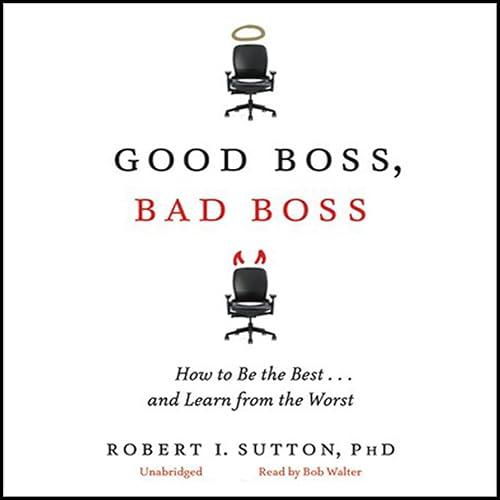
Book summary
Premium summary · Opens in the app · 30 min read
Every workplace has a boss story. Ask anyone about the best manager they ever had and you will hear about someone who pushed them to achieve more than they thought possible while making them feel valued, respected, and supported. Ask about the worst and you will hear about someone who made life miserable, crushed motivation, and drove talented people away.
**Author:** Robert I. Sutton
**Estimated Reading Time:** 45 minutes
**What You'll Learn:**
- Why the gap between how bosses see themselves and how followers experience them is the single greatest leadership challenge - How to balance relentless performance demands with genuine human decency - The specific behaviors that separate bosses people remember with gratitude from bosses people remember with resentment - Practical techniques for staying grounded when power distorts your perspective - How to build teams that perform brilliantly while feeling psychologically safe
**Who This Book Is For:**
Anyone who manages people, aspires to manage people, or works for someone who does. Whether you lead a team of two or an organization of twenty thousand, the principles in this book apply with equal force. It is also for followers who want to understand the dynamics shaping their daily work experience.
Every workplace has a boss story. Ask anyone about the best manager they ever had and you will hear about someone who pushed them to achieve more than they thought possible while making them feel valued, respected, and supported. Ask about the worst and you will hear about someone who made life miserable, crushed motivation, and drove talented people away. The strange thing is that most bosses believe they are the good kind. They believe they are fair, supportive, and effective. They believe their people respect them. They believe they have an accurate read on how their behavior affects others. They are often wrong. Robert Sutton has spent decades studying the gap between what bosses think they do and what followers actually experience. The evidence is sobering. Bosses routinely overestimate their positive impact and underestimate their negative impact. They miss the small moments that define how followers feel about them. They fail to notice the fear, frustration, and resentment that their actions create. This is not because bosses are bad people. It is because power changes how the human mind works. When you hold authority over others, you naturally become less attentive to their reactions. You become more focused on your own goals and less sensitive to the emotional consequences of your decisions. You start to believe that your intentions matter more than your impact. Meanwhile, followers experience the opposite effect. They pay intense attention to everything the boss says and does. They read meaning into small gestures, casual comments, and subtle shifts in mood. They remember moments the boss forgot seconds after they happened. This creates what Sutton calls the toxic tandem: a boss who is increasingly blind to his or her own behavior paired with followers who are hypervigilant to every signal the boss sends. The result is a relationship defined by misunderstanding, resentment, and missed opportunities. The…
Continue reading in the MinuteRead app
Get the complete 30-minute summary of Good Boss, Bad Boss
Get the complete summary in the appYour success as a boss depends on staying in tune with how others think, feel, and react to you.
Power makes you less attentive to others. This is a cognitive reality, not a moral failing. Combat it with active effort
Balance performance and humanity. Be demanding and supportive at the same time.
Focus on small wins. Motivation follows progress, not the other way around.
Create psychological safety. Make it safe for people to speak up, take risks, and admit mistakes.
Hire for connective talent. Team performance depends on how well people work together, not just how well they work alone
"Good Boss, Bad Boss" is a strong fit if you want practical ideas around business, leadership, management, especially themes like your success as a boss depends on staying in tune with how others think, feel, and react to you; power makes you less attentive to others. this is a cognitive reality, not a moral failing. combat it with active effort. The MinuteRead summary distills these concepts into a focused read, whether you're deciding whether to buy the book or applying its lessons at work.
Motivated to help readers with if you are a boss, Robert I. Sutton wrote “Good Boss, Bad Boss” to package those ideas for a fast, focused read. In “Good Boss, Bad Boss”, Robert I. Sutton focuses on if you are a boss. Through “Good Boss, Bad Boss”, Robert I. Sutton distills the core ideas on business into lessons readers can absorb in a single short sitting. Readers turn to this work when they want Robert I. Sutton's perspective on the subject without working through the entire original volume. R…
View all summaries by Robert I. SuttonContinue Reading
Access the complete 30-minute summary and thousands more nonfiction books in the MinuteRead app.

Continue reading the complete summary in the MinuteRead app.






