 MinuteRead
30 min
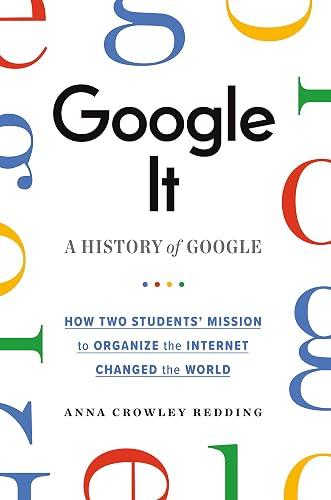
Book summary
by Anna Crowley Redding
Premium summary · Opens in the app · 30 min read
In the mid-1990s, the internet felt like a library with no card catalog. Millions of documents were appearing online, but finding the right one was becoming nearly impossible. Early search engines returned results that were chaotic, easily manipulated, and often irrelevant. Users typed in queries and received pages of junk. The promise of the information age was colliding with a practical problem: information was growing faster than anyone could organize it.
**Author:** Anna Crowley Redding **Estimated Reading Time:** 42 minutes
**What You'll Learn:**
How two graduate students with conflicting personalities built one of the most influential companies in history. You will discover the technical breakthrough that made Google possible, the business decisions that turned a research project into a global powerhouse, and the cultural philosophy that continues to drive innovation across multiple industries.
**Who This Book Is For:**
Anyone curious about the origins of the digital age, aspiring entrepreneurs who want to understand how world-changing ideas take shape, and readers who use Google products daily but have never understood the story behind them.
In the mid-1990s, the internet felt like a library with no card catalog. Millions of documents were appearing online, but finding the right one was becoming nearly impossible. Early search engines returned results that were chaotic, easily manipulated, and often irrelevant. Users typed in queries and received pages of junk. The promise of the information age was colliding with a practical problem: information was growing faster than anyone could organize it. This was the world Larry Page and Sergey Brin entered when they arrived at Stanford University as graduate students in computer science. They did not set out to build a company. They did not have a business plan. They had a simple observation: the web was built on links, and those links might reveal something important about which pages mattered most. That observation became an algorithm. That algorithm became a search engine. That search engine became Google. Anna Crowley Redding tells this story with the instincts of an investigative journalist. She traces how two brilliant, stubborn, and occasionally combative young men found common ground in a shared obsession with solving a problem that affected everyone who used the internet. Their solution did not just improve search. It changed how people access information, how businesses reach customers, and how the world thinks about organizing knowledge. The story matters because Google's rise was not inevitable. The company emerged during the dot-com boom, a period of wild speculation and spectacular failures. Many better-funded competitors had head starts. Established technology giants dismissed search as a solved problem. Yet Google succeeded because its founders focused on something others ignored: the quality of the answer. That focus created a philosophy that still shapes the company today. Google's culture of experimentation, its willingness to pursue projects that seem impossible, and its belief that technology should serve users first all trace back to decisions made in a Stanford dorm room and a rented garage. Understanding Google's story offers more than a corporate history. It reveals how breakthrough ideas develop, why certain innovations succeed while others fail, and what happens when a company grows large enough…
Continue reading in the MinuteRead app
Get the complete 30-minute summary of Google It
Get the complete summary in the appGoogle began as a research project at Stanford, not a business plan.
PageRank ranks pages by the quality and quantity of incoming links, treating links as votes of confidence.
Every established search engine declined to buy Google's technology, forcing the founders to build the company themselve
Google grew through word of mouth because the product was dramatically better than alternatives.
AdWords transformed advertising by matching ads to search intent and charging only for clicks.
Google's culture of experimentation, including 20% time, produced innovations like Gmail and Google News.
"Google It" is a strong fit if you want practical ideas around business, history, technology, especially themes like google began as a research project at stanford, not a business plan; pagerank ranks pages by the quality and quantity of incoming links, treating links as votes of confidence. The MinuteRead summary distills these concepts into a focused read, whether you're deciding whether to buy the book or applying its lessons at work.
Motivated to help readers with 1) Google's origins: Stanford students revolutionize search 2) PageRank algorithm: Ranking web pages by, Anna Crowley Redding wrote “Google It” to package those ideas for a fast, focused read. In “Google It”, Anna Crowley Redding focuses on 1) Google's origins: Stanford students revolutionize search 2) PageRank algorithm: Ranking web pages by. Through “Google It”, Anna Crowley Redding distills the core ideas on business into lessons readers can absorb in a single s…
Continue Reading
Access the complete 30-minute summary and thousands more nonfiction books in the MinuteRead app.

Continue reading the complete summary in the MinuteRead app.






