MinuteRead
30 min
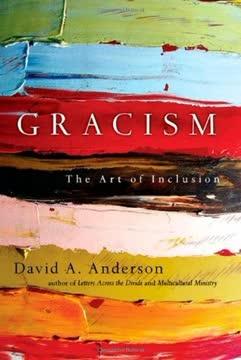
Some books about race and inclusion begin with outrage. Others begin with guilt. This one begins with a simple observation that changes everything: everyone has a dot.
**The Art of Inclusion**
By David A. Anderson
**Estimated Reading Time:** 45 minutes
**What You'll Learn:** * Why everyone carries an invisible mark of distinction or vulnerability * How to move from passive tolerance to active, positive favor toward others * The seven practical sayings of a gracist and how to live them out * How to build communities, workplaces, and relationships where the overlooked are honored * A spiritual and practical framework for genuine inclusion that goes far beyond tokenism
**Who This Book Is For:** Anyone who has ever felt like an outsider. Anyone who wants to build bridges across racial, cultural, or social divides but does not know where to start. Leaders, pastors, team members, and neighbors who sense that mere tolerance is not enough and want to learn the art of extending positive favor to others based on their differences rather than in spite of them.
Some books about race and inclusion begin with outrage. Others begin with guilt. This one begins with a simple observation that changes everything: everyone has a dot. A dot is that thing about you that makes you feel self-conscious, different, or vulnerable. It might be your skin color in a room where no one looks like you. It might be your accent, your weight, your disability, your age, or the fact that you are the only single person at a table full of couples. It might be your economic status, your educational background, or a family history you would rather not discuss. Whatever form it takes, every human being carries some mark of distinction that can become a source of pain. David Anderson stumbled onto this truth in an unlikely place: a children's book about a bunny. His young daughter loved a story about a rabbit who felt out of place because of his spots. When Anderson looked around his own life, he saw the same dynamic playing out everywhere. The white family moving into a predominantly Black neighborhood. The Black professional navigating a predominantly white corporation. The immigrant child learning a new language. The person in a wheelchair entering a building with no ramp. The overweight teenager in a cafeteria full of slender classmates. The universality of the dot changes the conversation. Suddenly, inclusion is not about charitable people reaching down to help the less fortunate. It is about vulnerable people recognizing their shared condition and choosing to honor one another. When you realize you have a dot too, the posture of your heart shifts. You stop seeing yourself as a benefactor and start seeing yourself as a fellow traveler. This is the foundation of gracism. Anderson coined the term by fusing two words: grace and racism. Where racism extends…
Continue reading in the MinuteRead app
Get the complete 30-minute summary of Gracism
Get the complete summary in the appEveryone carries a dot. Your own vulnerability is the bridge to empathy for others.
Gracism extends positive favor based on difference. It is not neutrality. It is active inclusion.
Colorblindness erases stories. Gracism honors them.
Lift up the overlooked. The people who seem weakest are often indispensable.
Cover the vulnerable. Protect dignity quietly and consistently.
Share your privilege. Refuse perks that come at others' expense.
"Gracism" is a strong fit if you want practical ideas around christian, christianity, christian living, especially themes like everyone carries a dot. your own vulnerability is the bridge to empathy for others; gracism extends positive favor based on difference. it is not neutrality. it is active inclusion. The MinuteRead summary distills these concepts into a focused read, whether you're deciding whether to buy the book or applying its lessons at work.
Dr. David A. Anderson is a renowned expert in bridging divides across race, faith, culture, and wealth. As the founder and President of the BridgeLeader Network (BLN), he has worked globally to bring hope and healing to diverse communities. Anderson's influence extends to Africa, Asia, Europe, the Middle East, and North America. He is recognized as an authority on building bridges and fostering reconciliation. Anderson's work focuses on addressing deep societal divisions and promoting understand…
View all summaries by David A. AndersonContinue Reading
Access the complete 30-minute summary and thousands more nonfiction books in the MinuteRead app.

Continue reading the complete summary in the MinuteRead app.