MinuteRead
30 min
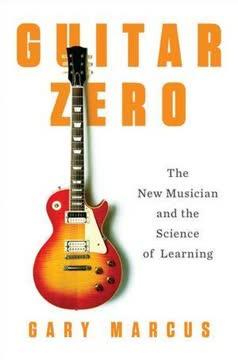
Gary Marcus was almost forty years old and almost completely unmusical. He could not carry a tune. He had no sense of rhythm that anyone would compliment. He had spent his entire career as a cognitive psychologist studying how the brain learns, yet he had never seriously tried to learn an instrument. Then he decided to spend a sabbatical year learning guitar.
**The Science of Becoming Musical at Any Age**
By Gary F. Marcus
**Estimated Reading Time:** 45 minutes
**What You'll Learn:** Why there is no such thing as musical talent in the way most people imagine it. How the brain pieces together musical ability from systems that evolved for entirely different purposes. What deliberate practice actually requires. Why adults can learn instruments despite what the critical period hypothesis suggests. And how music delivers two distinct kinds of happiness that explain its universal grip on human life.
**Who This Book Is For:** Anyone who ever said "I'm not musical." Anyone who quit lessons as a child and regrets it. Anyone who wonders whether starting an instrument at forty is foolish. Parents deciding when and how to introduce music to their children. Teachers looking for better ways to help students persist. And anyone curious about what happens inside the brain when we make music.
Gary Marcus was almost forty years old and almost completely unmusical. He could not carry a tune. He had no sense of rhythm that anyone would compliment. He had spent his entire career as a cognitive psychologist studying how the brain learns, yet he had never seriously tried to learn an instrument. Then he decided to spend a sabbatical year learning guitar. This book is the result of that experiment, but it is not a memoir of midlife hobby acquisition. Marcus used his own struggle as a window into a deeper question: What does it take to become musical, and what does that tell us about the human mind? The question matters because music occupies a strange position in human life. It is universal. Every culture ever studied has some form of music. Children respond to rhythm and melody before they can speak. People spend enormous amounts of time and money on music. They define their identities through it. They fall in love to it. They mourn to it. And yet, unlike language, music does not arrive effortlessly. Most children learn to speak without explicit instruction. Most children do not learn to play an instrument without enormous effort. Many never learn at all. This asymmetry raises a puzzle. If music is so central to human experience, why is it so hard to acquire? If the brain evolved to handle music, why is there no music module, no dedicated neural machinery that makes musical fluency automatic? Marcus argues that the answer lies in the difference between biological evolution and cultural evolution. Language is old enough and important enough that natural selection built specialized brain systems for it. Music, despite its ancient roots, appears to be something the brain cobbles together from parts that evolved for other purposes. The auditory system…
Continue reading in the MinuteRead app
Get the complete 30-minute summary of Guitar Zero
Get the complete summary in the appMusic is a skill you build, not a talent you discover.
Deliberate practice, focused work on specific weaknesses with immediate feedback, is the engine of improvement.
The brain has no dedicated music module. Musical ability is assembled from systems that evolved for other purposes.
Adults can learn instruments. The critical period for music is permeable.
Talent is mostly small initial advantages compounded by motivated practice.
Expert musicians align four representations: what they hear, what they intend, where the notes are, and what their body
"Guitar Zero" is a strong fit if you want practical ideas around music, psychology, science, especially themes like music is a skill you build, not a talent you discover; deliberate practice, focused work on specific weaknesses with immediate feedback, is the engine of improvement. The MinuteRead summary distills these concepts into a focused read, whether you're deciding whether to buy the book or applying its lessons at work.
Gary Marcus is an acclaimed cognitive psychologist and Professor of Psychology at New York University. He directs the NYU Center for Child Language and has authored several books on the human mind, including "Kluge" and "The Birth of the Mind." Marcus has contributed to leading scientific journals and edited "The Norton Psychology Reader." His work extends beyond academia, with articles published in popular media outlets like Wired, The Wall Street Journal, and The New York Times. Marcus's resea…
View all summaries by Gary F. MarcusContinue Reading
Access the complete 30-minute summary and thousands more nonfiction books in the MinuteRead app.

Continue reading the complete summary in the MinuteRead app.