 MinuteRead
30 min
Book summary
Premium summary · Opens in the app · 30 min read
Every organization claims to care about its customers. Mission statements promise customer obsession. Annual reports celebrate customer focus. Surveys track satisfaction scores. And yet, most organizations still struggle to create products, services, and experiences that people genuinely love.
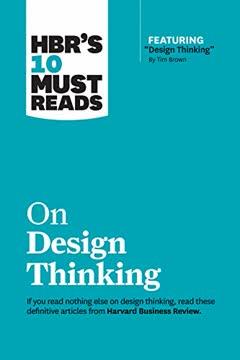
### HBR's 10 Must Reads on Design Thinking
**Author:** Harvard Business Review
**Estimated Reading Time:** 45 minutes
**What You'll Learn:**
- Why design thinking has become essential for innovation in every industry - How to uncover customer needs that traditional research misses - Why prototyping beats planning when developing new ideas - How to build a culture where creative confidence thrives - Practical frameworks for applying design thinking immediately
**Who This Book Is For:**
Leaders who want to move beyond incremental improvement. Product managers tired of building things nobody wants. Entrepreneurs seeking a reliable innovation process. Anyone who suspects that empathy and experimentation might outperform analysis and certainty.
Every organization claims to care about its customers. Mission statements promise customer obsession. Annual reports celebrate customer focus. Surveys track satisfaction scores. And yet, most organizations still struggle to create products, services, and experiences that people genuinely love. The reason is not a lack of effort. It is a lack of understanding. Most companies know a great deal about their customers as demographic profiles, market segments, and purchasing statistics. They know far less about their customers as human beings with frustrations, aspirations, contradictions, and unspoken needs. This gap between knowing about customers and understanding them is where innovation goes to die. Traditional business tools are remarkably good at optimizing what already exists. Spreadsheets can squeeze costs out of a supply chain. Focus groups can refine a marketing message. Competitive analysis can identify feature gaps. But these tools share a fundamental limitation: they are built to improve upon the known, not to discover the unknown. When Henry Ford reportedly said that if he had asked people what they wanted, they would have said faster horses, he captured the core problem. Customers can tell you about their frustrations with current solutions. They cannot reliably tell you what they need next. The most valuable insights are often things customers cannot articulate because they have never imagined an alternative. Design thinking emerged as a response to this challenge. It is not a superficial set of tools or a trendy workshop exercise. It is a fundamentally different way of approaching problems, one that places human experience at the center of the innovation process and uses experimentation to navigate uncertainty. The approach draws inspiration from how designers have always worked. Designers do not begin with a solution and seek validation. They begin with a problem and seek understanding. They observe. They empathize. They generate possibilities. They build rough prototypes and watch how people respond. They refine and repeat. The process is messy, iterative, and deeply human. For decades, this way of working was confined to design studios and creative agencies. Business leaders assumed it was too soft, too…
Continue reading in the MinuteRead app
Get the complete 30-minute summary of HBR's 10 Must Reads on Design Thinking
Get the complete summary in the appInnovation starts with observing what people actually do, not what they say they do.
Empathy is a strategic tool that reveals needs data cannot capture.
Prototypes are for learning, not for finishing. Build them quickly and cheaply.
Failure is a source of insight, not a sign of incompetence. Extract lessons from every failure.
Culture determines whether design thinking thrives or dies. Align systems with principles.
Challenge assumptions constantly. The most valuable innovations come from questioning what everyone accepts.
"HBR's 10 Must Reads on Design Thinking" is a strong fit if you want practical ideas around business, design, management, especially themes like innovation starts with observing what people actually do, not what they say they do; empathy is a strategic tool that reveals needs data cannot capture. The MinuteRead summary distills these concepts into a focused read, whether you're deciding whether to buy the book or applying its lessons at work.
Harvard Business Review is a renowned publication focused on management and business practices. While no specific author is mentioned for this compilation, Harvard Business Review is known for curating high-quality content from various experts in their respective fields. The organization has a long-standing reputation for providing well-researched, practical insights for business professionals and leaders. Their "10 Must Reads" series compiles essential articles on specific topics, offering read…
View all summaries by Harvard Business ReviewContinue Reading
Access the complete 30-minute summary and thousands more nonfiction books in the MinuteRead app.

Continue reading the complete summary in the MinuteRead app.






