 MinuteRead
30 min
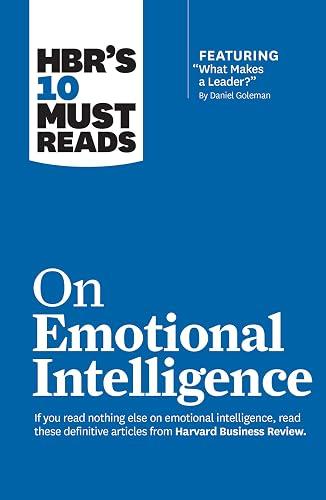
Book summary
Premium summary · Opens in the app · 30 min read
Every organization has a story about the brilliant leader who failed. Sometimes it is the sales director with an encyclopedic knowledge of the product line who could not retain a single direct report. Sometimes it is the chief financial officer whose forecasts were flawless but whose bluntness left colleagues feeling diminished. Sometimes it is the founder whose technical vision built the company but whose temper eventually drove away the very people needed to scale it.
**Author:** Harvard Business Review
**Estimated Reading Time:** 45 minutes
**What You'll Learn:**
- Why emotional intelligence matters more than IQ and technical skill in leadership - How to develop self-awareness, self-regulation, motivation, empathy, and social skills - Practical strategies for building resilience and handling workplace challenges - How to create a culture of feedback and civility in your organization - A 30-day plan for strengthening your emotional intelligence
**Who This Book Is For:**
This book is for leaders at every level who want to become more effective. It is for the technically brilliant professional who struggles to connect with colleagues. It is for the new manager who feels overwhelmed by the human side of leadership. It is for the seasoned executive who senses that something beyond strategy and execution determines whether teams thrive or falter. If you have ever wondered why some smart people succeed while equally smart people stall, this book offers an answer.
Every organization has a story about the brilliant leader who failed. Sometimes it is the sales director with an encyclopedic knowledge of the product line who could not retain a single direct report. Sometimes it is the chief financial officer whose forecasts were flawless but whose bluntness left colleagues feeling diminished. Sometimes it is the founder whose technical vision built the company but whose temper eventually drove away the very people needed to scale it. These stories share a common thread. The failure was not intellectual. It was emotional. For decades, the business world operated on a simple assumption: the smartest people make the best leaders. Companies recruited from elite universities, administered cognitive tests, and promoted based on technical mastery. Intelligence quotient, or IQ, was treated as the primary predictor of leadership success. The logic seemed sound. Leaders must analyze complex problems, make difficult decisions, and understand intricate systems. Surely raw intellectual horsepower mattered most. But the data told a different story. Researchers began noticing something curious. When they tracked the careers of high-IQ professionals over time, they found that intellectual ability predicted entry into leadership roles but not success within them. Some brilliant people excelled. Others plateaued or derailed. The difference was not intelligence. It was something else entirely. That something else is emotional intelligence. Emotional intelligence refers to the ability to recognize, understand, and manage your own emotions while also recognizing, understanding, and influencing the emotions of others. It encompasses five core components: self-awareness, self-regulation, motivation, empathy, and social skills. Together, these abilities determine how well you navigate the human dimensions of work. And the human dimensions of work are, it turns out, the dimensions that matter most. Consider what leadership actually requires. A leader must inspire people who are tired, frustrated, or…
Continue reading in the MinuteRead app
Get the complete 30-minute summary of On Emotional Intelligence
Get the complete summary in the appEmotional intelligence matters more than IQ and technical skill for leadership success.
Self-awareness is the foundation. Understand your emotions, strengths, weaknesses, values, and impact on others.
Self-regulation means choosing how to respond to emotions, not suppressing them.
Intrinsic motivation, driven by meaning and mastery, sustains leadership through difficult times.
Empathy means understanding others' feelings, not necessarily agreeing with them.
Social skills are the application of emotional intelligence in relationships. They are learnable.
"On Emotional Intelligence" is a strong fit if you want practical ideas around business, psychology, leadership, especially themes like emotional intelligence matters more than iq and technical skill for leadership success; self-awareness is the foundation. understand your emotions, strengths, weaknesses, values, and impact on others. The MinuteRead summary distills these concepts into a focused read, whether you're deciding whether to buy the book or applying its lessons at work.
Motivated to help readers with "IQ and technical skills are important, Harvard Business Review wrote “On Emotional Intelligence” to package those ideas for a fast, focused read. In “On Emotional Intelligence”, Harvard Business Review focuses on "IQ and technical skills are important. Through “On Emotional Intelligence”, Harvard Business Review distills the core ideas on business into lessons readers can absorb in a single short sitting. Readers turn to this work when they want Harvard Business R…
View all summaries by Harvard Business ReviewContinue Reading
Access the complete 30-minute summary and thousands more nonfiction books in the MinuteRead app.

Continue reading the complete summary in the MinuteRead app.






